Fertilization
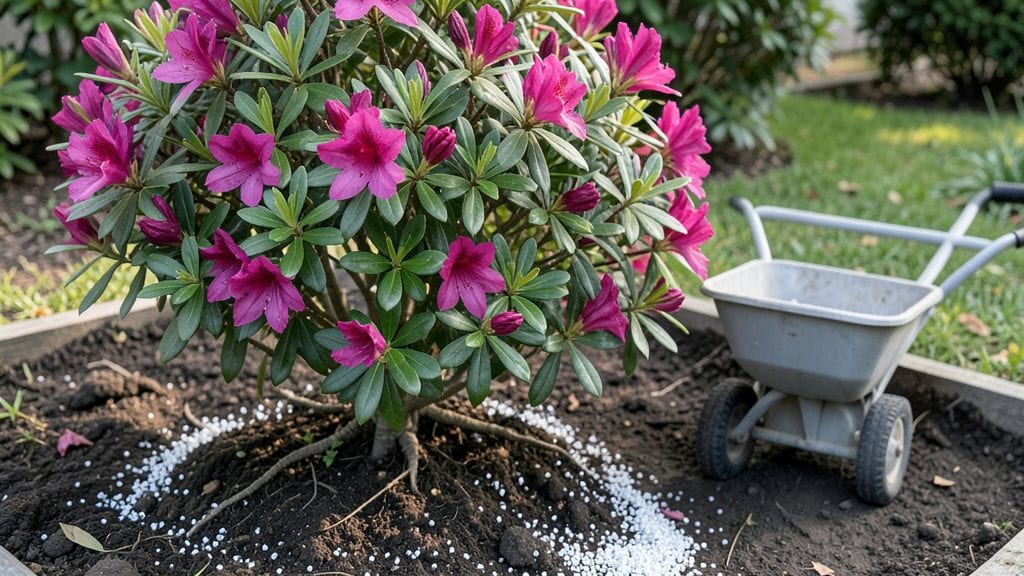
Using aluminum sulfate in gardening effectively lowers soil pH for acid-loving plants like blueberries and azaleas, with 1–2 pounds per 100 square feet for sandy soil or 2–4 pounds for clay. Apply in early spring or fall, watering thoroughly afterward to prevent root burn.
Aluminum sulfate works by breaking down into aluminum and sulfate ions, which react with soil minerals to release hydrogen ions—essentially making the soil more acidic over time. 🔥 Unlike sulfur, which takes months to years to acidify soil, aluminum sulfate delivers faster results, making it ideal for gardeners who need quick pH adjustments.
However, its effectiveness depends on soil type: clay holds more moisture and nutrients, so it requires higher doses, while sandy soil drains quickly and needs less.
For best results, I recommend testing your soil pH before applying—aim for a target between 4.5 and 5.5 for most acid-loving plants. Always wear gloves when handling it, as aluminum sulfate can irritate skin, and store it in a cool, dry place away from children and pets.
If you notice yellowing leaves or stunted growth after application, you may have overdone it—flush the soil with water and wait before reapplying.
💡 In This Article
- How Aluminum Sulfate Adjusts Soil pH Chemistry
- Safety and Application Tips for Aluminum Sulfate
How aluminum sulfate adjusts soil pH chemistry
When you sprinkle aluminum sulfate onto your garden soil, it doesn't just magically make things more acidic—it triggers a precise chemical reaction. This compound dissolves in soil moisture, breaking apart into aluminum ions (Al³⁺) and sulfate ions (SO₄²⁻).
The aluminum ions then react with water molecules to form a weak acid called aluminic acid (Al(OH)₃), which releases hydrogen ions (H⁺) into the soil solution. These extra H⁺ ions are what actually lower the pH, creating that acidic environment your blueberries or azaleas crave. 🔥
The speed of this reaction sets aluminum sulfate apart from other acidifiers. Unlike elemental sulfur—which must first oxidize into sulfuric acid (a process that can take months to years)—aluminum sulfate starts working within days to weeks.
For example, in a sandy loam soil with a starting pH of 6.5, you might see a pH drop of 0.5-1.0 points within 4-6 weeks after application. In contrast, sulfur might only drop pH by 0.25 points in the same timeframe.
This rapid action makes aluminum sulfate ideal for gardeners who need quick results before planting season.
Soil texture plays a crucial role in how effectively this works. In clay soils, the tiny particles create more surface area for chemical reactions, but they also hold water tightly—meaning the aluminum ions stay active longer.
That's why clay soils often require 2-4 pounds per 100 square feet compared to 1-2 pounds for sandy soils. The opposite happens in sandy soils: water drains quickly, so the acidifying effect is more temporary unless you reapply.
Organic matter also matters—soils rich in decomposed plant material can buffer the pH change more effectively, requiring slightly higher doses to achieve the same acidity level.
Rainfall patterns dramatically affect aluminum sulfate's performance. In regions with high annual rainfall (over 40 inches), the compound gets washed deeper into the soil profile, potentially acidifying lower layers where plant roots may not reach. This can create a "pocket" of acidity that doesn't benefit your top-growing plants.
Conversely, in dry climates (under 20 inches rainfall)**, the acidifying effect concentrates near the surface but may dissipate faster without regular watering. That's why thorough watering after application is critical—it helps distribute the aluminum ions evenly through the root zone while preventing surface crusting that could burn tender roots. 💫
Comparing it to other acidifiers reveals some important trade-offs. Peat moss, for instance, lowers pH by 0.5-1.0 points per year through natural decomposition, but it also adds valuable organic matter. Elemental sulfur is slower but longer-lasting, while aluminum sulfate delivers fast results with minimal organic benefits.
The key is matching your amendment to your specific needs: aluminum sulfate shines when you need quick acidification for established plants, while sulfur might be better for long-term soil management in vegetable gardens where you want gradual changes.
What most gardeners don't realize is how aluminum sulfate interacts with soil minerals. The aluminum ions can temporarily bind with phosphorus in the soil, making it less available to plants—a phenomenon called "phosphorus fixation."
This is why many gardeners combine aluminum sulfate applications with a low-phosphorus fertilizer or bone meal to prevent nutrient deficiencies. The good news is this effect is usually temporary, lasting only until the next rainfall flushes the system.
For container gardens, this interaction is even more pronounced due to the limited soil volume, so always monitor your plants closely after application. ✨