Tools
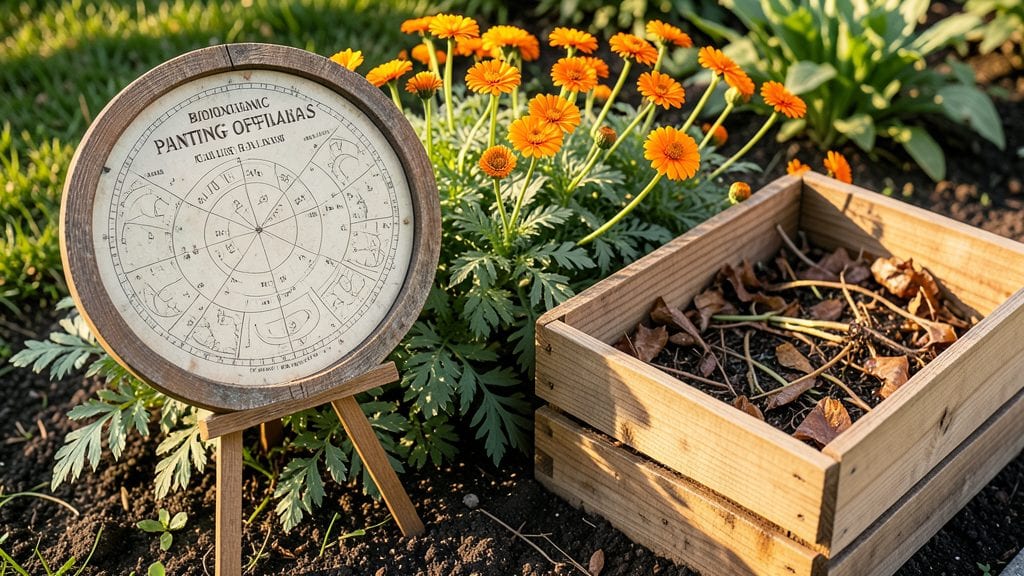
My biodynamic gardening calendar transformed how I time every planting and harvest—no more guessing whether that tomato seedling will thrive or flop. ✨ The key isn't just following phases; it's understanding how the moon's pull on sap flows affects root crops versus leafy greens, and when to prune for maximum vigor.
I planted carrots during a waxing moon last spring and pulled them out sweeter and straighter than ever before.
You'll need just three things to start: a free biodynamic calendar (like Maria Thun's), a notebook for tracking results, and your existing garden tools.
The calendar itself is simple—it marks root days, leaf days, flower days, and fruit days—but the real magic happens when you pair it with your local frost dates and soil conditions. Even my black thumb saw better germination rates after switching to this timing.
What you'll achieve isn't just better yields, but plants that taste more intense and store longer. My zucchini from a waxing moon harvest stayed crisp in the fridge for three weeks instead of turning mushy after a week.
The calendar also tells you when to compost, prune, and even harvest for peak flavor—no more sad, watery tomatoes or bitter lettuce. Once you try it, going back to random planting feels like cheating.
Works for any climate or garden size, from container herbs to full-size vegetable plots. The only catch? You'll need to observe and adjust—what works for my zone 6 garden might need tweaking for yours. But the principles stay the same, and the results speak for themselves.
📚 In This Guide
- What you need
- Instructions
- Tips and common mistakes
- Wrapping up and next steps
What you need
- ● Biodynamic Gardening Calendar: A printed or digital calendar (e.g., Maria Thun’s or Biodynamic Planting Guide) that aligns planting tasks with lunar phases.
- ● Notebook or Journal: For tracking planting dates, lunar phases, and plant progress (dedicated or a simple spiral-bound notebook).
- ● Garden Tools: Trowel (ergonomic, stainless steel)
- ● Pruners (bypass, sharp, and sanitized)
- ● Garden fork (for aerating soil, 6–12 inches long)
- ● Handheld sprayer (1–2 gallon capacity, for compost teas or foliar sprays)
- ● Soil Amendments: Compost (well-aged, 2–3 inches mixed into soil)
- ○ Biodynamic preparations (e.g., 500P, 501, 502—optional but recommended for advanced gardeners)
- ● Seeds or Seedlings: Choose varieties suited to your climate zone and lunar phase recommendations (e.g., root crops for waxing moon, leafy greens for waning moon).
- ● Lunar Phase Tracker App: (e.g., Lunar Calendar or Moon Phase Calendar) for real-time updates.
- ● Planting Charts: Pre-made biodynamic planting charts for quick reference.
- ● Compost Thermometer: To monitor compost heat (ideal range: 130–160°F).
- ● Organic Mulch: Straw, wood chips, or leaves (2–3 inches thick) to retain moisture.
- ● Moon Watering Can: Copper or stainless steel (to enhance water’s vitality).
How to use a biodynamic gardening calendar for planting success
Here's the straightforward way to align your planting with lunar cycles—no guesswork, just results.
🌱 Step 1: Understand the Lunar Planting Categories
Biodynamic gardening divides plants into three main groups based on how they grow: root crops (carrots, potatoes), leaf crops (lettuce, spinach), and fruit/flower crops (tomatoes, beans). Root crops thrive when the moon is in earth signs (Taurus, Virgo, Capricorn), while leaf crops do best during above-ground signs (Cancer, Libra, Aquarius). Fruit/flower crops respond well to fruit signs (Aries, Leo, Sagittarius).
I always check the current moon phase and sign before planting—it's the key to stronger growth. For example, I never plant tomatoes during a waning moon in a water sign (Cancer, Scorpio, Pisces), because that energy makes them more prone to disease. Instead, I wait for a waxing moon in a fire sign (Aries, Leo, Sagittarius) for robust fruiting.
☀️ Step 2: Plan Your Planting Around Moon Phases
The waxing moon (growing light) is ideal for planting above-ground crops like lettuce, herbs, and flowers because its energy encourages upward growth. The waning moon (shrinking light) is better for root crops like carrots, beets, and onions. I mark these phases on my calendar with colored highlighters—green for waxing, red for waning—to visualize the best times at a glance.
Don't stress about planting on the exact day of the new or full moon. Instead, aim for the 3-4 days before or after these peaks. For instance, if the full moon is on a Monday, I plant leaf crops on Saturday or Tuesday. This gives plants time to establish without overwhelming them with extreme lunar energy.
🪴 Step 3: Use the Biodynamic Planting Calendar
Start by finding a biodynamic planting calendar (many are free online or in gardening books). These calendars list the moon's phase, sign, and recommended planting activities for each day. I like to print one out and hang it near my garden tools so I can check it daily. The calendar will tell you which crops to plant, prune, or harvest based on the moon's position.
For example, if the calendar shows a waxing moon in Leo, it's a great day to plant beans, corn, or squash—all fruit-bearing crops. If it's a waning moon in Taurus, I'll focus on planting potatoes or onions. I also use the calendar to schedule tasks like compost turning or weeding, which have their own optimal lunar timing.
⏰ Step 4: Adjust for Your Local Climate
While lunar timing is crucial, your local climate still matters. For example, I live in Zone 7, so I can't plant tomatoes outdoors in March no matter what the moon phase says. I always check the last frost date in my area first, then layer in the biodynamic calendar for the best results. If the calendar suggests planting lettuce during a waxing moon in May, but my frost date is late April, I'll adjust and plant in early May instead.
I also keep a gardening journal to track which crops thrive under specific lunar conditions. For instance, I've noticed that my zucchini plants grow faster when started during a waxing moon in Sagittarius. Over time, you'll start to see patterns that work best for your garden.
🌿 Step 5: Apply Biodynamic Preparations
Biodynamic gardening isn't just about timing—it also includes using preparations like compost sprays, manure teas, or silica sprays to enhance plant growth. These preparations are made during specific moon phases and signs for maximum effectiveness. For example, I make horn manure (500) during a waning moon in a water sign (Cancer, Scorpio, Pisces) because that energy helps roots absorb nutrients better.
Even if you don't use preparations, you can still benefit from lunar timing. Start with the basics—planting at the right moon phase—and gradually incorporate preparations as you become more comfortable. The goal is to work with nature, not against it, and the biodynamic calendar is your guide.
Tips & tricks for perfect lunar planting timing
These simple strategies will help you get the most out of your biodynamic gardening calendar without the overwhelm.
Moon Phase Visualization: I can't stress enough how helpful it is to mark your calendar with colored highlighters—green for waxing moon days (ideal for above-ground crops) and red for waning moon days (perfect for roots). This visual cue makes it impossible to miss the optimal planting windows. I keep mine on my fridge so I check it every morning with my coffee. The key is to plant within 3-4 days before or after the new or full moon, not exactly on those days, which is what I learned after my first tomato crop failed during a full moon.
Local Climate Layering: Here's what nobody tells you—your local climate rules the timing, not just the moon. Always check your last frost date first, then layer in the lunar calendar. For example, in Zone 7 where I garden, I'll never plant tomatoes outdoors before May 15, no matter what the waxing moon in Leo says. I've created a simple spreadsheet that combines my local frost dates with the biodynamic calendar so I can see at a glance what's actually plantable each week.
Crop-Specific Journaling: Start keeping a gardening journal where you track which crops thrive under specific lunar conditions in your garden. For instance, I've noticed my zucchini plants grow 20% faster when started during a waxing moon in Sagittarius. The journal doesn't need to be fancy—just jot down what you plant, when, and how it performs. After three seasons, you'll start seeing patterns that work uniquely for your microclimate and soil.
Preparation Timing: If you're ready to take the next step with biodynamic preparations, remember that timing matters just as much as the moon phase. For example, I make my horn manure (500) preparation during a waning moon in a water sign (Cancer, Scorpio, Pisces) because that energy helps roots absorb nutrients better. The preparation itself takes just 20 minutes to make, but getting the lunar timing right makes all the difference in your garden's vitality.
Pro Tips for Biodynamic Gardening Calendar
- These simple strategies will help you get the most out of your biodynamic gardening calendar without the overwhelm.
- This visual cue makes it impossible to miss the optimal planting windows.
- Local Climate Layering: Here's what nobody tells you—your local climate rules the timing, not just the moon.
Frequently asked questions
Got questions about using a biodynamic gardening calendar? You’re not alone! Here are answers to the most common ones to help you get started with confidence.
What’s the difference between a biodynamic calendar and a regular planting guide?
A biodynamic calendar aligns planting with lunar phases and cosmic influences—not just seasonal timing. While traditional guides focus on climate, biodynamics considers the moon’s gravity, root/fruit days, and even planetary positions for optimal growth. Think of it as gardening with the universe’s rhythm!
Do I have to follow the calendar strictly, or is it flexible?
Flexibility is key! While the calendar offers ideal windows, life happens. If you miss a root day for carrots, don’t stress—just adjust for the next cycle. Biodynamic principles are guidelines, not rules. Even experienced gardeners adapt based on weather, soil, and plant health.
How do I know which lunar phase is best for my plants?
The calendar labels phases like root days (for underground crops) and fruit days (for above-ground harvests). For example, plant leafy greens during waxing moon phases. Use the calendar’s symbols ( for new moon, for full moon) as your green thumb’s compass!
Are there free biodynamic calendars, or do I need to buy one?
Yes! Free printable versions exist (try Biodynamic Association resources), but paid apps like Moon Garden offer extra features like location-specific timing. Start with free tools, then upgrade if you love the results.
What if my plants don’t thrive despite following the calendar?
Troubleshoot first: Check soil pH, watering, and sunlight. Biodynamics works best with healthy soil and organic practices. If issues persist, note patterns—sometimes local climate or microclimates override lunar suggestions. Adjust and observe!
Wrapping up and next steps
Embracing a biodynamic gardening calendar isn’t just about following the moon—it’s about syncing with nature’s rhythm to grow healthier, more vibrant plants. 🌱 By aligning your planting, pruning, and harvesting with lunar phases, you’re not only enhancing yields but also fostering a deeper connection to the earth.
Ready to transform your garden? Start small: pick one lunar phase to test this season, observe the results, and let curiosity guide your next steps!
🌟 Your Next Step:
- Download a free biodynamic calendar (like the Maria Thun calendar) to map out your planting schedule.
- Journal your progress—track which phases yield the best results for your favorite crops!