Advice
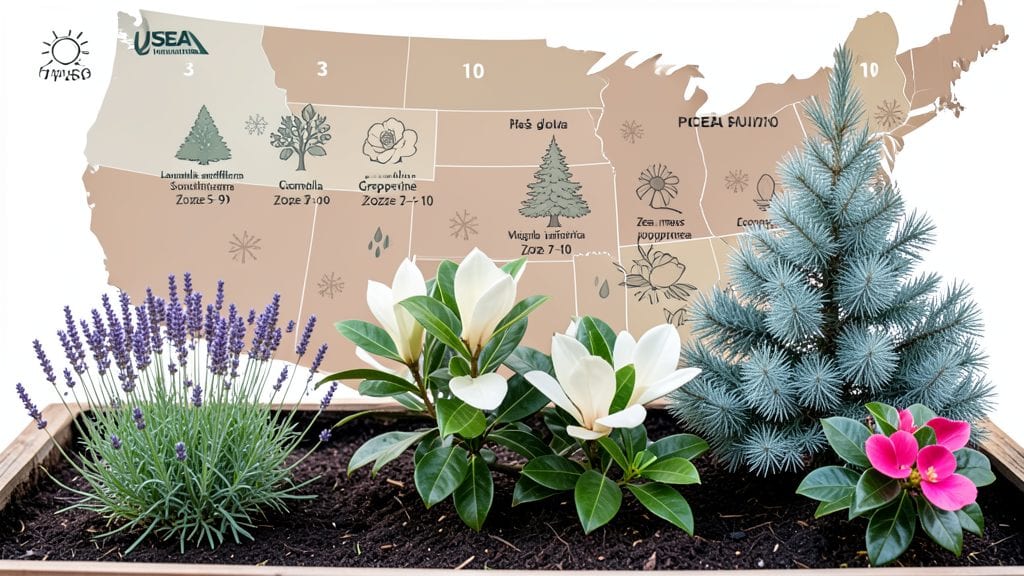
Climate zones for gardening categorize regions by temperature, frost dates, and rainfall to determine which plants thrive in your area. Use the USDA Hardiness Zone Map or Köppen climate classification to select cold-hardy, drought-resistant, or tropical species that match your local conditions.
Understanding your gardening climate zone is like having a cheat sheet for plant success—it tells you which species can handle your area's extremes. 🌱 The USDA system, for example, divides the U.S. into 13 zones based on average minimum winter temperatures, while Köppen's approach considers precipitation patterns too.
This isn't just about cold tolerance; it's about matching plants to your region's natural rhythms, from frost-free days to summer heat spikes. For instance, a Zone 5 garden might struggle with citrus trees, while Zone 9's Mediterranean climate thrives with drought-resistant lavender.
What makes this especially useful is how microclimates—like a sunny south-facing wall or a shady woodland edge—can create pockets where plants from different zones might actually grow.
I always recommend starting with your hardiness zone number (find it via the USDA's interactive map), then adjusting for local conditions like elevation or urban heat islands.
The key is balancing science with real-world observation: your neighbor's thriving tomato plants might just be growing in a microclimate your yard can't replicate!
💡 In This Article
- How USDA Hardiness Zones Define Plant Survival
- Best Plants for Each Major Gardening Climate Zone
How USDA hardiness Zones define plant survival
The USDA Hardiness Zone Map divides North America into 13 zones based on the average annual minimum temperature—the coldest temperature plants are likely to experience in a given area.
Each zone represents a 10°F range, with Zone 1 enduring temperatures as low as -60°F (Alaska's interior) and Zone 13 facing no frost (above 70°F in Florida's Keys). This system helps gardeners identify which plants can survive winter's harshest conditions without protection.
For example, a Zone 5 garden (like Chicago) can safely grow cold-hardy perennials like coneflowers, while Zone 10 (Southern California) supports frost-sensitive citrus year-round.
Frost-free days are equally critical—they determine the growing season's length. The USDA estimates these by calculating the last spring frost and first fall frost, which vary dramatically: 120+ days in Zone 9 versus 60 days in Zone 3.
This affects everything from planting schedules to crop selection. For instance, tomatoes need at least 90 frost-free days to mature, making them a poor choice for Zone 4 gardens unless grown in containers that can be moved indoors.
The map also accounts for microclimates, like urban heat islands where pavement and buildings trap warmth, creating pockets that can be 2-5°F warmer than surrounding areas.
Microclimates can turn gardening rules on their head. A north-facing slope might mimic a higher zone number (cooler), while a south-facing wall could push conditions into a lower zone number (warmer). This is why I always recommend testing soil temperatures with a thermometer before committing to zone-based plant lists.
For example, a Zone 6 garden might successfully grow Zone 7 plants near a brick wall, while a shady spot could struggle with Zone 5 species. The USDA acknowledges this variability by noting that zones are general guidelines, not absolute rules.
While the USDA system focuses on temperature, the Köppen climate classification adds precipitation patterns to the equation, dividing regions into categories like tropical, arid, and temperate.
This is especially useful for global gardening: a Zone 10 garden in Hawaii might face year-round humidity and require moisture-loving plants, while a Zone 10 garden in Southern California could be drought-prone.
Together, these systems help gardeners move beyond zone numbers to consider rainfall, humidity, and wind exposure—factors that can make or break a plant's success. The takeaway? Start with your zone, then observe your local conditions like a detective.
Here's what most gardeners overlook: plant acclimation. Some species, like Russian sage, can tolerate 20°F colder than their zone rating suggests if given time to harden off. Others, like tender perennials, may survive brief dips below their zone's minimum if mulched heavily.
The USDA's interactive map now includes 1/2-zone increments (e.g., Zone 6b) to account for these nuances. For precision, I recommend pairing the USDA map with your local Cooperative Extension Service for hyper-local insights.
For global gardeners, the Royal Horticultural Society (RHS) Hardiness Ratings offer a useful alternative, using H1-H10 scales where H10 represents tropical plants (no frost) and H1 handles -25°F. This system aligns closely with USDA zones but adds UK-specific climate factors, like marine influences that moderate temperatures.
Whether you're in Zone 3 or Zone 11, the core principle remains: match plants to your area's long-term averages, not just the extremes you've personally experienced.
Pro tip: Use the USDA map to narrow your plant choices, then experiment with microclimate adjustments—like choosing a sheltered spot for frost-sensitive plants. Over time, you'll build a personalized plant hardiness profile that accounts for your yard's unique quirks. 🌿