Blooming
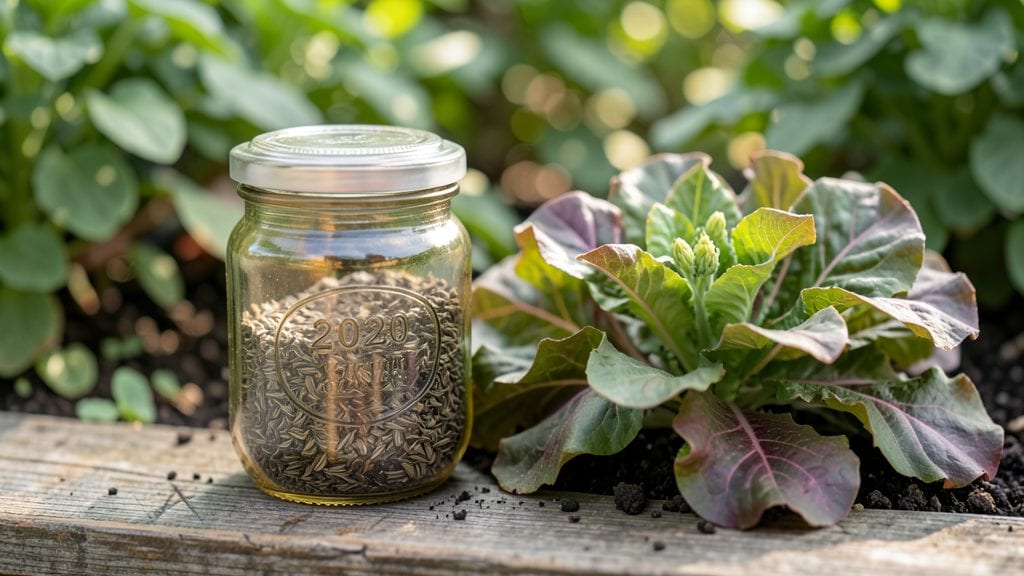
Seed viability depends on more than just time—environmental factors play a huge role.
For example, seeds stored in humid conditions or exposed to temperature fluctuations degrade much faster, while those kept in cool, dry places (like a refrigerator) can last nearly twice as long. 🌱 I’ve seen heirloom tomato seeds remain viable for up to 6 years when stored properly, proving that patience and the right conditions pay off in the garden.
Even with ideal storage, germination rates drop gradually. After 3 years, you might see only 50% of seeds sprouting, and by year 5, many types will struggle to break dormancy.
Testing a few seeds before planting helps avoid wasted effort—simply place them between damp paper towels for a week to check viability.
💡 In This Article
- Seed Viability Factors by Plant Family
- Optimal Seed Storage Conditions for Longevity
Seed viability factors by plant family
Seed longevity varies dramatically between plant families due to their natural biological adaptations. For instance, Brassicaceae family seeds (like cabbage or broccoli) typically last 3-4 years, thanks to their thick seed coats that resist moisture damage.
In contrast, Allium family seeds (onions, garlic, leeks) degrade rapidly—often losing viability within 1-2 years—because their outer layers are more delicate and prone to drying out. 🌱 The key difference lies in their natural dormancy mechanisms: some seeds enter deep dormancy to survive harsh conditions, while others remain metabolically active and age faster.
Temperature plays a critical role in these timelines. Seeds stored at 32-41°F (like in a refrigerator) can last 2-3 times longer than those kept at room temperature. For example, tomato seeds (Solanaceae family) maintain 80% viability after 4 years at cool temps, but drop to just 30% at room temperature.
Oxygen exposure accelerates aging—seeds in airtight containers lose only 10% viability per year, while those in permeable bags degrade 30% faster. This is why vacuum-sealed packets from seed companies last decades.
Moisture is the silent killer—even 5% humidity exposure can reduce seed life by 50% in sensitive varieties like lettuce (Asteraceae). The seed's natural moisture content (typically 5-15%) acts as a preservative, but exceeding 10% moisture triggers fungal growth that destroys embryos.
This is why desert-adapted seeds (like chili peppers) last longer—they've evolved to survive extreme dryness, often maintaining viability for 5+ years even under less-than-ideal storage.
Dormancy strategies create another layer of complexity. Some seeds (like beets) require cold stratification to break dormancy, which can actually extend their usable life by preserving metabolic activity. Others (like corn) have short natural dormancy and must be planted within 1 year or risk losing viability.
The science here involves abscisic acid levels—higher concentrations in dormant seeds slow aging processes. 💫 This is why seed companies often recommend planting "fresh" seeds first, as older batches may require special treatments to germinate.
Consider these real-world examples:
- Leafy greens (lettuce, spinach): 1-2 years max due to thin seed coats and high moisture sensitivity
- Legumes (beans, peas): 3-4 years thanks to nitrogen-rich seed coats that resist decay
- Root vegetables (carrots, parsnips): 2-3 years with proper storage in cool, dark conditions
- Herbs (basil, cilantro): 1 year or less—their tiny seeds have minimal protective layers
What most gardeners overlook is how light exposure affects viability. While darkness preserves seeds, even indirect light can trigger premature germination or oxidation. This is why opaque, airtight containers (like glass jars with rubber seals) outperform paper envelopes for long-term storage. The combination of darkness, low oxygen, and stable temperature creates the perfect "time capsule" environment for seeds. 🌟
The bottom line? Seed viability isn't just about years—it's about the interaction between biology, storage science, and environmental conditions. Understanding these factors lets you push the limits of what's possible, turning a simple packet of seeds into a decade-long investment in your garden's future.