Landscaping
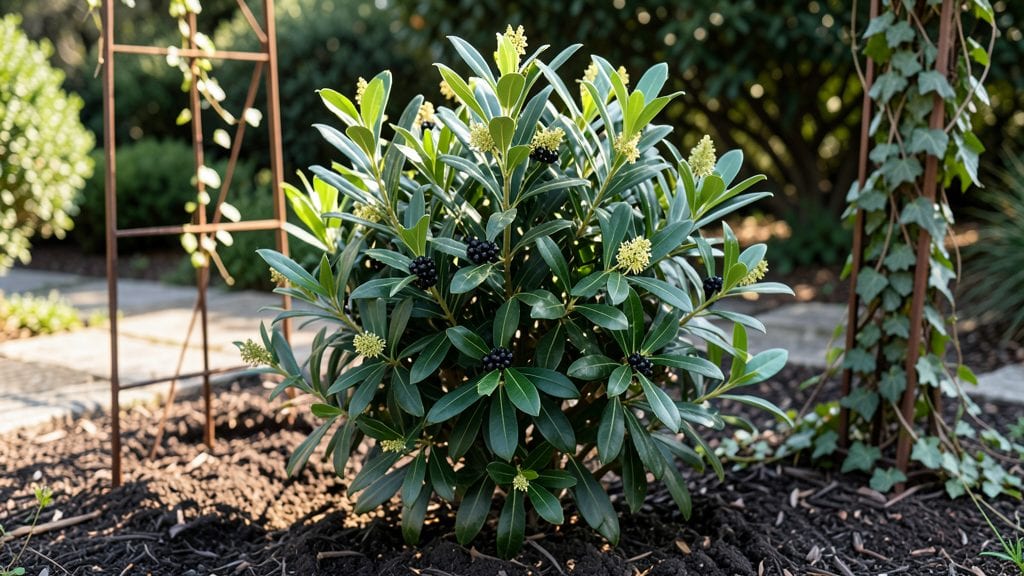
Laurel's garden design transforms any yard into a lush, fragrant fortress that works as hard as it looks. ✨ I stumbled onto this Mediterranean-inspired layout after struggling with flimsy privacy screens that fell apart in winter—until I planted a structured laurel hedge.
The deep green leaves provide year-round cover, while the subtle wood-like aroma creates a calming atmosphere that no chain-link fence ever could.
The magic lies in how versatile laurel is—whether you want a formal hedge, a mixed border, or a single statement plant. For hedges, space plants 2-3 feet apart and prune twice yearly to maintain shape.
Laurel thrives in full sun to partial shade and handles most soil types, though it prefers well-draining conditions. Pair it with lavender for color contrast or rosemary for additional fragrance, and you’ve got a low-maintenance, high-impact design that keeps neighbors guessing how you did it.
What you’ll end up with is a garden that feels like a retreat, not just a yard. The glossy leaves create a natural sound barrier, while the evergreen structure gives your space definition in every season.
Even in winter, when other plants go dormant, your laurel stays vibrant and full. The best part? It’s a one-time investment that pays off for decades—no seasonal replacements needed.
Works equally well for urban backyards, rural properties, or even large containers on patios. Whether you’re masking a noisy street or adding structure to a wildflower meadow, laurel delivers elegance without the fuss. Ready to design your own fragrant privacy screen?
📚 In This Guide
- What you need
- Instructions
- Tips and common mistakes
- Wrapping up and next steps
What you need
- ● Laurel plants: 10–20 Prunus laurocerasus (Cherry Laurel) or Viburnum tinus (Laurel Viburnum) saplings (depending on desired height and density).
- ● Mulch (3–4 bags of pine bark or cypress mulch) to retain moisture and suppress weeds.
- ● Natural wood elements: 6–10 cedar or redwood fence panels (6 ft tall x 8 ft wide, pressure-treated for longevity).
- ● 2–4 wooden trellises or arbors (4 ft x 4 ft, stained in natural tones).
- ● 1–2 wooden lattice screens (custom-cut to fill gaps between plants).
- ● Soil & amendments: 50 lbs compost or well-rotted manure to enrich planting areas.
- ● 10 lbs slow-release fertilizer (10-10-10 or organic options like fish emulsion).
- ● Essential tools: Shovel & spade (for digging and transplanting).
- ● Pruners (bypass pruners for clean cuts).
- ● Wheelbarrow (for hauling soil/mulch).
- ● Measuring tape & string (to mark plant spacing).
- ● Post-hole digger (if installing wooden posts for trellises).
- ○ Optional (but helpful) tools: Staple gun & landscape staples (for securing lattice screens).
- ● Drill & deck screws (for assembling trellises).
- ● Hose with nozzle (for watering).
- ● Garden gloves & knee pads (for comfort).
- ● Site preparation: Clear the area of weeds, rocks, or debris (use a landscaping fabric if needed).
- ● Test soil pH (ideal: 6.0–7.0 for laurels; amend with lime or sulfur if necessary).
- ● Permits & planning: Check local regulations for height restrictions on privacy screens (laurels can grow 15–25 ft tall!).
- ● Sketch a rough layout (consider mature plant sizes and sun exposure).
- ● Timing: Plant laurels in early spring or fall for best root establishment.
Step-by-step instructions for laurel's garden design
Create a lush, private retreat using natural wood and evergreen plants that thrive year-round.
🌱 Step 1: Plan Your Layout for Privacy and Flow
Start by sketching your space on paper, marking key features like windows, doors, and walkways. Laurel's design thrives on layered planting—place taller evergreens like arborvitae or thuja along the perimeter, then fill gaps with medium-height shrubs like boxwood or holly. I always leave a 3-foot walkway between plantings for easy maintenance and access.
Consider sunlight patterns: most evergreens prefer 6+ hours of sun daily, but some like rhododendrons tolerate partial shade. Place sun-loving plants on the south or west sides of your design, while shade-tolerant varieties go on the north or east. This ensures every plant gets the right conditions to thrive year-round.
🪴 Step 2: Prepare the Soil for Drainage and Nutrients
Laurel's garden design relies on well-draining soil to prevent root rot, especially important for evergreens. Mix 2 inches of compost into the top 6 inches of native soil to improve fertility without compacting the mix. For clay-heavy soil, add 1 part sand to 3 parts soil to create a looser texture that roots can penetrate easily.
Test your soil's pH—most evergreens prefer acidic soil (pH 5.0-6.5). If your soil tests alkaline, amend it with sulfur or peat moss before planting. I like to spread a 2-inch layer of wood chips over the amended soil to retain moisture and suppress weeds naturally.
☀️ Step 3: Plant Evergreens for Structure and Foliage
Begin with your tallest plants—arborvitae or thuja—spacing them 4-6 feet apart along the perimeter. These will form your privacy screen's backbone. Dig holes twice as wide as the root ball but no deeper, then place each plant so the top of the root ball sits 1 inch above ground level. This prevents water from pooling around the stem.
Fill gaps with medium-height shrubs like boxwood or holly, spacing them 2-3 feet apart. For ground cover, add creeping juniper or ivy to fill the space between plants. Water deeply after planting to settle the soil around roots, then mulch with 3 inches of wood chips, keeping it 6 inches away from plant stems to avoid rot.
✂️ Step 4: Prune and Shape for Elegance
Prune new growth back by one-third in early spring to encourage bushier, denser foliage. Use sharp pruners to make clean cuts just above a leaf node or bud. For formal shapes, trim boxwood or holly into geometric forms, while leaving arborvitae or thuja in their natural, rounded shapes for a softer look.
Shape plants gradually—never remove more than 25% of the foliage in one season. I prune mine in three stages: first in late winter to remove dead wood, again in early spring for shaping, and lightly in summer to maintain form. This keeps plants healthy and encourages new growth.
💧 Step 5: Maintain Year-Round Health
Water deeply once a week during the first growing season, then taper to every 2-3 weeks once established, depending on rainfall. Evergreens store water in their needles, so they’re drought-tolerant once mature. You’ll know they need water when the soil feels dry 2 inches below the surface.
Fertilize in early spring with a slow-release, acid-loving plant fertilizer to support new growth. I avoid heavy mulch layers in summer—they can suffocate roots and retain too much moisture. Instead, top-dress with a 1-inch layer of compost annually to feed the soil naturally.
Tips & tricks for perfect laurel's garden design
Creating a stunning year-round privacy garden isn't just about planting—it's about smart planning and maintenance that keeps everything thriving. Here are my go-to tips for bringing Laurel's design to life with confidence.
Layering Like a Pro: The secret to Laurel's signature layered look is starting with your tallest plants first. I always place arborvitae or thuja along property lines or fences, then work my way inward with boxwood or holly. Pro tip: Use a garden flag or stakes to mark planting locations before digging—this prevents overcrowding and ensures that 3-foot walkway stays clear for maintenance.
Soil Prep Shortcuts: Testing your soil's pH is non-negotiable for evergreens, but if you don't have test kits, here's my trick: Grow blueberries in a pot nearby. If they thrive, your soil is acidic enough (pH 5.0-6.5). For clay soil, I mix in 1 part sand to 3 parts soil and let it sit for a week before planting—this breaks up compaction naturally without needing heavy machinery.
Planting Precision: When digging holes for your evergreens, make them twice as wide as the root ball but never deeper. I use a tape measure to ensure the top of the root ball sits 1 inch above ground level—this prevents stem rot from water pooling. For large plantings, I rent a post-hole digger to save my back and get perfectly sized holes every time.
Year-Round Care Calendar: Mark your calendar for these key dates: early spring for pruning and fertilizing, late winter for removing dead wood, and summer for light maintenance pruning. I set phone reminders for these tasks so I never miss them. For watering, stick to the 2-inch soil dry test—evergreens are tough once established, but young plants need consistent moisture during their first growing season.
Pro Tips for Laurel'S Garden Design
- Creating a stunning year-round privacy garden isn't just about planting—it's about smart planning and maintenance that keeps everything thriving.
- Layering Like a Pro: The secret to Laurel's signature layered look is starting with your tallest plants first.
- Soil Prep Shortcuts: Testing your soil's pH is non-negotiable for evergreens, but if you don't have test kits, here's my trick: Grow blueberries in a pot nearby.
Frequently asked questions
Got questions about creating a stunning, year-round privacy screen with Laurel’s Garden Design? We’ve got answers! Here are some of the most common inquiries from homeowners looking to elevate their outdoor spaces with natural wood elegance.
What’s the best time of year to install a laurel hedge for privacy?
For optimal growth, plant laurel hedges in early spring or fall when temperatures are mild. This gives roots time to establish before extreme heat or cold. Avoid winter planting—frost can stress young plants. If you’re in a warmer climate, late fall works too!
How much maintenance does a laurel hedge require?
Laurel hedges are low-maintenance but need regular pruning (2-3 times a year) to maintain shape and density. Trim after flowering (spring/summer) to encourage bushiness. Water deeply once a week for the first year, then reduce as roots establish. Pro tip: Mulch around the base to retain moisture!
Can I use laurel for a tall privacy screen, or are there better alternatives?
Laurel grows 10–20 feet tall with proper care, making it ideal for tall screens. For faster results, opt for ‘Rotundifolia’ or ‘Angustifolia’ varieties. If you prefer quicker privacy, combine laurel with bamboo or evergreen shrubs for a layered look.
Will laurel hedges block noise and wind effectively?
Yes! A dense laurel hedge (especially when 3–4 feet wide) acts as a natural sound barrier, reducing noise by up to 50%. For windbreaks, plant in a tight, staggered formation with other wind-resistant plants like privet or arborvitae for extra protection.
How do I troubleshoot yellowing leaves on my laurel hedge?
Yellowing leaves often signal overwatering, nutrient deficiency, or fungal issues. Check soil drainage—laurel prefers well-draining soil. If leaves feel mushy, reduce watering. For nutrient issues, fertilize with acidic, slow-release fertilizer in early spring. Fungal spots? Prune affected areas and apply fungicide.
Are there deer-resistant laurel varieties?
While deer may nibble young laurel, ‘Skimmia japonica’ or ‘Pieris’ varieties are less appealing. To deter deer, plant near deer-resistant shrubs (e.g., boxwood or holly) or use natural repellents like soapy water sprays. A physical barrier (like fencing) also helps!
Wrapping up and next steps
Transforming your outdoor space with Laurel’s Garden Design isn’t just about privacy—it’s about crafting a serene, year-round retreat that blends natural beauty with timeless elegance.
By combining evergreen laurels, rustic wood accents, and thoughtful layering, you’ve got everything you need to create a lush, functional sanctuary that thrives in every season. 🌿✨
Ready to bring your vision to life? Start by sketching a rough layout, sourcing your materials, and taking the first step—whether it’s planting a single laurel or building a wooden trellis. Your dream garden awaits!