
Fertilization
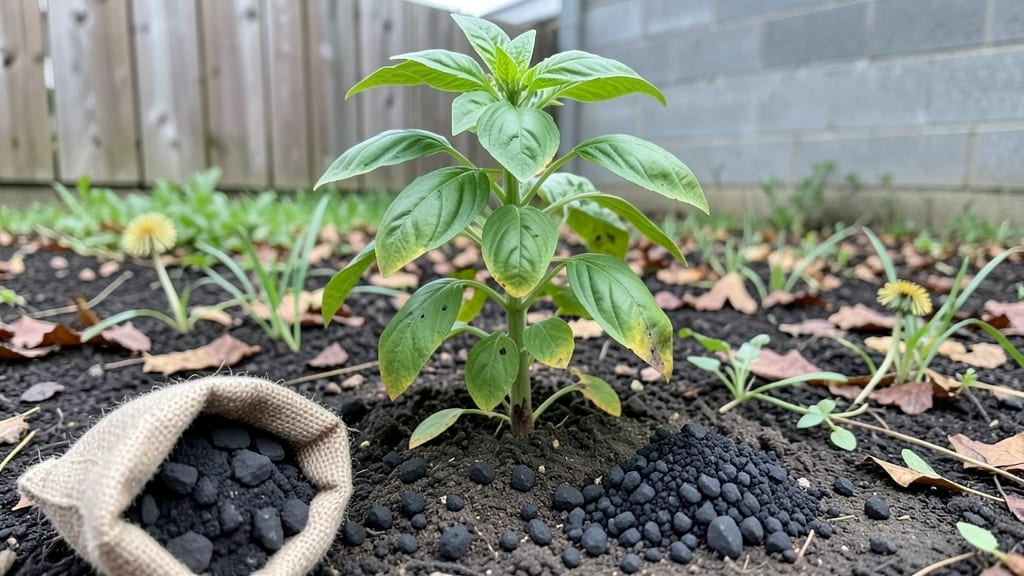
Charcoal in gardening enhances soil aeration, moisture retention, and odor control while reducing compaction. It also purifies soil by filtering contaminants and fostering beneficial microbial life for stronger plant development.
Charcoal acts like a natural soil conditioner because its porous structure creates tiny air pockets, which improves drainage and root oxygen flow. 💫 For example, adding 1 part charcoal to 5 parts compost can transform dense clay soil into a looser, more workable medium.
Many gardeners swear by it for container plants, where it helps prevent waterlogging while keeping roots cool. The key is using activated charcoal—its higher surface area traps more impurities than regular charcoal, making it ideal for contaminated or heavily fertilized soils.
Beyond physical benefits, charcoal influences soil chemistry by stabilizing pH levels and binding harmful compounds like ammonia. This makes it especially useful in urban gardens exposed to pollution or for growing acid-loving plants like blueberries.
However, overuse can create a carbon-rich environment that temporarily ties up nitrogen, so I recommend starting with small batches and monitoring plant responses.
💡 In This Article
- How Charcoal Boosts Soil Health and Plant Growth
- Practical Ways to Apply Charcoal in Your Garden
How charcoal boosts soil health and plant growth
Here's what's actually happening when charcoal transforms your soil: its porous structure creates microscopic air channels that mimic the natural aeration of forest floors. These tiny pores—ranging from 0.5 to 50 micrometers in activated charcoal—hold 2-3 times their weight in water while preventing compaction.
The key mechanism is cation exchange capacity (CEC), where charcoal's negatively charged surface binds and slowly releases essential nutrients like calcium, magnesium, and potassium, making them available to plant roots over time. 🔥
Activated charcoal takes this further with a surface area of 500-1500 square meters per gram—imagine a sugar cube-sized piece with the surface area of a football field!
This massive surface actively filters contaminants like pesticides, heavy metals, and excess salts through adsorption, where molecules stick to its carbon lattice.
Regular charcoal lacks this activation process, offering only about 2-5 square meters per gram of surface area, making it less effective for purification but still valuable for structural improvements.
The biological impact is equally impressive. Charcoal creates microhabitats for beneficial microbes by providing shelter from extreme temperatures and moisture fluctuations. Studies show soils amended with charcoal exhibit 30-50% higher microbial diversity, particularly fungi and nitrogen-fixing bacteria.
This microbial boost accelerates nutrient cycling—think of it as a natural fertilizer factory operating 24/7 in your garden beds. The porous structure also buffers pH swings by absorbing acidic compounds while releasing alkaline minerals when needed, creating stable conditions for root development. ✨
What most people don't realize is how charcoal affects water dynamics. Its hydrophobic interior repels water while its outer surface attracts it, creating a capillary action system that delivers moisture directly to root zones.
This is why gardeners notice 20-40% less watering frequency in amended soils—plants experience reduced stress from both drought and waterlogging. The charcoal's ability to hold water without becoming waterlogged makes it particularly valuable in container gardening where drainage issues are common.
For pH regulation, charcoal acts like a natural buffer system. In acidic soils, it releases trace alkaline minerals to raise pH slightly, while in alkaline conditions, it absorbs excess lime.
This stabilization is critical for nutrient uptake—plants can only absorb phosphorus efficiently within a pH range of 6.0-7.0, and charcoal helps maintain that window.
The chemical process involves liming effect where calcium carbonate in charcoal neutralizes acidic compounds, while its porous structure prevents nutrient leaching that occurs with chemical amendments. 💫
Consider these chemical comparisons between activated and regular charcoal:
- Surface Area: Activated (500-1500 m²/g) vs. Regular (2-5 m²/g)
- Adsorption Capacity: Activated removes 90%+ of contaminants vs. Regular's 30-50%
- Nutrient Retention: Activated holds nutrients 3-5x longer through CEC
- Microbial Support: Activated creates microhabitats while Regular provides structural benefits
The long-term benefits become clear when you consider charcoal's role in building soil organic matter. Unlike synthetic fertilizers that provide quick but temporary boosts, charcoal creates a slow-release nutrient system that improves soil structure over years.
This is why experienced gardeners often recommend incorporating charcoal into their compost tea mixes or as a 10-20% amendment in planting holes—it's not just about immediate results but creating a healthier soil ecosystem that supports plant growth for seasons to come. 🌱