
Pests
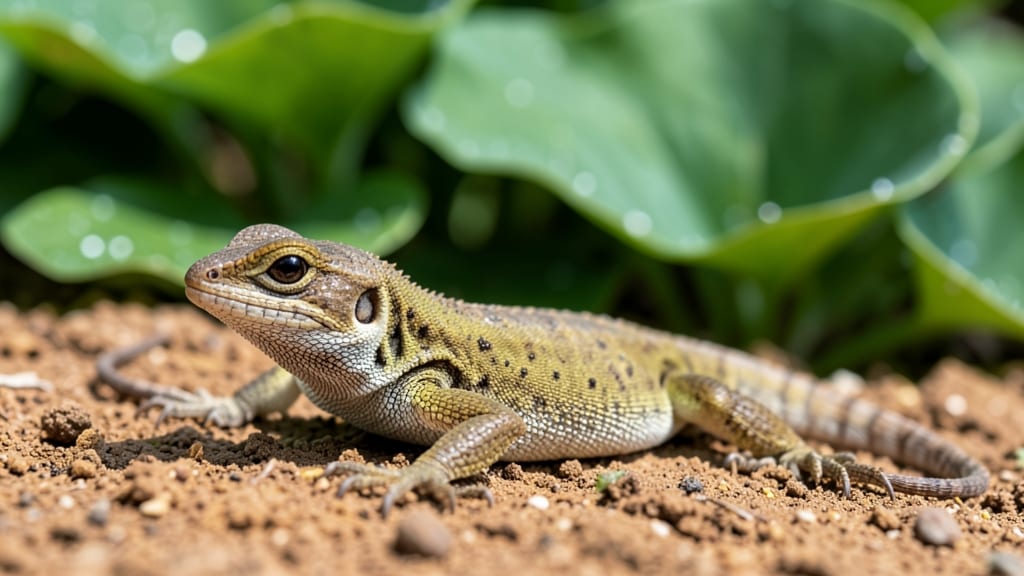
Spotting common garden lizards means looking for slender, greenish-brown reptiles with long tails that dart near sunny garden edges, rock piles, or leaf litter while hunting insects like flies and ants.
These small reptiles thrive in warm, sheltered spots where they can bask and hunt. 🌿 Unlike snakes, they have movable eyelids and external ear openings, which help distinguish them from other garden creatures.
Many gardeners welcome them as natural pest controllers, especially since they feast on aphids, spiders, and even small caterpillars. Their quick movements make them hard to catch, but their presence often signals a healthy garden ecosystem.
If you're trying to attract them, focus on creating microhabitats with flat rocks for sunbathing and dense ground cover for shelter. Avoid chemical pesticides, as these can harm both the lizards and their insect prey. 💫
💡 In This Article
- Physical Traits of Garden Lizards: Scales, Size, and Color Variations
- Best Garden Spots to Spot Common Lizards and Support Their Habitat
Physical traits of garden lizards: scales, size, and color variations
The most common garden lizards, like the Eastern fence lizard or common wall lizard, typically measure between 2 to 6 inches in length from snout to tail tip. Their bodies are built for agility, with slender frames and long, whip-like tails that make up more than half their total length.
These tails aren't just for balance—they're a survival tool, capable of detaching when grabbed by predators, a process called autotomy that allows the lizard to escape and later regrow the tail (though it may be slightly shorter or differently colored). 🔥
Their scales are a marvel of evolutionary adaptation, featuring overlapping, keeled (ridged) scales that create a textured surface. The dorsal (back) scales are usually greenish-brown or grayish-brown, blending seamlessly with garden foliage, while their undersides are pale yellow or white, providing camouflage when they flatten against the ground.
Male lizards often develop distinctive dorsal crests during breeding season, which can appear as spiky ridges along their backs, adding up to 1/4 inch in height. These crests aren't just for show—they help males establish dominance during territorial disputes.
Coloration plays a crucial role in their survival, with variations depending on the region and season. In cooler climates, these lizards tend to be darker brown or gray to absorb more heat, while in warmer southern gardens, they often display brighter greenish or olive tones to blend with vegetation.
Some species even change color slightly over time—a process called seasonal melanism—where they darken in winter to retain heat and lighten in summer to reflect sunlight. This adaptability helps them thrive in gardens across North America, from New England's rocky outcrops to Texas's sunbaked landscapes. 💫
One fascinating detail is how their eye structure aids in hunting. Garden lizards have moved upper and lower eyelids (unlike snakes, which have a protective scale over their eyes) and nictitating membranes, a clear inner eyelid that protects their eyes while they're active.
Their eyes are positioned on the sides of their heads, giving them a 340-degree field of vision—perfect for spotting insects like ants or flies while remaining hidden among leaves.
This wide vision comes at a trade-off, however; their depth perception isn't as sharp as ours, which is why they rely more on quick movements than precise strikes.
Size also varies by species and sex. Females are generally smaller (2-4 inches) than males (4-6 inches), a trait that helps reduce competition for food and space.
The largest common garden lizard, the five-lined skink, can reach 8 inches when fully grown, though most stay within the 2-6 inch range.
Their compact size allows them to navigate tight spaces in gardens, like the gaps between mulch and soil or the crevices in wooden fence posts, where they hunt for insects and avoid predators like birds or cats. 🌟
What most people don't realize is how their scale patterns serve as a form of individual identification. Each lizard's scales have unique markings—like faint stripes, spots, or irregular patterns—that can help distinguish one from another, much like human fingerprints.
These variations aren't just random; they're influenced by genetics and environmental factors like sunlight exposure and diet. For example, lizards in shadier garden areas may develop darker, more mottled scales to absorb limited light, while those in sunny spots retain brighter, more uniform colors.
This adaptability is why you might see two lizards in the same garden with noticeably different appearances.