
Watering
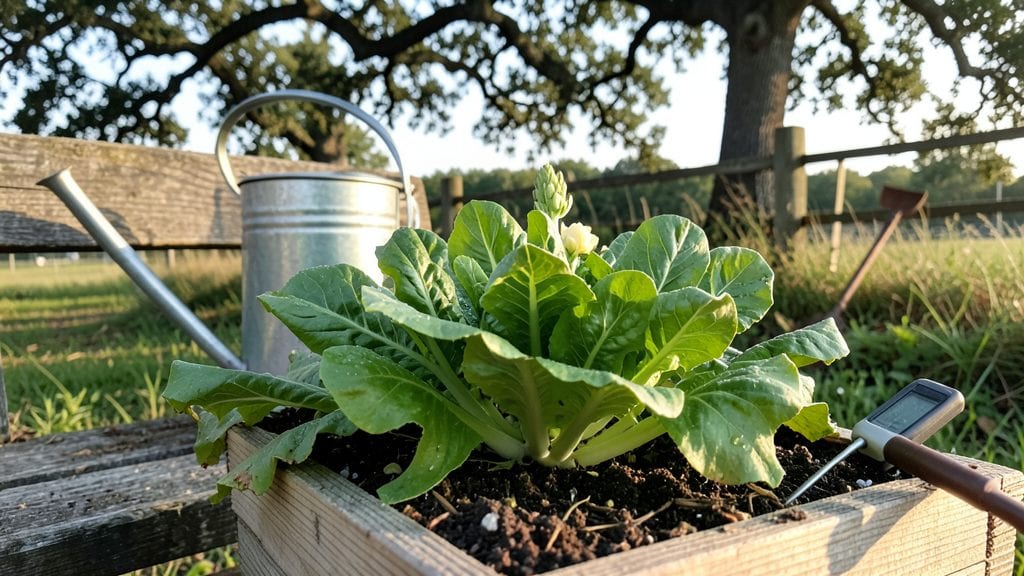
You rarely need to water your garden every day unless facing extreme heat or sandy soil; most plants do best with 1-1.5 inches of water weekly, tailored to soil type and plant needs to avoid over- or under-watering.
Daily watering can actually harm your plants by drowning roots or encouraging shallow growth.
Instead, focus on deep, infrequent watering that reaches 6 inches down—this encourages stronger root systems. 💧 The key is matching your watering routine to your garden's specific conditions, whether that's clay soil that holds moisture for days or sandy soil that drains within hours.
I've found that morning watering minimizes evaporation and fungal risks, while mulching helps retain that precious moisture between sessions.
Different plants have wildly different needs—succulents and lavender thrive on neglect, while tomatoes and peppers demand consistent moisture. Seasonal shifts matter too: summer heat may require twice-weekly watering, while cooler months often need less.
A simple soil probe or moisture meter can save you from guesswork and keep your garden healthy without wasting water.
💡 In This Article
- How Soil Type Affects Garden Watering Needs
- Plant-Specific Watering Schedules for Common Garden Types
How soil type affects garden watering needs
Soil isn't just dirt—it's a complex ecosystem where particle size and composition determine how water behaves. Clay soil, made of tiny, tightly packed particles, holds moisture like a sponge but drains poorly, creating waterlogged conditions that suffocate roots. Sandy soil, with its coarse, gritty texture, drains almost instantly, forcing plants to drink constantly or risk dehydration.
Meanwhile, loamy soil, the gardener's gold standard, balances water retention and drainage perfectly, holding moisture while allowing excess to escape. Peat-based soils add another layer, retaining water for days but risking compaction if overworked.
The science behind this lies in porosity and capillary action. Clay's dense structure creates tiny air pockets that trap water, while sand's large gaps let it slip away. Loam's ideal mix of silt, sand, and clay gives roots easy access to both water and oxygen.
Here's the kicker: 1 inch of water can penetrate 3-6 inches deep in loamy soil but only 1-2 inches in sand, requiring more frequent watering. 💧 A simple jar test reveals your soil's secrets—fill a jar with moist soil, shake it with water, and watch how quickly the water drains (fast = sandy; slow = clay).
Root health hinges on this balance. Overwatering in clay soil leads to anaerobic conditions, where roots suffocate from lack of oxygen, turning leaves yellow. Underwatering in sandy soil causes roots to dry out and retreat near the surface, making plants vulnerable to wind and heat.
The solution? Deep watering—aim for 6-12 inches down—to encourage roots to grow deeper, where moisture lasts longer. Mulching with 2-4 inches of organic matter (like wood chips) further regulates moisture by slowing evaporation and improving soil structure over time.
Seasonal shifts amplify these effects. In summer, sandy soil may need watering every 2-3 days to prevent wilting, while clay soil might only require once a week due to its water-holding capacity.
Winter slows drainage in all soils, so reduce watering by 30-50% unless your region experiences freeze-thaw cycles that disrupt soil structure. A moisture meter (or even a screwdriver) can reveal the truth: if the soil feels damp 2 inches down, hold off watering.
If it's bone-dry, it's time to hydrate.
Don't overlook the role of organic matter. Amending clay with compost or sand improves drainage, while adding peat moss or coconut coir to sandy soil boosts water retention.
The goal is 60% porosity—a mix that holds water like a well-designed sponge, not a leaky bucket or a waterlogged swamp. 🌱 This balance isn't just about survival; it's about thriving.
Plants in well-amended soil grow stronger, resist pests better, and produce more abundant blooms or harvests because their roots access the perfect moisture level consistently.
Here's a quick reference for your soil type:
- Clay: Water deeply once a week; test with a screwdriver—if it's hard to push past 1 inch, you're overwatering
- Sandy: Water lightly every 2-3 days; if the top 1 inch feels dry, it's time
- Loamy: Water 1-1.5 inches weekly; roots should stay moist but not soggy
- Peat/Organic: Water 2-3 times weekly in summer; reduce in winter to avoid compaction