
Companion Plants
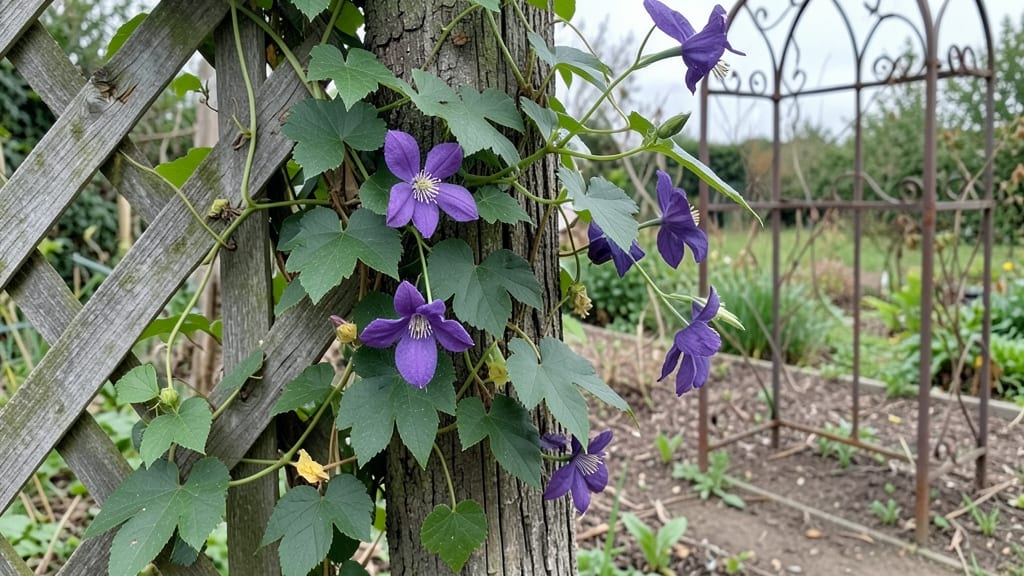
Climbing plants turn walls into lush green backdrops and transform small spaces into vibrant gardens. 🌿 I spent years watching vines struggle against flimsy supports before realizing the right structure makes all the difference—whether you're growing roses, clematis, or even pole beans.
The key is matching the plant's growth habit to a sturdy, well-placed frame that won't sag or rot under weight.
You don't need fancy materials to get started—simple wood trellises, metal obelisks, or even bamboo stakes work beautifully for most climbers. For modern gardens, powder-coated steel or composite wood lasts years without maintenance, while rustic cottagers love weathered cedar or wrought iron.
The best part? These structures save space by training plants upward, giving you more room for seating or additional plantings below.
Imagine your clematis blooming at eye level along an arbor or your morning glories spilling over a pergola in vibrant waves. With the right setup, you'll create vertical layers that catch sunlight differently, extend your growing season, and add architectural interest.
The payoff comes in both beauty and function—more plants in less space, with less work to keep them contained.
From urban balconies to country cottages, these structures adapt to any garden style. We'll cover placement tricks, plant pairings, and how to choose materials that match your climate. Let's build something that grows with your plants—and your garden dreams.
📚 In This Guide
- What you need
- Instructions
- Tips and common mistakes
- Wrapping up and next steps
What you need
- ● Base Structure: Wooden posts (4x4 or 6x6 inches, 2–4 pieces, treated for outdoor use)
- ● Metal or plastic pipes (2–4 inches diameter, 2–4 sections, 6–8 feet long)
- ● Concrete footings (4–8 bags, quick-setting mix) or heavy-duty stakes
- ● Climbing Framework: Horizontal slats or lattice panels (1–2 sheets, 4x8 feet, 1–2 inches spacing)
- ● Twine, jute rope, or metal mesh (1–2 rolls, for trellis weaving)
- ● Galvanized screws/nails (50–100 pieces, 2–3 inches long)
- ● Tools: Measuring tape, pencil, and level
- ● Drill/driver + bits
- ● Hammer or nail gun
- ● Safety gloves and goggles
- ● Paint/stain (weather-resistant, 1–2 gallons) for a polished look
- ● Plant ties or Velcro strips (10–20 pieces) to secure vines
- ● Automatic watering system (drip irrigation kit) for low-maintenance growth
- ● Pre-made trellises or arbors (if skipping DIY)
Step-by-Step guide to building functional garden structures for climbing plants
Turn your compact yard into a lush vertical garden with these sturdy, purpose-built supports.
🪴 Step 1: Choose the Right Structure Type for Your Plant
Not all climbing plants need the same support. Vines like clematis or wisteria thrive on trellises with 4-6 foot heights and wide crossbars for twining stems, while fast-growing varieties like morning glories need stronger obelisks or A-frame structures that can handle rapid growth. I always match the structure to the plant’s mature size—nothing worse than watching a vigorous runner strangle a flimsy support.
For compact spaces, opt for wall-mounted trellises or freestanding obelisks (3-4 feet tall). These maximize vertical growth without taking up valuable ground space. If you’re working with heavy climbers like grapes or kiwi, install metal or wooden arbors with sturdy cross-bracing to prevent collapse under weight.
☀️ Step 2: Select and Prepare the Location
Climbing plants need at least 6 hours of direct sun daily, but the exact placement depends on your plant. Sun-lovers like passionflowers should face south or west, while partial-shade varieties (e.g., clematis) can thrive in east-facing spots with dappled light. Avoid deep shade—even vigorous climbers will grow leggy and weak without sufficient light.
Check soil drainage before installing. Most climbing plants hate soggy roots, so amend heavy soil with 2-3 inches of compost or install French drains if water pools. If mounting to a fence or wall, ensure the surface is clean and stable—peeling paint or rotten wood will fail under a plant’s weight. I always use L-brackets or heavy-duty screws for wall-mounted structures.
🌱 Step 3: Assemble the Structure with Stability in Mind
Follow manufacturer instructions for pre-made structures, but always reinforce joints with galvanized screws or metal brackets—especially for taller supports. For DIY trellises, use 2x4 lumber (pressure-treated for outdoor use) and staple 1-inch chicken wire or plastic mesh between vertical posts for twining plants. Space crossbars 12-18 inches apart to give vines purchase as they climb.
Bury freestanding structures at least 12 inches deep or anchor them with concrete footings to prevent toppling in wind. If using a wall-mounted trellis, pre-drill holes to avoid cracking masonry. I like to test stability by gently shaking the structure before planting—if it wobbles, reinforce it immediately.
💧 Step 4: Plant and Train Vines for Optimal Growth
Dig a hole twice as wide as the root ball but no deeper—planting too deep suffocates roots. For self-clinging plants (like ivy or Virginia creeper), attach them to the structure with soft ties or plant clips to guide growth. For twining vines (e.g., morning glories), gently coil stems around crossbars as they emerge—never force them, or you’ll snap tender new growth.
Water deeply after planting to settle roots, then maintain 1-2 inches of soil moisture for the first 4-6 weeks. Mulch with 2-3 inches of shredded bark to retain moisture and suppress weeds. Watch for new shoots—these are your signal to start weekly training sessions, gently weaving vines through the structure’s framework.
✂️ Step 5: Prune and Maintain for Long-Term Health
Prune annually in early spring to remove dead or crossing branches, which steal energy from the plant. For woody climbers (like roses), cut back overgrown stems by 1/3 to encourage bushier growth. For fast growers (like honeysuckle), trim new shoots to 12-18 inches to control sprawl and improve airflow—this prevents fungal diseases like powdery mildew.
Inspect structures seasonally for loose screws, rusted metal, or rotting wood. Replace damaged parts immediately—a broken trellis can crush vines and leave them vulnerable to pests. In winter, wrap tender climbers (like passionflowers) with burlap if temperatures drop below 20°F to protect from frost damage.
Tips & tricks for perfect garden structures for climbing plants
Building the right support system transforms your garden from flat to fabulous. Here's what I've learned to ensure your structures stand the test of time and thrive with your plants.
Structure Selection: In Step 1, when choosing between trellises, obelisks, or arbors, consider the plant's growth habit and mature size. For heavy climbers like grapes, I recommend metal arbors with cross-bracing—they handle weight better than wood alone. For lightweight vines like clematis, a 4-foot tall trellis with 12-inch spacing between crossbars gives them perfect climbing purchase without overpowering your space.
Location is Everything: The 6 hours of direct sun mentioned in Step 2 is non-negotiable for most climbing plants. I always check sun exposure patterns throughout the day—morning sun works for shade-tolerant varieties, while afternoon sun can scorch sun-lovers. If your yard has limited sun, opt for partial-shade plants like clematis and position them to catch dappled light from nearby trees.
Stability Secrets: When assembling in Step 3, I can't stress enough how critical that 12-inch burial depth is for freestanding structures. For wind-prone areas, add concrete footings or ground anchors—I've seen perfectly built trellises topple in storms because they weren't properly secured. Always test stability by gently shaking before planting, and reinforce any wobbly joints immediately.
Pruning Precision: The annual spring pruning in Step 5 requires a sharp eye. For woody climbers, I cut back overgrown stems by exactly 1/3 to maintain that perfect balance between airflow and foliage density. For fast growers like honeysuckle, I trim new shoots to 12-18 inches—this might seem drastic, but it prevents that leggy, weak growth that leads to fungal issues. I always prune just above a leaf node where new growth will emerge.
Pro Tips for Garden Structures For Climbing Plants
- Building the right support system transforms your garden from flat to fabulous.
- Structure Selection: In Step 1, when choosing between trellises, obelisks, or arbors, consider the plant's growth habit and mature size.
- Location is Everything: The 6 hours of direct sun mentioned in Step 2 is non-negotiable for most climbing plants.
Frequently asked questions
What’s the best time of year to install garden structures for climbing plants?
For perennial climbers (like clematis or wisteria), spring is ideal—after the last frost but before new growth starts. Annuals (e.g., morning glories) can go in as soon as the soil is workable. Pro tip: Install structures in early spring to give roots time to establish before summer heat!
Can I use DIY materials, or should I buy pre-made structures?
Both work! DIY options (like trellises from bamboo or PVC pipes) are budget-friendly and customizable. Pre-made structures (e.g., metal arches or obelisks) offer durability and professional finishes. Choose based on:
- Budget (DIY saves money)
- Time (pre-made = quicker setup)
- Plant type (heavy vines need sturdy materials like metal or wood)
How do I keep pests away from climbing plants on structures?
Prevention is key! Use these tactics:
- Neem oil spray (natural pest deterrent)
- Companion planting (marigolds repel aphids)
- Regular checks (remove eggs/larvae early)
- Row covers (for young plants)
What if my climbing plant isn’t growing well on the structure?
Troubleshoot with this checklist:
- Sunlight: Is it getting 6+ hours/day?
- Water: Keep soil consistently moist (not soggy).
- Support: Is the structure stable? Add ties if needed.
- Pruning: Trim dead/damaged growth to encourage new shoots.
Are there space-saving alternatives if my yard is very small?
Try these compact-friendly ideas:
- Wall-mounted pockets (for herbs or small vines)
- Vertical planters (hanging or wall-mounted)
- Tiered shelves (stacked with trellises)
- Mini trellis arches (for balconies or patios)
Wrapping up and next steps
Transforming your compact yard into a lush, vertical paradise is easier than you think! With the right garden structures for climbing plants, you can maximize space, boost biodiversity, and add stunning greenery—all while keeping maintenance simple.
Whether you choose trellises, arbors, or pergolas, each structure offers a unique way to elevate your garden’s charm and productivity.
Ready to get started? Pick your favorite design, gather your materials, and let your climbing plants shine! 🌿✨ Which structure will you build first?