
Tools
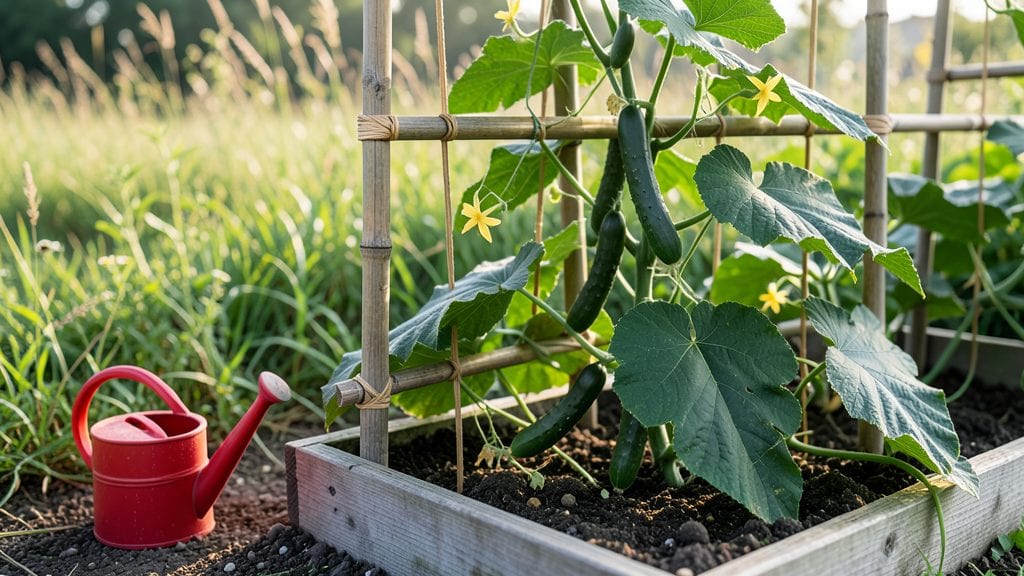
My garden trellis cucumbers transformed my tiny backyard into a high-yielding cucumber factory last summer. 🌱 The moment I saw those vines spiral upward instead of sprawling across the soil, I knew I'd never go back to ground planting again.
Vertical growth isn't just clever—it's a game-changer for small spaces, keeping plants healthy and your harvests abundant.
You don't need fancy equipment to make this work—just a sturdy trellis (A-frame, fan, or even DIY bamboo stakes) and cucumber varieties bred for climbing. The right setup prevents disease by improving airflow, and you'll save space for other plants too.
My favorite setup uses a 6-foot-tall A-frame trellis that fits neatly in a 4x4-foot corner, producing twice as many cucumbers as the same plants would on the ground.
By mid-July, you'll be harvesting crisp, straight cucumbers that stay cleaner and last longer than their sprawling cousins. The vines create a lush green curtain that's both productive and pretty, and you'll spend far less time weeding.
Plus, those cucumbers stay off the damp soil, reducing rot and making harvests easier.
Works for any garden size—whether you're training vines along a fence or building a dedicated trellis in a raised bed. The key is choosing the right trellis type for your space and cucumber variety. Let's get those vines climbing!
📚 In This Guide
- What you need
- Instructions
- Tips and common mistakes
- Wrapping up and next steps
What you need
- ● Trellis Structure: 1–2 bamboo poles (6–8 ft tall, 1–2 inch diameter) or
- ● 1 metal/powder-coated trellis frame (4–6 ft wide, adjustable height)
- ● 1 wooden lattice panel (4×8 ft, 1-inch grid spacing) or
- ● 1 DIY wire mesh (18–24 gauge, 1-inch squares, 4×8 ft)
- ● Fasteners & Supports: 4–6 sturdy stakes (6-inch diameter, 18–24 inches long)
- ● 1 zip ties (pack of 50, heavy-duty) or galvanized screws/nails
- ○ 1 bungee cords (optional, for adjustable tension)
- ● Growing Supplies: 2–4 cucumber plants (vining varieties like ‘Straight Eight’ or ‘Marketmore’)
- ● 1 potting mix (10–15 gallons, well-draining) or compost-amended soil
- ● 1 slow-release fertilizer (10-10-10 ratio, 1 lb per 10 sq ft)
- ● 1 drip irrigation kit (to keep vines hydrated without overwatering)
- ● 1 plant ties (soft fabric strips, 10-pack) for gentle vine guidance
- ● 1 shade cloth (30–50% coverage, 4×6 ft) for hot climates
- ● 1 pruning shears (for trimming excess leaves/vines)
Step-by-Step instructions for training cucumbers on a garden trellis
Here’s how to turn sprawling vines into a neat, high-yielding vertical display—no more cucumbers hiding under leaves.
🪴 Step 1: Install the Trellis in the Right Location
Position your trellis in a spot with full sun (6+ hours daily) and well-draining soil. Cucumbers need warmth to thrive, so avoid shady corners or windy areas. I like to install mine along a fence or wall for extra support—just make sure the structure can handle 10-15 pounds of vine weight per plant.
Drive stakes or secure the trellis 1-2 weeks before planting so roots have time to establish before climbing. For heavy vines, use 3-4 foot tall trellises—taller ones risk toppling in wind or storms. If using a wire trellis, space wires 6-12 inches apart to give vines room to weave through.
🌱 Step 2: Plant Cucumbers Near the Trellis
Dig a hole twice as wide as the root ball and 1 inch deeper than the container. Place the plant so the top of the root ball sits ½ inch below soil level—this helps prevent rot while keeping stems sturdy. Gently firm the soil around the roots to remove air pockets, then water deeply to settle everything.
I plant cucumbers 6-12 inches from the trellis—close enough for easy training but far enough to avoid crowding. For bushier varieties, space plants 3 feet apart; for vining types, stretch to 4-5 feet. Mulch with 2-3 inches of organic mulch (like straw) to retain moisture and suppress weeds.
✂️ Step 3: Train Vines as They Grow
When vines reach 6-8 inches tall, gently tie the main stem to the trellis with soft plant ties or old fabric strips. Avoid wire or plastic ties—they can cut into tender stems as vines thicken. I like to loop the tie around the vine and trellis once, then leave a little slack so the vine can grow without strangulation.
As side shoots (suckers) appear, pinch them off when they’re 2-3 inches long. You’ll want to keep only the main vine and the first few strong side branches near the trellis—these will produce the most fruit. Watch for tendrils (curly growths) that latch onto the trellis naturally; these are your cue that the plant is ready to climb.
💧 Step 4: Water and Fertilize for Vertical Growth
Water at the base 1-2 inches per week, keeping soil consistently moist but not soggy. Drip irrigation works best—it delivers water directly to the roots without wetting leaves, which reduces disease risk. I water in the early morning to give foliage time to dry before evening humidity sets in.
Fertilize lightly every 3-4 weeks with a balanced, water-soluble fertilizer (like 10-10-10). Too much nitrogen makes vines leafy but fruitless, so cut back after the first harvest. You’ll know your plants are happy when they produce 5-7 inch vines daily and flowers appear within 4-6 weeks of planting.
☀️ Step 5: Prune and Harvest for Maximum Yield
Once vines reach the top of the trellis, trim the tips to encourage bushier growth lower down. This redirects energy to fruit production instead of endless climbing. I also remove any yellow or diseased leaves immediately—they sap strength from healthy parts of the plant.
Harvest cucumbers when they’re 6-8 inches long and firm to the touch. Check vines every 2-3 days in peak season to avoid overripe fruit, which deters future production. Store harvested cucumbers in the fridge for 5-7 days—they won’t last long once picked!
Tips & tricks for perfect vertical cucumber growth
Transforming sprawling cucumber vines into a tidy vertical display takes a few key tricks—here's what I've learned after years of trial and error.
Trellis Stability Matters: In Step 1, when installing your 3-4 foot trellis, I recommend anchoring it with additional stakes on the leeward side if you're in a windy area. I've seen perfectly good trellises topple during storms because they weren't properly secured. For extra peace of mind, use a heavy-duty trellis or add cross-bracing between support posts—this prevents wobbling that can stress the vines as they grow.
Root Ball Placement Secret: When planting in Step 2, that ½ inch below soil level is crucial but often overlooked. I've found that using a small mound of soil to create this depression makes it easier to achieve the perfect depth. Also, consider adding a handful of compost to the planting hole—this gives roots an immediate nutrient boost while they establish. The compost helps prevent the common issue of stunted growth from poor soil contact.
Tie Technique That Prevents Damage: In Step 3, when tying vines to the trellis, I've discovered that using old T-shirts or fabric strips works better than store-bought plant ties. The fabric stretches as the vine grows, preventing the constriction that can occur with plastic ties. Pro tip: Make your first tie at the base of the vine, then add a second tie halfway up as the vine grows—this creates better support without risking damage to tender stems.
Watering Strategy for Consistent Growth: The 1-2 inches per week watering guideline in Step 4 is perfect, but timing is everything. I've had the best success using a soaker hose buried 2-3 inches deep along the trellis base. This delivers water directly to the roots while keeping foliage dry—preventing powdery mildew that can ruin your vertical garden. Watering in the early morning also gives foliage time to dry completely before evening humidity sets in, which is when fungal diseases typically take hold.
Pro Tips for Garden Trellis Cucumbers
- Transforming sprawling cucumber vines into a tidy vertical display takes a few key tricks—here's what I've learned after years of trial and error.
- Trellis Stability Matters: In Step 1, when installing your 3-4 foot trellis, I recommend anchoring it with additional stakes on the leeward side if you're in a windy area.
- Root Ball Placement Secret: When planting in Step 2, that ½ inch below soil level is crucial but often overlooked.
Frequently asked questions
Got questions about growing cucumbers on a trellis? You’re not alone! Here are answers to the most common queries to help you succeed with vertical cucumber gardening.
What’s the best time to plant cucumbers on a trellis?
Plant cucumbers after the last frost when soil temperatures reach at least 60°F (15°C). For warm climates, aim for early spring; in cooler zones, wait until late spring. Trellises work best when vines are young (3–4 weeks old) to avoid overburdening the structure. Start seeds indoors 3–4 weeks before transplanting for a head start!
Can I use a trellis for any cucumber variety?
Not all cucumbers thrive on trellises! Opt for bush varieties or parthenocarpic types (like ‘Straight Eight’ or ‘Marketmore 76’) that produce well when trained vertically. Avoid sprawling varieties like ‘Lemon Cucumber’ unless you’re okay with pruning heavily. Check seed packets—“bush” or “compact” labels are your friends!
How do I keep pests away from trellised cucumbers?
Trellises improve airflow, reducing some pests, but watch for cucumber beetles and spider mites. Use row covers early in the season, handpick beetles, or spray with neem oil. Yellow sticky traps can catch beetles before they lay eggs. Prune lower leaves for better airflow and inspect vines regularly—early action prevents infestations!
Do trellised cucumbers need more or less water than ground-grown ones?
Trellised cucumbers dry out faster because their roots are less shaded. Water deeply 1–2 times per week (more in heatwaves), aiming for 1–1.5 inches of water per week. Use drip irrigation to keep foliage dry and prevent fungal diseases. Mulch around the base to retain moisture—consistency is key!
What if my cucumber vines won’t climb the trellis?
Cucumbers are not naturally clingy—you’ll need to train them! Gently tie vines to the trellis with soft plant ties or old fabric strips every 2–3 feet. If vines are weak, prune lower leaves to redirect energy upward. Avoid metal ties—they can girdle stems. Patience pays off: vines will climb as they grow stronger!
Wrapping up and next steps
Growing cucumbers vertically with a garden trellis isn’t just space-saving—it’s a game-changer for healthier, happier plants and bigger harvests! 🌱 By mastering the right trellis type, training techniques, and maintenance tips, you’ll transform even the tiniest balcony or patio into a thriving cucumber oasis.
Whether you’re a beginner or a seasoned gardener, the key is to start small, stay consistent, and enjoy the process.
Ready to put your new skills into action? Grab your trellis, pick your favorite cucumber variety, and let your green thumb shine! Next up: Share your trellis success (or bloopers!) with fellow gardeners—your story might inspire someone else to grow upward! 🌿