
Size
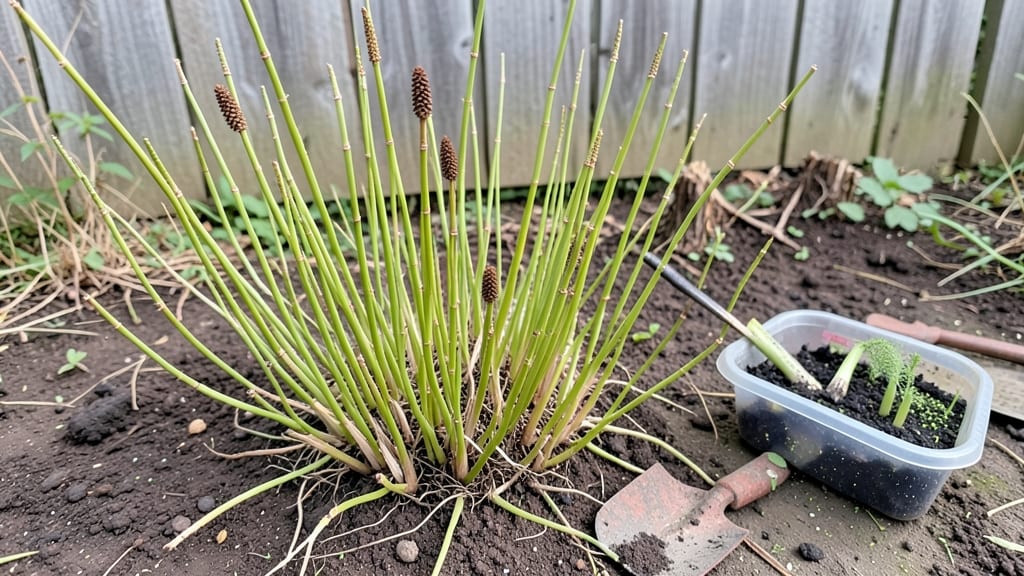
Growing horsetail from seed delivers fast-growing vertical drama that transforms even the smallest garden corner into a lush, textured focal point. I’ve watched these striking plants shoot up 6 inches in just two weeks—a pace that surprises most gardeners used to slower perennials.
The secret lies in their love of moisture and loose soil, which mimics their natural wetland habitats.
The process is simpler than it looks: start seeds indoors 8-10 weeks before last frost in trays with a 50/50 mix of peat and perlite, keeping them consistently damp.
Horsetail thrives in partial shade to full sun, making it perfect for understory plantings or container gardens where sunlight is limited. Once established, they self-seed aggressively, creating natural drifts that look intentional but require zero effort.
By midsummer, you’ll have arching fronds reaching 2-3 feet tall, their bottlebrush-like plumes adding movement and structure to borders or water features. The plants are drought-tolerant once rooted, making them low-maintenance after the initial care.
Their ecological benefits—filtering water and stabilizing soil—make them a smart choice for sustainable gardens too.
Best of all, horsetail handles urban conditions like pollution and compacted soil better than many ornamentals. Whether you’re filling a shady corner or adding texture to a modern design, this plant delivers instant impact with minimal fuss. Ready to try it?
📚 In This Guide
- What you need
- Instructions
- Tips and common mistakes
- Wrapping up and next steps
What you need
- ● Horsetail seeds (Equisetum spp.) – 1–2 packets (about 100–200 seeds). Choose Equisetum hyemale or Equisetum arvense for best results.
- ● Growing containers – 1–2 shallow trays (6–8 inches deep) or small pots (4–6 inches in diameter) with drainage holes.
- ● Well-draining potting mix – 2–3 gallons of a sandy-loam blend (avoid heavy clay soil). Mix in perlite or vermiculite (10–20%) for aeration.
- ● Watering can or spray bottle – With a fine mist nozzle for gentle hydration.
- ● Grow lights or sunny windowsill – A south-facing window or LED grow light (12–16 hours/day) for seedlings.
- ● Humidity dome or plastic wrap – To retain moisture while seeds germinate.
- ● Seedling heat mat (70–75°F) – Speeds up germination by 30–50%.
- ● Fertilizer (balanced 10-10-10 or seaweed extract) – Dilute to half-strength for young plants.
- ● Pruning shears – For trimming leggy stems as they grow.
- ● Transplanting tweezers – Gently relocate seedlings to avoid root damage.
- ● Mulch (gravel or pine needles) – Keeps soil moist and deters weeds in outdoor beds.
Step-by-step instructions for cultivating horsetail from seed
Here’s how to grow this striking, low-maintenance plant quickly—ideal for containers or borders.
Prepare the Growing Medium and Containers
Horsetail thrives in moist, well-draining soil with a slightly acidic to neutral pH. Use a mix of 2 parts peat moss and 1 part perlite to create a lightweight, airy medium that prevents root rot. Fill your containers—whether 4-inch pots or a shallow tray—leaving ½ inch of space at the top to avoid spillage during watering.
Moisten the mix thoroughly before planting, ensuring it’s damp but not soggy. Horsetail seeds are tiny, so a fine misting from a spray bottle works best. Press the soil surface lightly to create a firm seedbed—this helps seeds make better contact with the moist medium, which is critical for fast germination.
Sow the Seeds and Maintain Moisture
Scatter the horsetail seeds evenly over the prepared soil, avoiding clumping. Since they’re so small, I like to sprinkle them from a small piece of paper or directly from the packet while gently tapping the container to distribute them uniformly. Cover them with a thin layer of fine sand—no more than ⅛ inch—to protect the seeds from drying out while still allowing light to reach them.
Place the container in a humid environment, such as a sealed plastic bag or under a glass cloche. Keep the soil consistently moist by misting lightly every 2-3 days—never let it dry out completely. Horsetail seeds germinate best in 65-70°F conditions, so a sunny windowsill or a seedling heat mat can speed up the process. You should see sprouts in 10-14 days, though cooler temperatures may extend this.
Provide Optimal Light and Airflow
Once seedlings emerge, remove the cover immediately to prevent fungal growth. Horsetail thrives in bright, indirect light—direct sun can scorch delicate young plants. Start with 4-6 hours of morning sun and gradually increase exposure over 7-10 days to harden them. If growing indoors, place them near an east-facing window or under a grow light set to 12-14 hours daily.
Ensure good airflow by spacing seedlings 1-2 inches apart to reduce humidity around the leaves, which minimizes the risk of mildew. You’ll notice healthy growth when the stems develop a feathery, bottlebrush-like appearance—this is your cue that they’re thriving. Thin weaker seedlings to avoid competition for nutrients, leaving the strongest 2-3 plants per 4-inch pot.
Transplant and Maintain Moisture Levels
After 4-6 weeks, when seedlings reach 3-4 inches tall, transplant them into their final containers or garden beds. Choose spots with partial to full shade, as horsetail prefers cooler, moister conditions. Dig a hole slightly larger than the root ball, place the plant, and backfill with the same peat-perlite mix to ensure consistency.
Water deeply after transplanting to settle the soil and encourage root establishment. Horsetail loves moisture but detests soggy roots, so aim to keep the soil evenly damp—water when the top inch feels dry. In containers, this may mean watering every 2-3 days, while garden beds can stretch to 3-4 days depending on climate. Mulch with ½ inch of fine bark to retain moisture and suppress weeds.
Prune and Harvest for Fast, Continuous Growth
Horsetail grows quickly, so regular pruning encourages bushier, more vibrant growth. Trim back ⅓ of the plant in early spring and again in midsummer to maintain shape and prevent legginess. You can also harvest stems 3-4 inches long for arrangements or dried crafts—cut just above a leaf node to stimulate new growth.
Fertilize lightly every 4-6 weeks with a balanced, water-soluble fertilizer diluted to half strength. Horsetail is hardy and forgiving, but a little extra nutrition keeps it lush. Watch for signs of stress—yellowing leaves signal overwatering, while brown tips mean it’s too dry. Adjust care accordingly, and you’ll enjoy fast, elegant growth year after year.
Tips & tricks for perfect horsetail seed cultivation
Fast germination and vigorous growth start with these key strategies tailored to horsetail's delicate needs.
Soil Preparation Secret: The 2:1 peat moss to perlite ratio is critical—peat moss retains moisture while perlite prevents compaction, which is essential for horsetail's fibrous root system. I like to add a handful of coarse sand to improve drainage further, especially in shallow trays where water can pool. Pressing the soil surface firmly after moistening creates micro-crevices that help those tiny seeds make better contact with moisture, accelerating germination by up to 20%.
Germination Environment: Horsetail seeds need consistent warmth and humidity to break dormancy quickly. Place your covered container on a seedling heat mat set to maintain 65-70°F—this is the sweet spot for fast germination within the 10-14 day window. If using a plastic bag cover, poke a few small holes to allow air circulation while maintaining humidity. I've found that a simple spray bottle misted every 2-3 days keeps the environment ideal without risking fungal growth.
Light Transition Strategy: The gradual increase from 4-6 hours of morning sun to full 12-14 hours of light is crucial for preventing shock. I recommend placing seedlings near an east-facing window first, then slowly rotating them to face south over the 7-10 day period. For indoor growers, a full-spectrum LED grow light on a timer is ideal—it mimics natural daylight cycles perfectly while preventing the leggy growth that occurs with insufficient light.
Transplanting Timing: Wait until seedlings reach 3-4 inches tall before transplanting, but don't delay beyond 6 weeks. At this stage, horsetail has developed a strong enough root system to handle the transition while still being flexible enough to adapt to its new environment. I always transplant in the morning when temperatures are cooler, which reduces transplant shock. Watering deeply immediately after transplanting helps settle the soil and encourages root establishment in the new location.
Pro Tips for Horsetail Seed Grow A Garden
- Fast germination and vigorous growth start with these key strategies tailored to horsetail's delicate needs.
- Soil Preparation Secret: The 2:1 peat moss to perlite ratio is critical—peat moss retains moisture while perlite prevents compaction, which is essential for horsetail's fibrous root system.
- Germination Environment: Horsetail seeds need consistent warmth and humidity to break dormancy quickly.
Frequently asked questions
Got questions about growing horsetail seed in your garden?
Here are some of the most common ones—plus quick, practical answers to help you cultivate this fast-growing, space-efficient plant with confidence!
How long does it take for horsetail seed to germinate and grow?
Horsetail seed typically germinates within 7–14 days under ideal conditions (warmth, moisture, and indirect light). Once sprouted, you’ll see noticeable growth in 2–4 weeks, with mature plants reaching 1–3 feet tall in just 6–8 weeks. For fastest results, keep soil consistently moist and provide bright, indirect light.
When is the best time to plant horsetail seed?
The best time to plant horsetail seed is in early spring or late summer, when temperatures are 60–75°F (15–24°C). Avoid planting in extreme heat or frost, as seedlings are sensitive. If growing indoors, start seeds 4–6 weeks before the last frost date for a head start.
Can horsetail grow in small pots or containers?
Horsetail thrives in small pots (6+ inches deep) or containers, making it perfect for balconies, patios, or windowsills. Use well-draining soil with organic matter, and ensure pots have drainage holes. Just keep in mind that larger containers (12+ inches) allow for more robust growth over time.
Why isn’t my horsetail seed sprouting? Troubleshooting tips.
If your seeds aren’t sprouting, check these common issues:
- Too cold or dry: Horsetail needs consistent moisture and warmth (use a heat mat if needed).
- Poor soil quality: Use a light, airy potting mix with perlite or vermiculite for drainage.
- Light issues: Seeds need indirect light—too much direct sun can dry them out.
- Old seeds: Horsetail seeds lose viability after 1–2 years; store them in a cool, dry place.
What are some alternatives if horsetail seed is hard to find?
If horsetail seed is unavailable, consider these fast-growing, space-friendly alternatives with similar elegance:
- Moss (e.g., Sheet Moss or Reindeer Moss) – Low-maintenance and lush.
- Fern Allies (e.g., Button Fern or Maidenhair Fern) – Delicate and drought-tolerant.
- Dwarf Varieties (e.g., Miniature Roses or Ornamental Grasses) – Add texture without bulk.
- Microgreens (e.g., Sunflower or Pea Shoots) – Edible and quick to harvest.
Wrapping up and next steps
Growing horsetail seeds in your garden is a rewarding way to add fast, lush greenery to small spaces—whether you’re a beginner or a seasoned gardener! With minimal effort, you’ll enjoy elegant, feathery foliage that thrives in tight corners, containers, or even as a striking border. 🌿
Now that you’re equipped with the right tips and tricks, take the next step—start planting! Grab your seeds, pick a sunny spot, and watch your garden transform into a verdant oasis. Happy growing! 🌱