Flowers
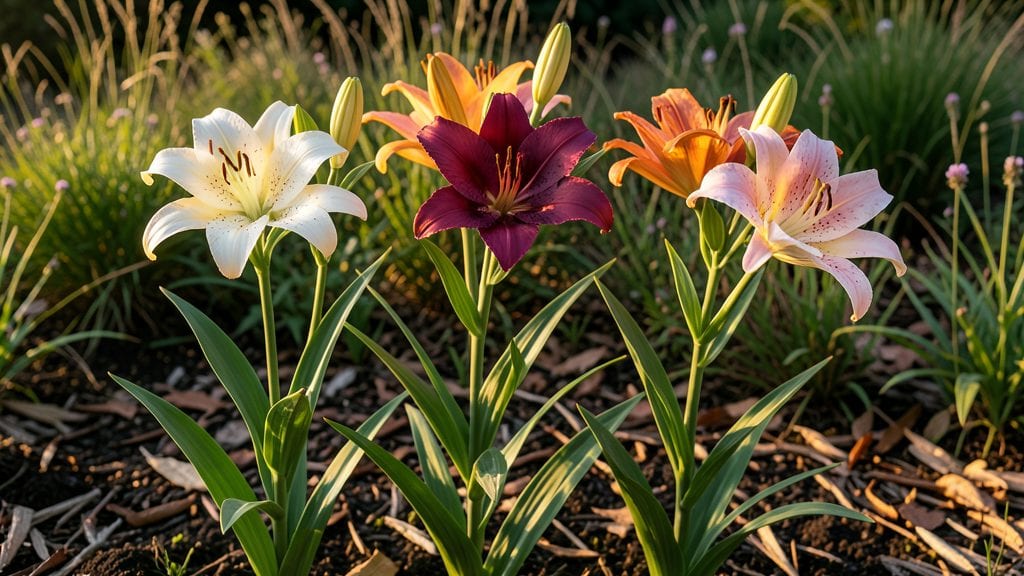
A lily garden filled with flowers transforms any backyard into a fragrant sanctuary where every bloom feels like a masterpiece. 🌸 I remember the first time I walked through one—those velvety petals in every shade from fiery orange to pure white, each one smelling like a secret shared only with bees.
The key isn't just planting lilies; it's arranging them so their heights and colors create natural layers, like a painter's brushstrokes.
Start with your sunniest spot and well-draining soil—most lilies need at least 6 hours of sunlight daily. Asiatic lilies bring bold colors and early blooms, while Oriental types reward you with intoxicating fragrance.
Mix in companion plants like daylilies for texture or salvia for contrast—their foliage softens the lilies' dramatic presence. Spacing matters too: give each bulb 12-24 inches of room to prevent crowding.
By midsummer, you'll have a garden that feels alive with movement—petals swaying in the breeze, colors shifting as light changes. The fragrance at dusk is unmatched, drawing hummingbirds and butterflies into your space.
Even in late summer when other gardens fade, your lilies will still shine, their blooms lasting weeks with proper care.
This works for small courtyards or large backyards—just scale the quantities. The real magic happens when you let the lilies dictate the layout, not the other way around. Ready to create your own fragrant masterpiece?
📚 In This Guide
- What you need
- Instructions
- Tips and common mistakes
- Wrapping up and next steps
What you need
- ● Lily bulbs: Choose 10–20 bulbs (or more, depending on garden size) of your favorite varieties (e.g., Asiatic, Oriental, Trumpet, or Stargazer lilies). Opt for high-quality, disease-free bulbs from a trusted nursery.
- ● Well-draining soil: 5–10 cubic yards (adjust based on garden size). Lilies thrive in loamy, slightly acidic soil (pH 6.1–7.0). Amend clay or sandy soil with compost or organic matter.
- ● Organic fertilizer: A balanced, slow-release formula (e.g., 10-10-10 or 5-10-10) to provide nutrients over time. Use 1–2 cups per 10 sq. ft.
- ● Mulch: 2–3 inches of organic mulch (e.g., shredded bark, straw, or compost) to retain moisture and regulate soil temperature.
- ● Garden tools: Trowel or small shovel
- ● Garden fork (for loosening soil)
- ● Pruners (for trimming dead foliage)
- ● Watering can or hose with a gentle spray nozzle
- ○ Support stakes or cages: Optional but helpful for taller varieties (e.g., Oriental lilies) to prevent flopping. Use 3–4 ft. stakes or tomato cages per plant.
- ● Slow-release fertilizer spikes: Insert these into the planting hole for a steady nutrient boost.
- ● Epsom salt: A handful mixed into the soil can enhance magnesium levels, promoting vibrant blooms.
- ● Companion plants: Marigolds, lavender, or ferns to deter pests and add visual appeal.
- ● Drip irrigation system: For large gardens, to ensure consistent watering.
- ● Garden gloves: To protect your hands while handling soil and bulbs.
How to design a stunning lily garden with fragrant blooms
Here's the simple approach I've used to create lush, fragrant lily displays that last all summer.
🪴 Step 1: Select Your Lily Varieties and Planting Sites
Choose lily varieties that complement your space—Asiatic lilies for bold colors, Oriental lilies for intense fragrance, and Martagon lilies for delicate, nodding blooms. Group plants by height: place tall varieties (4-6 feet) at the back, medium (2-3 feet) in the middle, and low-growing (1-2 feet) at the front. I always plant mine in full sun (6-8 hours daily) for maximum blooms.
Test your soil's drainage—lilies rot easily in soggy ground. If your soil feels compacted, add 2-3 inches of coarse sand to the planting hole. The ideal spot has loamy, well-draining soil with a pH between 6.0 and 7.0. Amend heavy clay with composted organic matter to improve aeration.
🌱 Step 2: Prepare the Soil and Plant Lily Bulbs
Dig holes 3 times wider than the bulb but only 6-8 inches deep—lilies need room to spread but won't grow if buried too deep. Space bulbs 12-24 inches apart, depending on variety (smaller bulbs need less space). I always plant mine in early spring (after last frost) or early fall (6-8 weeks before first frost) for best root establishment.
Place each bulb in the hole with the pointed end facing up—this ensures proper growth direction. Gently backfill with soil, leaving 1-2 inches of space between the soil and the bulb's top. Water deeply after planting to settle the soil and encourage root growth. Mulch with 2-3 inches of organic mulch to retain moisture and suppress weeds.
☀️ Step 3: Provide Support and Maintain Watering
Install stakes or rings for tall varieties (like Oriental lilies) before they bloom—these prevent wind damage and support heavy flower heads. I use 3-foot bamboo stakes driven 4 inches deep beside each plant. For fragrant varieties, plant near seating areas or walkways so you can enjoy their scent up close.
Water deeply once a week during the first growing season to establish strong roots. Once established, lilies are drought-tolerant but bloom best with 1 inch of water weekly. Reduce watering in late summer to encourage bulb hardening before winter. Fertilize lightly with a balanced, slow-release fertilizer in early spring and again after blooming.
✂️ Step 4: Deadhead, Divide, and Protect Over Winter
After blooming, cut back faded flowers but leave the foliage until it yellows naturally—this feeds the bulb for next year's growth. I always mark planting locations with flags so I don’t accidentally dig up bulbs when dividing. Every 3-4 years, divide crowded clumps in early spring or fall, replanting the largest bulbs and composting the smaller ones.
In colder climates, mulch heavily with 4-6 inches of straw or leaves before the first frost. In mild winters, lilies often return year after year with minimal care. Watch for lily beetles—handpick adults and larvae to protect your garden. With proper spacing and care, your lily garden will reward you with fragrant blooms for decades.
Tips & tricks for perfect lily garden flowers
Creating a fragrant lily garden takes more than just planting bulbs—it's about the details that make all the difference. Here's what I've learned from years of growing these stunning blooms.
Variety Pairing: The secret to a visually stunning lily garden lies in strategic pairing. Plant Asiatic lilies with Oriental lilies—the bold colors of Asiatics complement the intense fragrance of Orientals. I always add a few Martagon lilies at the front for their delicate, nodding blooms that create movement in the breeze. This combination gives you height variation, color contrast, and a sensory experience that changes throughout the day.
Soil Prep Secret: Don't skip the soil test! Lilies hate soggy feet, so if your soil feels compacted, mix in 2-3 inches of coarse sand before planting. I've seen lilies rot in heavy clay soil even when planted at the recommended depth. For clay soils, work in composted organic matter to improve drainage while maintaining nutrients. A pH between 6.0 and 7.0 is ideal—you can test this with a simple soil kit from your garden center.
Planting Direction: That pointed end on your lily bulb isn't just for show—it's a growth indicator! Always plant with the pointed end facing up. I've made this mistake before and ended up with lopsided growth that never bloomed properly. The pointed end contains the shoot that will push through the soil, while the flat end has the roots. This simple step ensures your lilies grow straight and strong.
Winter Protection: In colder climates, don't skimp on the mulch! I've learned the hard way that 4-6 inches of straw or leaves makes all the difference. This thick layer insulates the bulbs through freezing temperatures while preventing soil heaving. In mild winters, you can reduce this to 2-3 inches of organic mulch, but always remove it in early spring to prevent rot from excess moisture.
Pro Tips for Lily Garden Flowers
- Creating a fragrant lily garden takes more than just planting bulbs—it's about the details that make all the difference.
- Variety Pairing: The secret to a visually stunning lily garden lies in strategic pairing.
- Soil Prep Secret: Don't skip the soil test!
Frequently asked questions
Got questions about creating or caring for your lily garden flowers? You’re not alone! Here are some of the most common queries—and their simple solutions—to help your blooms thrive.
How do I start a lily garden with limited space?
Lilies are perfect for small spaces! Opt for miniature lilies or daylilies, which grow in containers or tight beds. Use vertical planters or trellises to maximize space. Even a sunny windowsill or balcony can host fragrant lilies in pots—just ensure they get 6+ hours of light daily.
When is the best time to plant lily bulbs?
Plant lily bulbs in early spring (after the last frost) or late summer/early fall (6–8 weeks before the first frost). Spring planting gives blooms time to establish roots, while fall planting lets them naturalize. Avoid planting in extreme heat or cold—bulbs need stable soil temps (around 50–60°F).
How often should I water my lilies, and do they need special care?
Water lilies deeply 1–2 times per week, ensuring soil stays moist but not soggy (root rot is a risk!). Mulch around the base to retain moisture and protect roots. Once blooms fade, reduce watering to encourage bulb dormancy. Hardy lilies like Asiatic or Oriental types are low-maintenance, while tropical lilies may need extra humidity.
What are the most common pests for lily gardens, and how do I prevent them?
Lilies attract lily beetles, aphids, and slugs. Handpick beetles (they’re bright red!) or use neem oil. For slugs, set out beer traps or copper barriers. Rotate crops yearly to deter pests, and plant marigolds nearby—their scent repels bugs naturally. Avoid over-fertilizing, which attracts pests.
Can I grow lilies indoors, and which varieties work best?
Yes! Calla lilies or peace lilies (though not true lilies) thrive indoors with bright, indirect light. For real lilies, try Easter lilies or stargazer lilies in pots near a sunny window. Use well-draining soil and a moisture meter to avoid overwatering. Just know: indoor lilies may not rebloom like outdoor varieties.
Do lilies come back every year, or are they annuals?
Most hardy lilies (like Asiatic or Trumpet lilies) are perennials and return yearly with proper care. Tropical lilies (e.g., Stargazer) are often grown as annuals unless you dig and store bulbs indoors in winter. Deadhead spent blooms to encourage more flowers, and fertilize lightly in spring for repeat performances.
Wrapping up and next steps
Creating a lily garden is more than just planting flowers—it’s about crafting a fragrant, serene sanctuary that breathes life into your outdoor space. 🌸 From selecting the right varieties to nurturing them with care, every step brings you closer to a blooming masterpiece.
Whether you're a seasoned gardener or just starting, the key is patience and passion.
Ready to dive in? Start small—pick a sunny spot, gather your supplies, and let your lily garden grow! Before you know it, your backyard will be a haven of beauty, color, and intoxicating scents. Happy gardening!