Tools
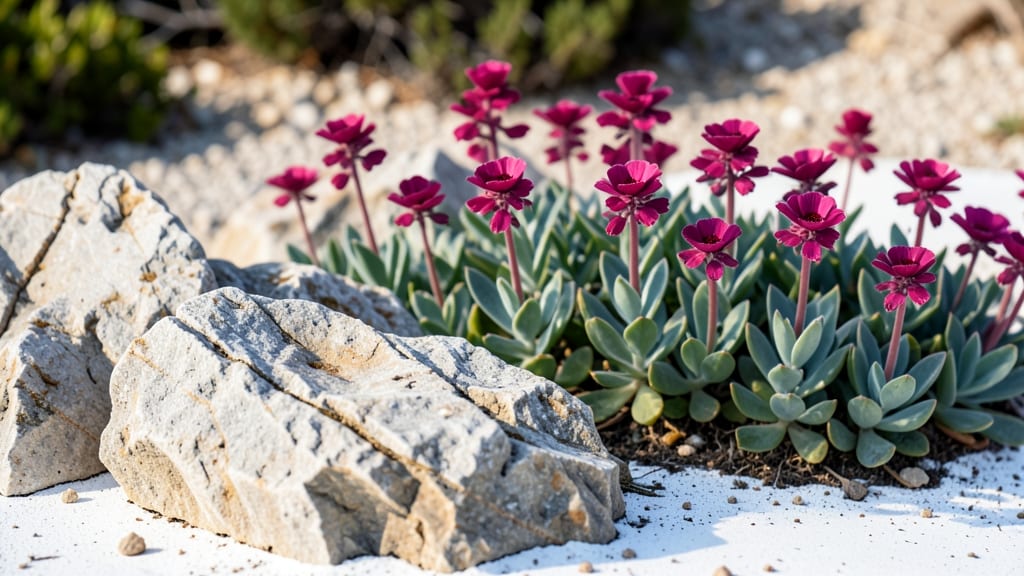
Using limestone in your garden improves acidic soil by raising pH levels, creating ideal growing conditions for acid-loving plants like blueberries, azaleas, and tomatoes. Spread crushed limestone evenly in spring, but avoid overuse to prevent soil from becoming too alkaline.
Limestone works by neutralizing soil acidity through a gradual chemical reaction that releases calcium and magnesium ions.
These minerals bind with hydrogen ions in acidic soil, effectively raising the pH over time. 🌱 Unlike quick-fix amendments, limestone takes 2-3 months to fully integrate, so testing your soil's pH every 6 months ensures you're maintaining the right balance.
I've found that clay soils benefit more from limestone than sandy soils, since clay holds onto nutrients longer and resists pH swings better.
For best results, apply 5-10 pounds per 100 square feet of garden bed, depending on how acidic your soil is. Overdoing it can lock out essential nutrients like iron and manganese, harming plants that need slightly acidic conditions.
Always work limestone into the top 2-3 inches of soil rather than just spreading it on the surface.
💡 In This Article
- How Limestone Adjusts Soil pH Chemistry
- Best Plants and Application Rates for Limestone Soil
How limestone adjusts soil pH chemistry
Limestone—primarily made of calcium carbonate (CaCO₃)—works like a natural buffer in acidic soil. When you add it, the calcium carbonate reacts with hydrogen ions (H⁺) in the soil, forming calcium bicarbonate (Ca(HCO₃)₂) and water (H₂O). This reaction effectively removes excess acidity by converting harmful hydrogen ions into neutral compounds.
The process is slow because it depends on soil moisture and microbial activity, which is why gradual application prevents sudden pH spikes that could harm plant roots.
The chemical reaction can be simplified as: CaCO₃ + 2H⁺ → Ca²⁺ + H₂O + CO₂. The calcium ions released also improve soil structure by promoting microbial growth and binding soil particles together.
In clay soils, limestone works more efficiently because the fine particles hold moisture longer, speeding up the reaction. Sandy soils, however, require more frequent applications since water drains quickly, washing away the limestone before it fully reacts. 🔥
One key factor is the particle size of the limestone. Finer particles (like pulverized limestone) dissolve faster, raising pH within weeks, while larger chunks take months to years. This is why gardeners often choose mesh sizes between 8-12 for balanced results.
Overapplication can create a pH shock, locking out essential nutrients like iron and zinc, which become unavailable to plants at high pH levels. Testing soil pH before and after application ensures you’re hitting the 6.0-7.0 target range for most vegetables.
Long-term benefits include improved soil aggregation and better water retention. The calcium from limestone strengthens cell walls in plants, making them more drought-resistant. In acidic peat soils, limestone also prevents the leaching of vital nutrients like magnesium and potassium.
However, in alkaline soils (pH >7.5), limestone is unnecessary and can worsen nutrient deficiencies. Always test first! ✨
For visual learners, imagine limestone as tiny sponges soaking up excess acidity like a dry towel absorbs water. The reaction isn’t instantaneous—it’s a slow, steady process that mirrors how a slow-release fertilizer works. This gradual approach is what makes limestone a sustainable soil amendment rather than a quick fix.
The best time to apply it is in early spring or fall, when soil is moist but not waterlogged, allowing the chemical reaction to proceed optimally.
What most gardeners don’t realize is that limestone doesn’t just raise pH—it also adds calcium, a critical nutrient for plant cell structure. Without enough calcium, plants develop blossom-end rot in tomatoes or weak stems in peppers.
The magnesium released also activates enzymes that help plants convert sunlight into energy. It’s a two-for-one benefit that goes beyond just pH adjustment. 🌱