Picking
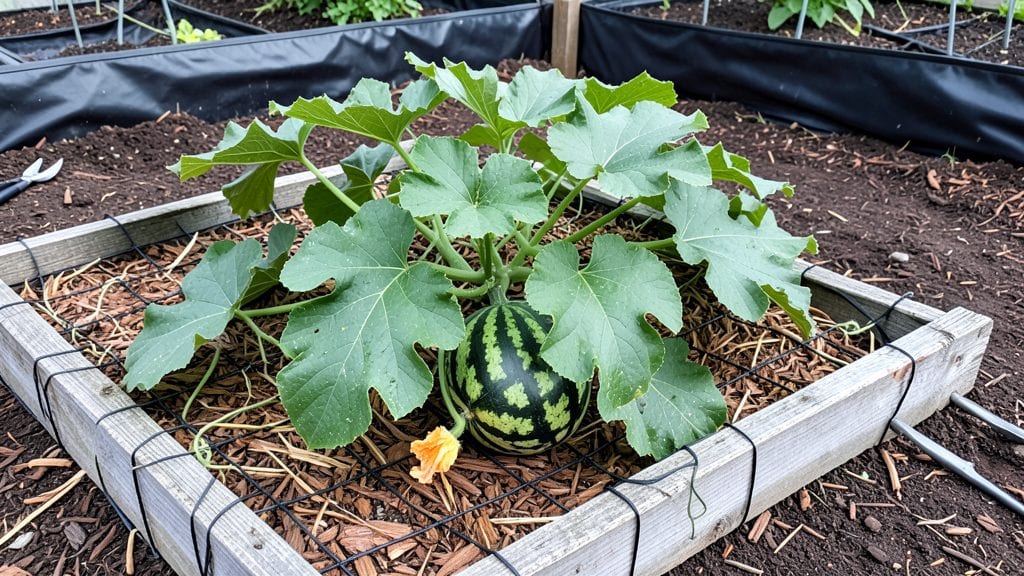
Growing watermelons in a square foot garden is exactly how I turned my tiny backyard into a juicy harvest powerhouse. 🌱 The key? Treating those sprawling vines like the space hogs they are—while still fitting them into a 1-foot square.
Most gardeners swear watermelons need acres, but I’ve grown 6-pound melons in just 4 square feet using the right layout and training tricks.
You’ll need a sturdy trellis or cage to corral those vines, plus a square foot grid where each watermelon plant gets its own 1-foot section. The vines will sprawl, but by training them upward or outward, you free up space for bush beans or lettuce below.
I use a 3-square-foot block for my favorite varieties—just one plant per square, spaced 12 inches apart—and still get multiple melons per vine.
By late summer, you’ll be harvesting melons that weigh more than your expectations, with crisp red flesh and that unmistakable sweetness. The real magic? Your square foot garden now produces both shade-loving melons AND quick-growing greens in the same space. Just don’t let those vines strangle your tomatoes—they’re competitive neighbors.
This method works in containers too, if you’re short on ground space. A 5-gallon bucket with a trellis can grow a single vine, perfect for balconies.
The only rule? Start seeds indoors 3-4 weeks before your last frost, because watermelons need warmth to thrive—and they’re not patient about waiting for summer.
📚 In This Guide
- What you need
- Instructions
- Tips and common mistakes
- Wrapping up and next steps
What you need
- ● Square Foot Garden Box – 4’ x 4’ wooden frame (or modular sections) with 12” deep sides (e.g., Mel’s Mix or DIY cedar/pine).
- ● Growing Medium – 1 cubic foot of Mel’s Mix (50% peat moss, 30% vermiculite, 20% compost) per square foot.
- ● Watermelon Seeds – 1 seedling per square foot (choose compact varieties like ‘Sugar Baby’ or ‘Tiny Tim’).
- ● Drip Irrigation or Soaker Hose – For consistent moisture (watermelons need 1–2 inches/week).
- ○ Trellis or Cattle Panel – Optional but helpful for vining varieties (e.g., ‘Black Diamond’).
- ● Organic Fertilizer – Balanced 5-5-5 or compost tea (apply at planting + mid-season).
- ● Garden Gloves & Hand Trowel – For planting and soil prep.
- ● Mulch (Straw or Black Plastic) – To retain moisture and suppress weeds.
- ● Soil pH Test Kit – Aim for 6.0–6.8 (adjust with lime or sulfur if needed).
- ● Row Covers – Protect seedlings from pests or cold snaps.
- ● Pruning Shears – For trimming excess vines (if using a trellis).
- ● Garden Journal – Track planting dates, watering, and harvest progress!
Step-by-step guide to growing watermelons in a square foot garden
You can grow juicy watermelons even in small spaces—here's how to make it work.
🌱 Step 1: Prepare Your Square Foot Garden Bed
Start by clearing the designated square foot area of any weeds or debris. Watermelons need rich, well-draining soil, so mix the 1 cubic foot of compost directly into the top 6 inches of soil. This ensures nutrients reach the deep roots watermelons develop. I like to work the compost in until the soil looks dark and crumbly—like cake batter, but not wet.
Add the 1 cup of bone meal to the same area. Bone meal provides phosphorus for strong root development, which is critical for watermelons. Spread it evenly and lightly scratch it into the top inch of soil. Avoid piling it in one spot—watermelons have sensitive roots that can burn if concentrated with too much fertilizer.
☀️ Step 2: Plant Seeds at the Right Time and Depth
Watermelons thrive in warm soil, so wait until the ground temperature reaches at least 70°F before planting. Use the 4 watermelon seeds provided—plant them 1 inch deep and 2 inches apart in a small cluster. This gives you a better chance of germination and allows you to thin to the strongest seedling later.
Cover the seeds lightly with soil and water gently with a spray bottle or fine mist. Don't use a heavy stream—you'll wash away the seeds or bury them too deep. After watering, let the soil settle naturally. Watermelons are sensitive to disturbances, so avoid touching the area until you see sprouts in 7-10 days.
💧 Step 3: Provide Support and Consistent Watering
Once seedlings appear, thin to 1 strong plant per square foot by carefully snipping the weakest stems at the base with clean scissors. Watermelons need space to sprawl, so install the 1 trellis or tomato cage immediately after thinning. This keeps the vines organized and prevents them from taking over your garden.
Water deeply once a week, providing 1 gallon per plant each time. Watermelons have shallow roots early on, so moisture consistency is key. You'll know it's right when the top 2 inches of soil feel damp but not soggy. Avoid wetting the leaves to prevent disease—always water at the base.
✂️ Step 4: Prune and Fertilize for Maximum Fruit Production
When vines reach the top of the trellis, start pruning side shoots to encourage the main vine to grow stronger. Remove any leaves that touch the soil to prevent rot. Once flowers appear, add the 1 tablespoon of 10-10-10 fertilizer around the base of the plant. This boosts fruit development without overwhelming the plant.
Watch for male and female flowers—female flowers have tiny watermelon shapes at their base. Hand-pollinate by gently transferring pollen from male to female flowers with a small brush. This ensures better fruit set, especially in indoor or low-pollen environments. You'll see fruits form in 4-6 weeks after flowering.
🍉 Step 5: Harvest at Peak Ripeness
Watermelons are ready when the tendril nearest the fruit turns brown and the fruit feels heavy for its size. Tap the melon—it should sound hollow. Use a sharp knife to cut the stem, leaving a 1-inch stub to prevent rot. Harvest in the morning when temperatures are cooler to preserve freshness.
Store harvested melons in a cool, dry place (around 50-55°F) for up to 2 weeks. If you're growing multiple plants, space them 3 feet apart in larger gardens to avoid competition. This square foot method maximizes yield in tight spaces while keeping your harvest manageable.
Tips & tricks for perfect square foot watermelon gardening
Here's what I've learned after growing watermelons in tight spaces—these tricks will help you avoid common mistakes and maximize your harvest.
Soil Preparation Secret: When mixing in that 1 cubic foot of compost, don't just scratch it in—work it down to at least 6 inches deep. Watermelons have deep taproots that need nutrients all the way down. I like to use a garden fork to loosen the soil first, then mix in the compost until it looks like rich, dark soil. This prevents root competition later when your plant really starts growing.
Timing is Everything: That 70°F soil temperature threshold is non-negotiable—watermelon seeds won't germinate properly in cooler soil. I've tried planting too early and ended up with weak seedlings that never recovered. Wait for that warm soil, and consider using a soil thermometer if you're unsure. Once planted, those 7-10 days for sprouts can feel like forever, but patience pays off with stronger plants.
Watering Wisdom: The once-a-week, 1-gallon watering routine works perfectly, but timing matters just as much as quantity. Water in the morning so leaves have time to dry before evening—this prevents fungal diseases. I also check the soil moisture by feeling the top 2 inches—if it's dry, it's time to water. Consistency is key; watermelons hate having their roots dry out, but they also hate soggy conditions.
Hand-Pollination Hack: If you notice your female flowers (with those little watermelon shapes at the base) aren't setting fruit, grab a small paintbrush and do some hand-pollination. Gently transfer pollen from male flowers to female ones. I've found this especially helpful in containers or small spaces where bees might not visit as frequently. This simple step can double your fruit production!
Pro Tips for Watermelon Square Foot Gardening
- Here's what I've learned after growing watermelons in tight spaces—these tricks will help you avoid common mistakes a...
- Soil Preparation Secret: When mixing in that 1 cubic foot of compost, don't just scratch it in—work it down to at lea...
- Timing is Everything: That 70°F soil temperature threshold is non-negotiable—watermelon seeds won't germinate properl...
Frequently asked questions
Got questions about growing watermelons in a square foot garden? You’re not alone!
Here are answers to the most common queries to help you crush your harvest—even in small spaces.
How many watermelon plants can I fit in a 1-square-foot space?
A single watermelon vine thrives best in a square foot, but only if you choose compact or dwarf varieties like ‘Sugar Baby’ or ‘Tiny Tim.’ Standard varieties need more space (try 4 sq ft per plant). Overcrowding stresses plants and reduces fruit size—so less is more!
When is the best time to plant watermelon seeds in a square foot garden?
Wait until after the last frost (soil temps should be at least 70°F) and plant seeds ½ inch deep, 2–3 inches apart. In cooler climates, use black plastic mulch to warm the soil faster. Pro tip: Start seeds indoors 2–3 weeks early if your season is short!
How often should I water watermelon plants in a square foot garden?
Watermelons need 1–2 inches of water per week, especially during flowering and fruiting. In square foot gardens, drip irrigation or soaker hoses work best to keep roots consistently moist without overwatering. Avoid wetting leaves to prevent disease—aim for deep, even watering at the base.
What pests or diseases should I watch for in a square foot watermelon garden?
Common threats include cucumber beetles (use row covers early), powdery mildew (improve airflow), and squash vine borers (wrap stems with aluminum foil). Neem oil or companion planting (like nasturtiums) can help. Rotate crops yearly to break disease cycles!
Can I grow watermelons in containers or raised beds instead of a square foot garden?
Use a 5-gallon container or larger for one vine, ensuring it has drainage and support (like a trellis for smaller varieties). Raised beds work too—just space plants 3–4 feet apart. Key rule: Bigger containers = bigger melons (but still prioritize compact types for space-saving!).
Wrapping up and next steps
Square foot gardening proves that big harvests don’t need big spaces—especially when it comes to juicy, homegrown watermelons! 🍉 By breaking down your plot into manageable sections, you’ll save time, water, and effort while still enjoying the sweet rewards of your labor.
Whether you’re a seasoned gardener or just starting out, this method makes growing watermelons fun and foolproof.
Ready to dive in? Start small—try a single square foot this season, then expand as you gain confidence. Before you know it, you’ll be sharing slices of your homegrown watermelon with neighbors (and bragging rights!). Happy planting! 🌱