
Picking
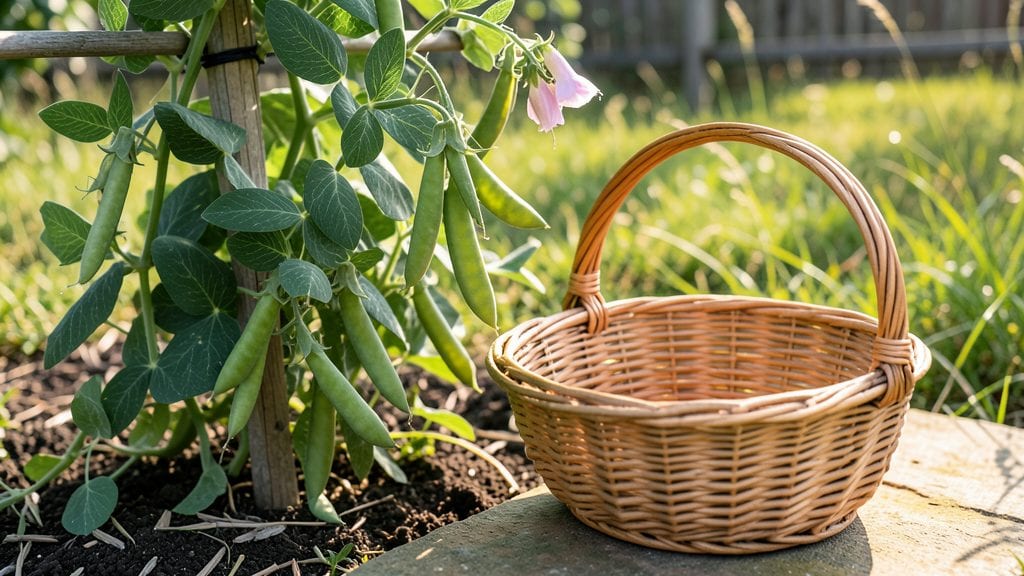
The moment your garden peas are ready to pick determines whether you get sweet, tender pods or tough, mealy ones. 🌱 I learned this the hard way when I waited too long and ended up with peas that tasted like flour.
The secret is checking pods every 2-3 days once they start forming—before they get fat or develop wrinkles.
Look for pods that are 2-3 inches long and slightly plump but still firm to the touch. Inside, you should see peas that fill the pod but aren’t pushing against the skin—if they’re squished together, it’s past prime time.
Early varieties like 'Sugar Snap' or 'Snowbird' mature faster, often in 50-60 days, while larger types like 'Lincoln' take 60-70 days from planting.
Harvesting at the right time keeps plants productive for weeks, not just a single flush. Snap pods cleanly just above the seed pod, and pick in the morning when sugars are highest.
If you miss the window, peas turn starchy and lose sweetness—trust me, you’ll notice the difference in your first bite.
Climate plays a role too: cooler weather slows maturity, while heat can rush pods to overripe faster. In hot summers, check daily and harvest early to avoid tough peas. The more you pick, the more your plants produce—it’s like giving them a reason to keep growing!
📚 In This Guide
- What you need
- Instructions
- Tips and common mistakes
- Wrapping up and next steps
What you need
- ● Garden peas (Pisum sativum) – Ensure you’ve planted a variety suited for your climate (e.g., Sugar Snap, Snow Pea, or Shelling Pea).
- ○ Gloves (optional but recommended) – Lightweight gardening gloves to protect hands from thorns (especially for Sugar Snap peas).
- ● Harvesting container or basket – A shallow, breathable container (like a woven basket or mesh bag) to avoid bruising peas.
- ● Sharp scissors or pruning shears – Small, clean scissors (or even clean kitchen shears) to snip stems without damaging the plant.
- ● Timer or watch – To track growth stages (especially for sugar snap peas, which need precise timing).
- ○ Water spray bottle (optional) – A light mist to refresh peas if they’ve been in the sun too long before picking.
- ● Pea pod ruler or measuring tape – To check pod size (ideal: 1.5–2.5 inches for shelling peas, 2–4 inches for sugar snaps).
- ● Hand lens or magnifying glass – For inspecting pea maturity if pods are small or unclear.
- ● Cool storage container with ice packs – If you won’t eat peas immediately, keep them crisp by storing them in the fridge.
- ● Notebook or app – To log harvest dates, pod sizes, and plant performance for future reference.
- ● Established pea plants – Peas take 60–70 days to mature (check seed packet for exact variety timeline).
- ● Sunny, well-drained soil – Peas thrive in full sun (6+ hours/day) and cool temperatures (50–70°F).
- ● Regular watering – Keep soil consistently moist (not soggy) to avoid stress on plants.
- ● Pest-free zone – Watch for pea aphids, slugs, or powdery mildew—treat early if spotted!
How to tell when garden peas are ready to pick
Peas don’t wait for your schedule—they’re ready when their pods reach perfect sweetness. Here’s how to spot them at their peak.
🌱 Step 1: Watch for Flower Blooms and Early Pods
Pea plants start with delicate purple or white flowers that fade within a few days. After blooms drop, tiny pea pods begin forming along the vine. These early pods are barely bigger than a fingernail and still bright green. Don’t harvest them yet—they’re too young to be sweet.
Instead, focus on pods that appear 5-7 days after flowering. You’ll notice them growing longer and starting to plump out slightly. This is the window when peas transition from immature to harvest-ready. Run your thumb along the vine—you’ll feel the pods filling out with peas inside.
☀️ Step 2: Check Pod Size and Color for Readiness
Pea pods are ready when they’re 2-3 inches long and bright, vibrant green. Avoid pods that are still pale or have a waxy sheen—they’re not fully mature. Overripe pods turn dull green or yellowish and develop a tough, fibrous texture.
Here’s the real test: Gently squeeze a pod. If it gives slightly under pressure (like a ripe avocado), it’s ready. If it feels hard, wait another day. The peas inside should be plump and firm, not shriveled or shrinking back from the pod walls.
✂️ Step 3: Harvest at the Right Time for Peak Flavor
Peas lose sweetness fast once picked. Harvest them in the morning when sugars are highest. Use clean pruning shears or snip with scissors just above the pod to avoid damaging the vine. Never pull pods off—they’ll leave behind scars that attract pests.
Real talk: If you miss the window, pods can turn stringy or develop tough skins. But don’t stress—even slightly overripe peas are edible if you blanch them first. For best results, check your plants every 2-3 days during peak production.
🌿 Step 4: Encourage Continuous Harvesting
Pea plants keep producing for 4-6 weeks if you stay on top of harvesting. After you pick a pod, new flowers will form within 7-10 days. Pinch off any pods that turn yellow or start drying out—they’re past their prime and drain energy from the plant.
Here’s the thing—if you let pods mature fully, the peas inside will dry out and turn starchy. But if you keep picking at the 2-3 inch stage, the plant will focus on producing more sweet, tender pods. You’ll know you’re doing it right when the vine stays lush and keeps flowering.
Tips & tricks for perfect pea harvesting
Between us, these little tricks will help you avoid the heartbreak of picking peas that are either too young or past their prime.
Timing is Everything: The 5-7 day window after flowering is your sweet spot for harvesting. I always set a reminder on my phone for when the first flowers appear, then count those days. This way, I don't miss the perfect moment when pods start plumping out. Trust me on this—waiting too long means tough, stringy peas that lose their sweetness.
Color and Texture Tell All: When pods reach 2-3 inches and have that bright, vibrant green color, they're ready to go. Here's what I do: I give each pod a gentle squeeze—if it feels firm but yields slightly (like a ripe avocado), that's your cue. If it's still hard, leave it for another day. The peas inside should be plump and snug against the pod walls, not rattling around.
Morning Magic: Harvesting in the morning is non-negotiable if you want the sweetest peas. That's when their natural sugars are at their peak. I always grab my basket first thing and make my rounds before the sun gets too high. Pro tip: Use clean pruning shears or sharp scissors to snip just above the pod—this keeps the plant healthy and prevents damage that invites pests.
Continuous Care: Pea plants are like little factories—they'll keep producing for 4-6 weeks if you stay on top of harvesting. After you pick a pod, new flowers appear within 7-10 days, so don't let those pods go to waste. I make it a habit to check my plants every 2-3 days during peak season. Pinch off any yellowing or drying pods—they're just sucking energy from your plant instead of producing sweet peas.
Pro Tips for When Are Garden Peas Ready To Pick
- Between us, these little tricks will help you avoid the heartbreak of picking peas that are either too young or past their prime.
- Timing is Everything: The 5-7 day window after flowering is your sweet spot for harvesting.
- Color and Texture Tell All: When pods reach 2-3 inches and have that bright, vibrant green color, they're ready to go.
Frequently asked questions
Got questions about picking garden peas at the perfect moment? You’re not alone! Here are some of the most common queries—plus quick, actionable answers to keep your harvest sweet and bountiful.
How do I know when garden peas are fully ripe and ready to pick?
Garden peas are ready to harvest when the pods are plump, firm, and about 1–2 inches long, but before they start bulging or the peas inside become too large. If you hear a slight crunch when squeezed gently, that’s your cue! Overripe peas lose sweetness and texture, so act fast—aim for 7–10 days after flowering for peak flavor.
What’s the best time of day to pick garden peas?
Morning is ideal! Pick peas early in the day (before 10 a.m.) when temperatures are cooler. This ensures the pods are crisp, sweet, and packed with flavor. Avoid harvesting after a hot day—they’ll be tougher and less tender. Pro tip: Check plants daily; peas ripen quickly and can go from perfect to pasty in 24 hours!
Can I eat garden peas straight from the pod, or do I need to shell them first?
While you technically can eat peas straight from the pod (they’re edible!), most gardeners prefer to shell them for better texture and flavor. The pods can be fibrous and slightly bitter. To shell: Pinch the seam of the pod, then gently squeeze to release the peas. Save the pods for compost—they’re nutrient-rich!
What should I do if my garden peas are flowering but not producing pods?
If your peas are blooming but not setting pods, it’s often due to pollination issues or temperature stress. Try these fixes:
- Gently shake plants during bloom time to aid pollination (peas are self-pollinating but benefit from movement).
- Ensure temps stay 50–85°F; extreme heat or cold can halt pod development.
- Check for pests like pea weevils or diseases (e.g., powdery mildew) and treat accordingly.
How long do picked garden peas stay fresh, and can I store them?
Freshly picked peas stay crisp in the fridge for 3–5 days if stored in a perforated bag with a damp paper towel. For longer storage:
- Freeze them: Blanch peas in boiling water for 2 minutes, then shock in ice water before freezing.
- Shell and store dry: Spread shelled peas on a tray to dry, then transfer to an airtight container (lasts up to 6 months in the freezer).
Wrapping up and next steps
Now that you know the signs of perfectly ripe peas—tender pods, sweet flavor, and vibrant color—you’re ready to enjoy the fruits of your labor! 🌱 With just a little patience and practice, you’ll master the art of picking garden peas at their peak. Next up: Try experimenting with recipes—whether it’s a fresh pea salad, a warm pea soup, or even frozen peas for later.
Happy harvesting! 🥦✨