
Picking
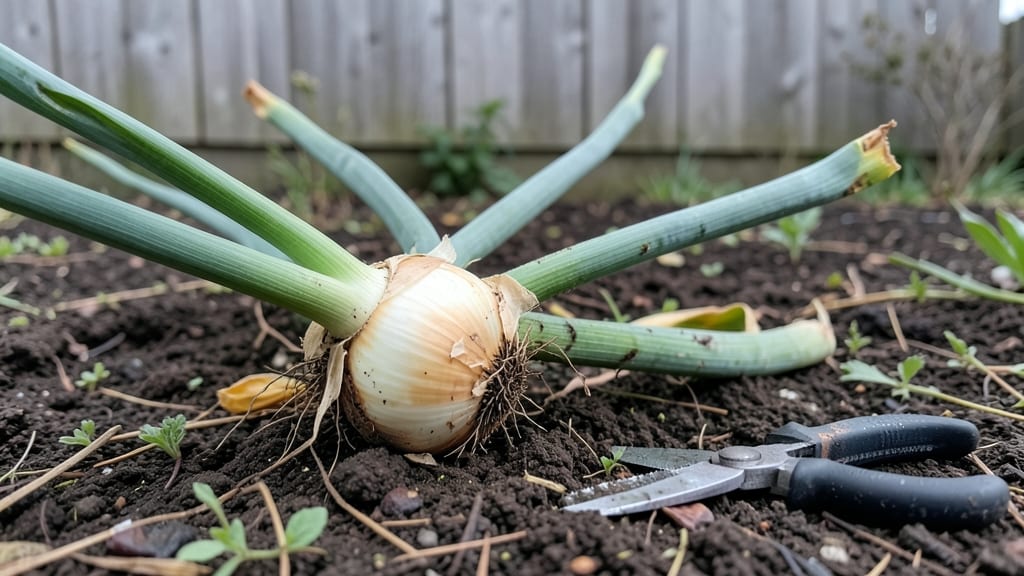
Picking onions from your garden at the right time transforms them from mild and sweet to tough and bitter—so timing is everything.
Picture this: you’ve nurtured your 🧅 plants all season, only to pull them too early and end up with tiny, underdeveloped bulbs, or wait too long and watch them split or rot.
The key is catching that sweet spot when the tops yellow and the neck starts to slim—before the bulbs lose their flavor.
In USDA Zone 6a, spring-planted onions typically reach harvest by late May or early June, while fall crops mature in September or October. But don’t rely on the calendar—watch for three telltale signs: tops falling over, papery skins forming, and a firm, round bulb.
Once you spot these cues, I’ll walk you through the best way to harvest, cure, and store your onions so they stay fresh and flavorful for months. No more guesswork, just perfect, homegrown harvests every time.


How to identify the perfect harvest time for onions using visual cues
Harvesting onions at the right moment ensures maximum flavor and storage potential. Unlike many vegetables, onions don’t ripen after being picked—they simply mature. If you pull them too early, you’ll end up with small, pungent bulbs.
Wait too long, and they’ll split or rot in the ground. The key is learning to read your plants’ visual cues, which tell you exactly when to harvest for the best results.
For USDA Zone 6a gardeners, timing matters even more. Spring-planted onions typically mature between 100-120 days, while fall crops take slightly longer due to cooler temperatures. But don’t rely solely on days-to-maturity—watch for these three critical visual signals instead.
Mastering these cues will help you avoid common mistakes like harvesting in damp weather or missing the sweet spot for flavor.
- 1. Neck Thinning: The stem neck (the area between the bulb and tops) should shrink to about ½-inch thick. When it’s thicker, the bulb isn’t fully mature. If it’s too thin (¼-inch), you’ve waited too long.
- 2. Leaf Yellowing: The green tops will start turning yellow-brown and fall over naturally. This signals the bulb has stopped growing upward and is focusing energy on storage. Never harvest when tops are still green and upright.
- 3. Bulb Firmness: Gently squeeze the bulb—it should feel firm and round, not soft or spongy. A mature bulb will also have papery outer skins forming, which protect it during storage.
Green onions (or scallions) are different—they’re harvested when the bulb is ½- to 1-inch wide and the leaves reach 6-8 inches tall. Unlike storage onions, you can cut green onions multiple times from the same plant.
For these, watch for tender leaves rather than bulb development. If you accidentally harvest a storage onion too early, don’t panic—just replant the tops, and they’ll often regrow for green onion use.
Seasonal variations play a role too. In hot climates, onions may mature faster and need harvesting earlier to avoid splitting. In cooler zones like Zone 6a, fall-planted onions might need an extra week or two to reach full maturity compared to spring crops.
Always prioritize dry, sunny days for harvesting—wet conditions can lead to rot or fungal issues.
One pro tip: Pull a test onion a few days before you think they’re ready. Dig up one bulb and check its size and firmness. If it’s smaller than a golf ball, wait a few more days.
If it’s the size of a tennis ball and firm, you’re good to go. This simple step saves you from harvesting an entire crop too early or too late.
After harvesting, let onions cure in the sun for 1-2 hours to toughen the skins and prevent rot. Then, braid or store them in a dry, well-ventilated area. Proper curing extends storage life from weeks to months. If you miss the curing step, onions may spoil faster or develop mold.
Remember, onion flavor changes over time. Freshly harvested bulbs are sweetest, while stored onions develop stronger, sharper flavors. For the best balance, aim to harvest when the neck is thin, tops are yellowing, and bulbs are firm. With these visual cues, you’ll never second-guess your harvest timing again.
Now that you know the signs, mark your calendar for late May to early June for spring crops and September to October for fall-planted onions in Zone 6a. Happy harvesting!
Common mistakes that ruin onion harvest timing (and how to avoid them)
Harvesting onions at the wrong time can turn your hard work into a bitter disappointment. I’ve seen gardeners pull onions too early, leaving them small and pungent, or wait until they split open from over-maturity.
The key is recognizing the three critical mistakes that throw off timing—and how to fix them before it’s too late.
First, many gardeners rely on the calendar instead of visual cues. While spring-planted onions in USDA Zone 6a typically mature by late May, fall crops need individual attention.
Ignoring the plant’s signals leads to underdeveloped bulbs or wasted effort. Next, harvesting in wet conditions creates muddy, slow-to-dry onions that rot in storage.
Finally, overlooking pest damage or disease can ruin an entire batch. Onions with holes from onion flies or moldy tops won’t store well, no matter how perfect the timing. Let’s tackle these mistakes head-on with actionable fixes.
⚠️ Warning: The #1 Harvest Timing Trap
Pulling onions when the tops are still green is a rookie mistake. If you harvest before the neck slims to ½-inch thick, you’ll end up with tiny, sharp bulbs. Wait until 50-60% of the tops yellow and fall over—this ensures maximum sweetness and storage life.
Pro Tip: Use a ruler to check neck thickness. If it’s thinner than a pencil, wait 3-5 more days.
Another common error is harvesting in wet weather. Damp bulbs take forever to cure and are prone to mold. Always harvest onions on a dry, sunny day when the soil is loose. If rain is forecast, pull them early and lay them out to dry immediately.
Pro tip: Use a garden fork to loosen soil gently—never yank onions by the tops, or you’ll damage the bulbs.
Pest pressure is the silent harvest killer. Onion flies lay eggs near plants, and their larvae burrow into bulbs, causing rot. If you notice chewed leaves or small holes, treat with neem oil or row covers early in the season.
For storage onions, cull any damaged bulbs immediately—they’ll spoil the whole batch. A quick inspection before curing saves hours of frustration later.
Finally, don’t assume all onions mature at once. In my garden, yellow onions and red onions often ripen weeks apart. Harvest them in batches as they reach readiness to avoid over-maturity.
For green onions, cut them when they’re 6-8 inches tall—they won’t form bulbs, so timing is less critical but still matters for flavor.
By avoiding these pitfalls, you’ll enjoy sweet, long-storing onions that taste like summer all winter. Next time, trust the plant’s signals over the calendar—and harvest with confidence!