
Pests
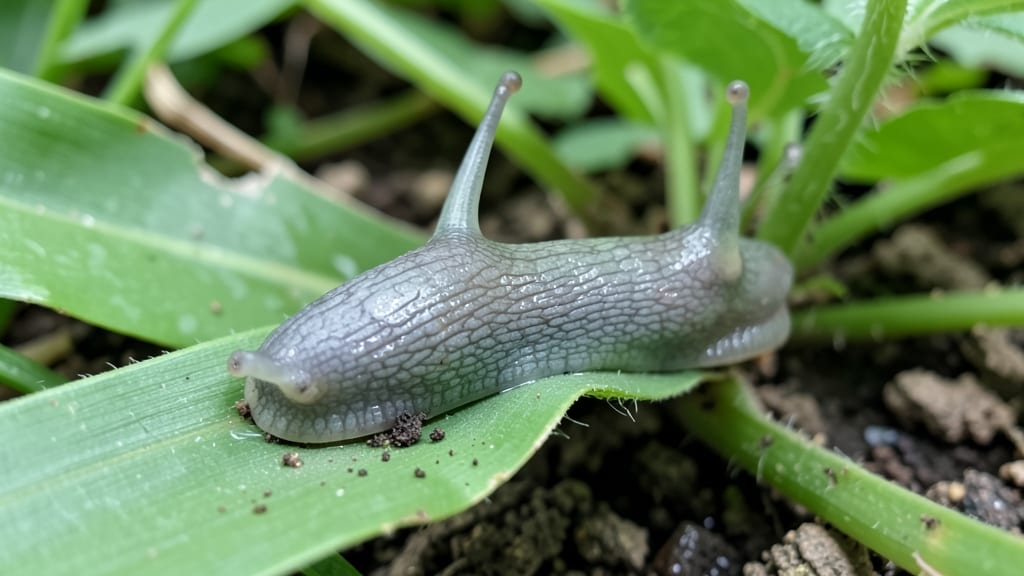
Slugs are bad for gardens because they devour young seedlings, leaves, and flowers, leaving behind irregular holes and silvery slime trails that damage plants and hinder growth. Their feeding can weaken or kill vulnerable plants overnight, especially in moist conditions.
These slimy pests aren't just annoying—they're like tiny, nocturnal lawnmowers that target your most delicate plants first. 🌱 Their razor-sharp tongues (called radulae) scrape plant tissue like sandpaper, leaving behind jagged edges that invite disease.
Hostas, lettuce, and marigolds are particularly vulnerable, but even mature plants can suffer if slug populations explode during rainy seasons.
What makes them especially dangerous is their timing: slugs strike at night when defenses are down, and their slimy trails create perfect conditions for fungal infections. A single slug can consume 50 square inches of leaves per night, turning your carefully nurtured garden into a buffet zone overnight.
💡 In This Article
- How Slugs Damage Garden Plants and Recognize Their Feeding Patterns
- Natural Slug Control Methods for Organic Gardens
How slugs damage garden plants and recognize their feeding patterns
Slugs attack plants using a specialized feeding organ called the radula—a ribbon-like structure lined with thousands of tiny, chitinous teeth that act like sandpaper. These teeth scrape plant cells at a microscopic level, creating irregular holes that disrupt photosynthesis.
The real damage comes from their saliva, which contains enzymes that break down cell walls, making plants more susceptible to disease. 🔥
Young plants are especially vulnerable because their tender leaves offer little resistance. A single slug can consume up to 0.25 square feet of foliage per night, and their favorite targets include hostas (which they find irresistible), lettuce (soft and water-rich), and marigolds (whose strong scent doesn't deter them).
The damage isn't just cosmetic—it weakens stems, stunts growth, and can even kill seedlings entirely.
Recognizing slug damage is easier than you think. Look for these telltale signs: irregular holes with smooth edges (unlike insect damage, which often has jagged edges), silvery slime trails (their mucus leaves a shiny, metallic sheen on leaves and soil), and missing petals or flower centers (they adore tender blooms).
The slime also creates a perfect environment for fungal spores, accelerating plant decline.
Here's what most gardeners miss: slugs prefer young, succulent growth because it's easier to digest. Mature plants have tougher cell walls and often contain bitter compounds that slugs avoid. This is why you might see perfect leaves on older plants while nearby seedlings are being decimated.
The key factor is moisture—slugs thrive in damp conditions, which is why they're most destructive after rain or in shady, humid areas.
Another clue is the time of day. Slugs are nocturnal, so damage often appears overnight. If you notice fresh holes in the morning but no insects or chewed edges, slugs are likely the culprits.
Their feeding patterns create a zigzag pattern on leaves, unlike the straight cuts made by cutworms or the notched edges from snails. 💫
The damage compounds quickly. A single slug can lay 20-40 eggs per clutch, and these hatch into tiny slugs that start feeding immediately. Without intervention, a garden can go from a few holes to widespread destruction in just a few weeks.
The worst part? You might not even see the slugs themselves—they hide under boards, rocks, or dense mulch during the day.