Container Gardens
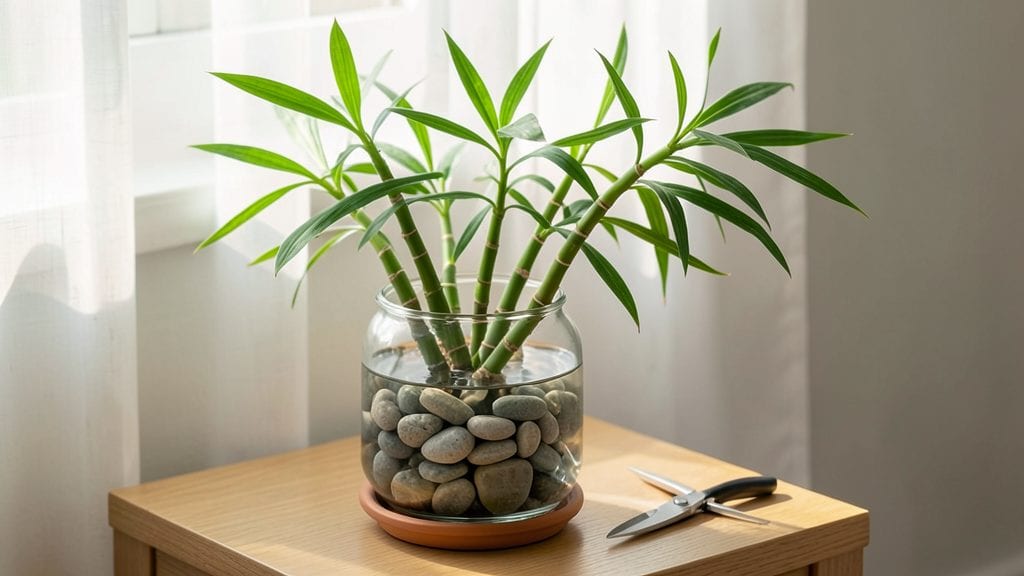
A bamboo garden in Chicago thrives with cold-resistant species like Fargesia or Phyllostachys aureosulcata, planted in well-draining soil with partial shade, and protected from winter winds. Chicago’s Zone 5 climate requires clumping bamboo over running types to prevent spreading, with proper spacing and mulching for winter survival.
A bamboo garden in Chicago isn’t just possible—it’s rewarding when you choose the right types. 🌿 The key is selecting clumping varieties like Fargesia, which stay contained and handle Chicago’s harsh winters far better than their running cousins.
These plants thrive in partial shade and well-draining soil, which helps prevent root rot—a common issue in Chicago’s heavy clay. I’ve seen firsthand how a 3-inch layer of mulch in late fall keeps roots insulated, while a sturdy windbreak (like a lattice fence) shields tender shoots from brutal winter winds.
The payoff? Lush, year-round greenery that’s both low-maintenance and stunning.
💡 In This Article
- Cold-Hardy Bamboo Varieties for Chicago Gardens
- Planting and Maintaining Bamboo in Chicago’s Climate
Cold-hardy bamboo varieties for Chicago gardens
Chicago's Zone 5 climate pushes temperatures to -10°F to -20°F in winter, making most bamboo species vulnerable to cold damage.
The key to survival lies in species with thick rhizomes and dormant buds that can withstand freezing. Fargesia (clumping bamboo) and Phyllostachys aureosulcata (running bamboo) excel here because their underground stems store starches that act like natural antifreeze, preventing cellular damage.
These varieties also have denser culm walls that insulate against rapid temperature swings—critical during Chicago's infamous polar vortex events.
Let's compare the two top performers: Fargesia grows in tight clusters (clumping), reaching 10-15 feet tall with 1-2 inch diameter stalks, while Phyllostachys aureosulcata spreads aggressively (running) but matures at 20-30 feet with 3-4 inch stalks.
The tradeoff? Fargesia stays contained naturally, while Phyllostachys requires rhizome barriers to prevent underground invasion. Both handle -15°F without protection, but Fargesia's compact growth makes it ideal for urban Chicago gardens where space is limited.
What actually happens in Chicago winters? The rhizomes of these cold-hardy varieties enter dormancy when temperatures drop below 40°F, slowing metabolic activity to conserve energy.
Their waxy leaf cuticles prevent moisture loss during dry winds, while the thick mulch layer (minimum 3 inches of straw or wood chips) mimics natural forest floor insulation.
Without this protection, new shoots would freeze back to the ground, requiring 2-3 years to recover—time most gardeners don't have in our short growing season.
Consider these growth habits when selecting: Fargesia robusta develops arching canes perfect for privacy screens, while Phyllostachys nigra (black bamboo) offers dramatic contrast but needs 6-8 feet spacing. Both produce edible shoots in spring (harvest before 1 foot tall), adding a bonus for adventurous gardeners.
The golden culms of Phyllostachys aureosulcata also create stunning winter interest when backlit by snow.
Seasonal care reveals why these varieties thrive: In spring, remove old canes at ground level to encourage new growth. During summer, water deeply once weekly (Chicago's clay soil drains poorly), and in fall, apply compost-rich mulch before first frost.
The root systems of these bamboos extend 1-2 feet deep, so avoid disturbing them during planting—they establish slowly in our heavy soil.
Here's what most Chicago gardeners overlook: The wind factor. Unprotected bamboo suffers windburn (brown leaf tips) when winds exceed 20 mphlattice windbreak on the north side creates a microclimate that can raise temperatures 5-10°F warmer near the plants.
This simple addition explains why bamboo thrives in my Zone 5b garden when neighbors struggle with the same varieties.