
Tools
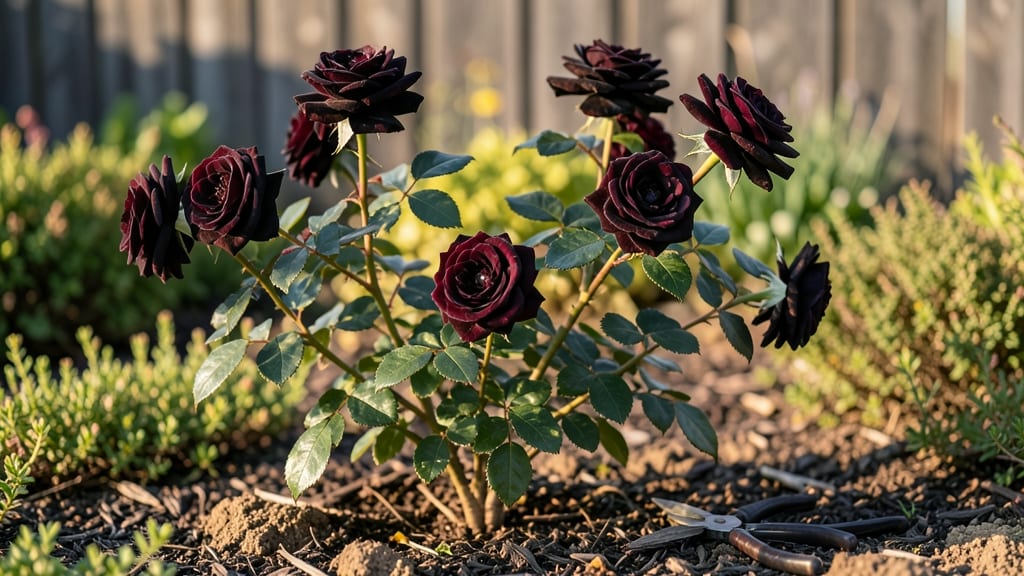
A garden centered around black roses transforms any space into a moody, velvety masterpiece that stops people in their tracks. 🌿 I’ve designed my own dark-themed garden with these dramatic blooms, and the secret isn’t just planting them—it’s layering them with the right companions to make the color pop against rich greens and deep purples.
Black roses thrive in full sun and well-draining soil, but the real magic happens when you pair them with plants like heucheras, purple fountain grass, or silver foliage.
My garden’s focal point is a circular bed where the roses anchor a mix of textures—smooth, glossy leaves and spiky grasses—that create depth. For borders, I use boxwoods trimmed into sharp lines to contrast the roses’ soft petals.
The result? A garden that feels like a living painting, with year-round interest from evergreen shrubs and seasonal blooms that echo the roses’ dark tones. Even in winter, the skeletal branches add structure, and by spring, the first deep red buds bring back that dramatic impact.
It’s not just about the roses—it’s about the drama they bring to the whole scene.
Whether you’re going for gothic romance, modern minimalism, or a cottage-core twist, black roses adapt beautifully. The key is playing with contrast—light against dark, smooth against textured—and letting the roses be the star while supporting players steal the show in their own way.
📚 In This Guide
- What you need
- Instructions
- Tips and common mistakes
- Wrapping up and next steps
What you need
- ● Black roses (or near-black varieties): 5–10 plants (depending on garden size). Opt for 'Black Baccara', 'Queen of Night', or 'Double Black' for the deepest hues.
- ● Well-draining soil: Mix equal parts garden soil, compost, and perlite (or coarse sand) to prevent root rot.
- ● Organic mulch: 2–3 inches of dark mulch (cypress or pine bark) to retain moisture and enhance contrast.
- ● Slow-release fertilizer: 10–15 lb. (5–7 kg) of balanced 10-10-10 or rose-specific fertilizer.
- ● Epsom salt: 1 lb. (0.5 kg) for magnesium boosts (dissolve 1 tbsp in water monthly).
- ● Garden trowel & spade: For planting and soil prep.
- ● Pruning shears: Sharp, bypass-style shears (sterilized with rubbing alcohol).
- ● Watering can or hose with adjustable nozzle: Black roses love consistent moisture but hate soggy roots.
- ● Garden gloves: Heavy-duty to protect against thorns.
- ● Stakes or trellis: 4–6 ft. tall (for climbing varieties like 'Black Ice').
- ● pH test kit: Aim for soil pH 6.0–6.5 (black roses thrive in slightly acidic conditions).
- ● 🌿 Companion plants: Silver foliage (e.g., Artemisia 'Powis Castle') or deep purples (e.g., Salvia 'May Night') to make black roses pop.
- ● 💡 Garden lights: Solar-powered LED lights to highlight your roses at night.
- ● 🎨 Decorative elements: Dark stone borders, wrought-iron trellises, or obsidian pebbles for a gothic vibe.
- ● 🌡️ Row covers: Lightweight fabric to protect from late frosts (if planting in cooler climates).
Step-by-Step instructions for designing a striking black roses garden
Here's how to create a dramatic, low-maintenance black rose display that thrives year-round.
🪴 Step 1: Select and Prepare Planting Locations
Black roses—like 'Black Baccara' or 'Black Magic'—thrive in full sun with at least 6-8 hours of direct light daily. Choose spots with well-draining soil; these deep-red roses despise soggy roots. I always test drainage first by digging a 12-inch hole, filling it with water, and waiting to see if it drains within 1 hour.
For maximum impact, space plants 3-4 feet apart in rows or clusters. This gives them room to grow while creating a lush, dramatic backdrop. If your soil is heavy clay, mix in 2-3 inches of compost to improve aeration before planting.
☀️ Step 2: Plant Roses for Optimal Growth and Color
Dig holes twice as wide and deep as the root ball to encourage outward root growth. Gently loosen the roots of each rose (if pot-bound) and place the plant so the graft union sits 2-3 inches below soil level. This prevents sun exposure that can weaken the plant.
Backfill with native soil mixed with 1 cup of bone meal fertilizer per hole to boost early root development. Water deeply to settle the soil, then add a 2-inch layer of mulch around the base (keeping it 3 inches away from the stem to prevent rot). This retains moisture while protecting roots from temperature swings.
💧 Step 3: Establish a Watering and Feeding Routine
Water newly planted roses deeply 2-3 times per week until the soil is 6-8 inches deep and evenly moist. Black roses are drought-tolerant once established, but consistent moisture in their first year ensures strong growth. I check moisture by sticking my finger 2 inches into the soil—if it feels dry, it's time to water.
Feed with a balanced rose fertilizer (10-10-10) every 4-6 weeks during the growing season. In late summer, switch to a low-nitrogen, high-phosphorus fertilizer to encourage blooming. Avoid fertilizing after mid-September to allow plants to harden off for winter.
✂️ Step 4: Prune for Health and Dramatic Blooms
Prune black roses 3 times per year: in late winter (just before new growth starts), after each major bloom cycle, and lightly in early summer to shape the plant. Always use clean, sharp pruners to make cuts at a 45-degree angle, just above an outward-facing bud.
Remove any dead, diseased, or crossing branches first. Then thin out 1/3 of the oldest canes to encourage new growth. Black roses bloom on both old and new wood, so don't cut back too aggressively—you'll sacrifice next year's flowers. After pruning, apply a copper fungicide spray to prevent infections through fresh cuts.
⏰ Step 5: Protect and Maintain Year-Round
In fall, reduce watering as temperatures drop but keep soil moist until first frost. Once dormancy begins, mound 4-6 inches of mulch around the base to insulate roots. In winter, wrap young plants with burlap or frost cloth if temperatures dip below 15°F.
Remove winter protection in early spring before new growth appears. Black roses are surprisingly low-maintenance once established—they reward patience with bold, velvety blooms from early summer through fall. Deadhead spent flowers regularly to encourage continuous blooming and maintain that dramatic, jet-black appearance.
Tips & tricks for perfect black roses garden
A few simple tricks will help you create a stunning black rose garden that thrives year after year.
Sunlight Strategy: Black roses need that full sun—at least 6-8 hours daily—but don't assume every sunny spot is perfect. I've found that morning sun with afternoon shade works best in hot climates, preventing leaf scorch while still giving them the light they crave. If your garden has limited sun, consider container planting where you can move them to optimal light conditions.
Drainage Test: That 1-hour drainage test in Step 1 is non-negotiable. I've seen black roses struggle in spots that seemed fine for other plants. If water pools after an hour, amend the soil with more compost or create raised beds. The roots need oxygen as much as water, and soggy soil leads to root rot that's hard to fix.
Winter Protection: When temperatures dip below 15°F, don't skimp on the winter wrapping. I've learned this the hard way—young plants wrapped in burlap survived, while neglected ones suffered frost damage. For extra insurance, add a layer of straw mulch over the burlap. This double protection gives you peace of mind during harsh winters.
Pruning Precision: The 45-degree angle cut in Step 4 isn't just for looks—it's about directing water and nutrients away from the cut. I've started marking my pruners with a small piece of tape at the correct angle so I don't accidentally make straight cuts. This small detail makes a big difference in plant health and bloom quality.
Pro Tips for Black Roses Garden
- A few simple tricks will help you create a stunning black rose garden that thrives year after year.
- Sunlight Strategy: Black roses need that full sun—at least 6-8 hours daily—but don't assume every sunny spot is perfect.
- Drainage Test: That 1-hour drainage test in Step 1 is non-negotiable.
Frequently asked questions
Can black roses really thrive in my climate?
Most black roses (like Bourbon or Noir varieties) prefer USDA Zones 6-10, but some cold-hardy types (e.g., Black Baccara) survive in Zone 5 with winter protection. For warmer zones (10+), shade and consistent moisture are key. Pro tip: Check your local nursery for heat-tolerant cultivars if you’re in a hotter region!
How long does it take for black roses to bloom after planting?
Patience pays off! Newly planted black roses may take 1-2 years to establish and bloom. Prune lightly in early spring to encourage growth, and fertilize monthly during the growing season. First-year flowers might be sparse, but year-round color becomes reliable in the second year with proper care.
What’s the difference between ‘black’ roses and deep red or purple roses?
True black roses have dark, velvety petals with a near-onyx hue (thanks to anthocyanins), while deep reds (like Black Velvet) lean toward burgundy. Purple-black roses (e.g., Papa Meilland) have a bluish tint. For authentic black, opt for Bourbon or China hybrids—they’re the closest to the iconic “black rose” look!
Why are my black roses’ leaves turning yellow or dropping?
Yellow leaves often signal overwatering or nutrient deficiency. Check soil drainage (black roses hate soggy roots!) and amend with compost. Pests like aphids or spider mites can also stress plants—spray with neem oil if you spot tiny bugs. Troubleshoot: Adjust watering (1-2 inches per week) and test soil pH (ideal: 6.0-6.5).
Can I grow black roses in containers? What’s the best setup?
Use a large pot (15+ gallons) with drainage holes and a mix of potting soil + perlite. Choose compact varieties like Black Chiffon. Place in morning sun/afternoon shade to prevent wilting. Container hack: Add slow-release fertilizer at planting and repot every 2-3 years to refresh soil.
Are there black roses that bloom year-round?
While no rose blooms nonstop, repeat-blooming varieties (like Black Magic or Black Queen) produce flowers in spring, summer, and fall with minimal deadheading. For winter interest, plant near evergreens or add ornamental grasses to bridge gaps. Bonus: Prune spent blooms to encourage new growth!
Wrapping up and next steps
A black roses garden isn’t just a bold statement—it’s a year-round masterpiece of drama and elegance. With the right soil, sunlight, and care, these striking blooms can transform your outdoor space into a captivating sanctuary.
Whether you’re drawn to their mysterious allure or their ability to thrive in various climates, this garden style is sure to inspire confidence and creativity.
Ready to bring your vision to life? Start small—plant a few black roses or experiment with complementary dark foliage. Your next step? Sketch a layout, gather your tools, and dive in! The garden of your dreams is closer than you think. 🌹✨