
Container Gardens
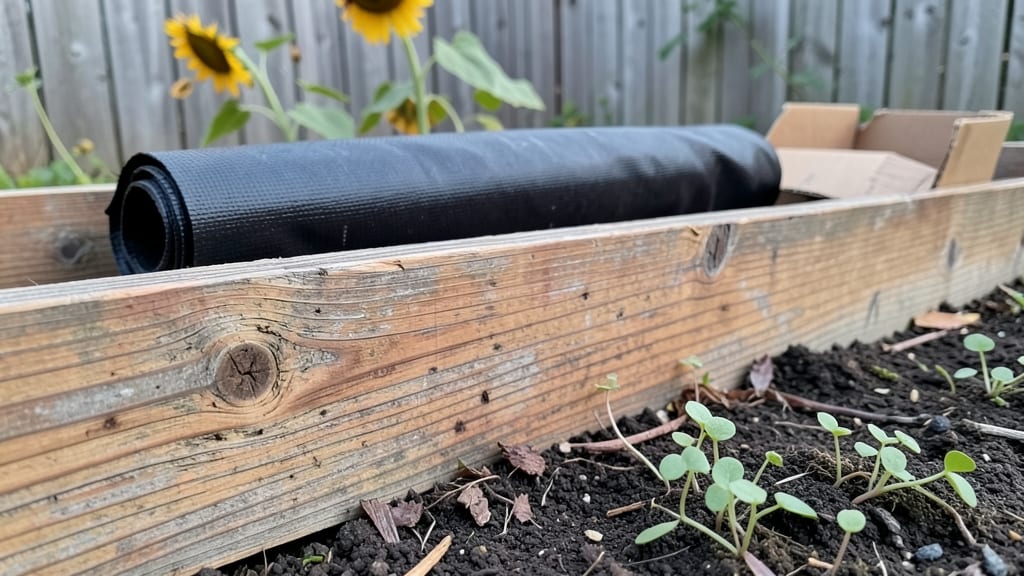
Building a raised garden bed costs between $100 and $500, depending on materials like cedar wood ($30-$100 per bed), hardware ($15-$30), soil ($20-$50 per cubic yard), and liner ($5-$20). DIY designs with recycled materials can cut costs significantly while maintaining durability.
I’ve found that cedar remains the gold standard for longevity—it naturally resists rot and pests, which justifies the higher upfront cost over time. 🌱 For budget-conscious gardeners, pine or composite lumber can slash expenses by up to 50%, though they’ll need more maintenance.
The real cost-saver? Skipping pre-mixed soil and blending your own with compost or free yard waste—this can cut soil costs by nearly half while boosting plant health.
Don’t overlook hardware either—galvanized screws last longer than basic nails but cost just a few extra dollars. And if you’re crafty, upcycling materials like untreated pallets or cinder blocks can transform a $500 project into a $150 one without sacrificing structure. The key is balancing upfront savings with long-term durability.
💡 In This Article
- Raised Garden Bed Material Cost Breakdown
- DIY Cost-Saving Techniques for Raised Beds
Raised garden bed material cost breakdown
Your choice of lumber sets the foundation for both cost and durability. Cedar planks cost $3-$6 per linear foot due to their natural rot resistance, while pine—commonly $1-$3 per foot—requires sealing every 1-2 years.
Composite lumber, made from recycled wood fibers and plastic, falls in the $4-$7 per foot range but never needs staining. The key difference is cedar's 15-20 year lifespan versus pine's 5-10 years with treatment, making cedar the long-term investment despite higher upfront costs.
Hardware choices create subtle but meaningful cost differences. Galvanized deck screws ($0.20-$0.40 each) resist corrosion better than basic nails ($0.05-$0.15 each) but cost 3-4x more. Corner brackets ($3-$8 each) add structural integrity to larger beds but aren't needed for simple 4x8 foot designs.
What most people overlook is that 100 galvanized screws cost about $25, while 200 basic nails run $10—the tradeoff is how many seasons your bed will last without wobbling.
Soil represents the largest variable cost after lumber. Premium topsoil runs $20-$50 per cubic yard, while compost blends cost $10-$25 but require mixing. The science here is simple: plants need 5% organic matter for optimal growth.
A 4x8x12-inch bed requires 1.33 cubic yards—pure topsoil costs $40-$66, but blending 50% compost cuts costs to $25-$35 while improving drainage. Regional variations matter too: coastal areas often charge 20% more for soil due to transportation costs.
Liners prevent soil erosion and weeds but offer stark cost contrasts. Cardboard ($0.10-$0.20 per sheet) works for 1-2 seasons before breaking down, while landscape fabric ($1-$3 per roll) lasts 3-5 years. The catch? Cardboard requires 4-6 layers to match fabric's durability, adding labor time.
For 8x4 foot beds, you'll need 4 sheets of cardboard ($0.50) versus 1 roll of fabric ($2.50). The environmental tradeoff is real too—cardboard degrades into soil but may introduce ink residues.
Bulk purchasing unlocks hidden savings. Home improvement stores offer 10-15% discounts on lumber bundles, and buying screws in 5-pound boxes cuts per-unit costs by 25%. Soil suppliers often give 10% off for orders over 3 cubic yards.
Here's the math: a 4x8x12-inch cedar bed needs 16 linear feet of lumber. Buying 20 feet at once drops the price from $48 to $40—a $8 savings that compounds with hardware and soil.
Don't forget regional lumberyard deals. In the Pacific Northwest, cedar prices drop 20-30% in winter due to seasonal inventory. Southern states often have pine lumber for $0.80 per foot versus $2 in New England.
The lesson? Time your build with local harvest cycles and check Craigslist for "free" pallets—many businesses give them away for hauling fees. A $500 project can become $200 with strategic sourcing.