
Pests
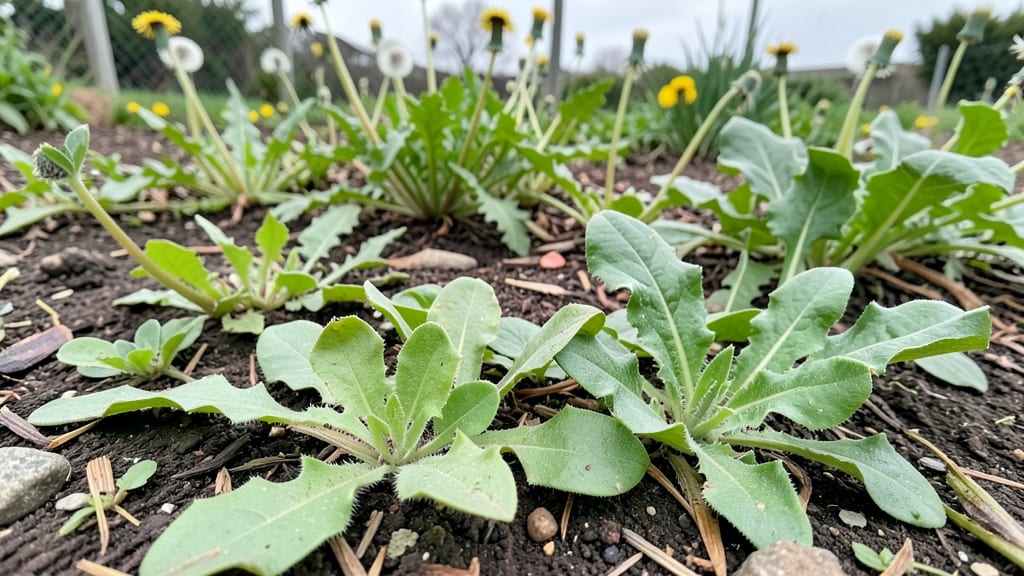
When garden weed leaves start crowding out your prized plants, you need more than just pulling—you need a natural herbicide that actually kills the roots.
I’ve battled weeds for years, and the difference between a struggling garden and one that thrives often comes down to how aggressively you tackle them at the leaf level. The key isn’t just yanking them out but using their own biology against them.
Most store-bought herbicides miss the roots, leaving weeds to regrow. But vinegar, salt, and dish soap mixed in a spray bottle? That combo works—when applied directly to weed leaves, it breaks down their cell structure and starves the roots below.
You’ll need a sunny day for application and about 10 minutes to cover a 10x10-foot area. The results? Weeds crisp up within 24-48 hours and stay gone for weeks.
What you’ll end up with is a garden where your tomatoes, peppers, and flowers get the sunlight and nutrients they deserve. The soil stays healthier too, since you’re avoiding harsh chemicals that can linger.
Plus, the satisfaction of watching weeds wither away after just one treatment? Priceless. Here’s how to make it happen without harming your plants.
This method works best in warm, dry weather—perfect for late spring through early fall. If you’re in a cooler climate, wait until temperatures hit 70°F or higher for maximum effectiveness. And for stubborn weeds like dandelions, you might need a second application, but it’s worth the effort.
Root Causes Of Weed Overgrowth
When garden weed leaves seem to take over your yard like an uninvited party, it’s rarely just bad luck—there’s usually a science-backed reason behind it. Understanding these causes can help you tackle the problem at its source.
Let’s break down the most common culprits and why they allow weeds to thrive.
Weeds flourish in soil that’s either too rich, too compacted, or lacking essential nutrients. Here’s why:
- Excess Nitrogen: Weeds like crabgrass and chickweed love nitrogen-heavy soil, often left behind by over-fertilizing lawns. While nitrogen helps grass grow, it also fuels weeds, giving them a competitive edge. Solution: Use slow-release fertilizers or organic options like compost to balance nutrient levels.
- Compacted Soil: Heavy foot traffic, machinery, or clay-heavy soil compresses the earth, making it harder for grass roots to spread. Weeds, with their shallow but aggressive root systems, fill the gaps. Solution: Aerate your lawn annually to improve airflow and root growth.
- Low Organic Matter: Soil with minimal compost or mulch lacks structure, leaving bare patches where weeds germinate easily. Solution: Add a 1–2 inch layer of mulch or compost to block sunlight and improve soil health.
Weeds are opportunistic—when your lawn or garden has gaps, they move in fast. Here’s how sunlight plays a role:
- Thin Grass or Patchy Cover: If your lawn has bald spots from disease, drought, or poor seeding, weeds like dandelions and clover seize the opportunity. Solution: Overseed bare areas in early fall for dense grass coverage.
- Excessive Sun Exposure: Some weeds (e.g., purslane or spurge) thrive in full sun, while others (like creeping Charlie) prefer shade. If your garden has inconsistent light, weeds exploit the imbalance. Solution: Adjust planting layouts or use shade-tolerant ground covers to outcompete weeds.
Overwatering or irregular watering can turn your garden into a weed magnet. Here’s how:
- Frequent, Shallow Watering: Light, frequent watering keeps the topsoil moist—perfect for weed seeds to germinate. Deep, infrequent watering (1–1.5 inches per week) encourages grass roots to grow deeper, crowding out weeds. Solution: Water early in the morning and use soaker hoses for targeted hydration.
- Irrigation Runoff: Sprinklers that overspray onto sidewalks or driveways can deposit weed seeds from neighboring areas. Solution: Adjust sprinkler heads to avoid overspray and clean gutters to prevent seed buildup.
Weeds dominate when they’re not competing with stronger plants. Here’s why this happens:
- Over-Cultivating Soil: Frequent tilling disrupts beneficial soil microbes and buries weed seeds deeper, where they germinate later. Solution: Use mulch or sheet mulching (cardboard + compost) to suppress weeds naturally.
- Monoculture Planting: Gardens with single-species plants (e.g., rows of tomatoes) leave gaps where weeds like pigweed or lambsquarters thrive. Solution: Plant densely with companion plants (e.g., basil near tomatoes) to fill space and deter weeds.
When your garden’s main plants struggle, weeds step in to fill the void. Common triggers include:
- Grass Grubs or Chinch Bugs: These pests devour grass roots, creating dead patches where weeds like nutsedge or crabgrass move in. Solution: Treat infestations with neem oil or beneficial nematodes.
- Fungal Infections (e.g., Brown Patch): Diseased grass leaves gaps for weeds to colonize. Solution: Improve drainage and apply fungicides as needed.
Pro Tip: 💡 Most weed problems start with soil health. Test your soil’s pH and nutrient levels annually—aim for a pH of 6.0–7.0 for lawns and 6.0–6.8 for gardens. Adjust with lime (to raise pH) or sulfur (to lower it) as needed.
Natural Ways to Banish Weeds for Good
Weeds may seem like a never-ending battle, but with the right approach, you can reclaim your garden without harsh chemicals. Below, we’ve mapped out practical solutions for common weed problems—from stubborn leaves to deep-rooted invaders—along with prevention tips to keep them from returning. Let’s tackle this step by step!
1.
Manual Removal: The Old-School Method Cause: Weeds with shallow roots (like dandelions, chickweed, or crabgrass) spread quickly and leave behind unsightly leaves. Fix: - Pull at the right time: Wait for a rainy day or water the soil first—wet soil makes roots easier to extract. 🌧️ - Grab the base: Use a garden fork or weeding tool to loosen roots before pulling.
For stubborn weeds, a gloved hand works too! - Dispose properly: Bag weeds (especially seed-bearing ones) and trash them—don’t compost them, or they’ll regrow. - Pro tip: Mulch immediately after weeding to block sunlight and prevent regrowth. 🌿
Prevention:
- Hand-pull weeds weekly before they seed.
- Use a pre-emergent mulch (like straw or wood chips) to smother soil.
2.
Vinegar Spray: Fast-Kill for Tough Leaves Cause: Broadleaf weeds (like clover or plantain) thrive in sunny patches and leave behind tough, persistent foliage. Fix: - Mix a potent spray: - 1 gallon of white vinegar (20% acetic acid) - 1 cup of salt (enhances drying effect) - 1 tbsp dish soap (helps it stick) - Spray on a sunny day (vinegar works best with direct sunlight). - Reapply every 2–3 days until leaves turn crispy and brown. ⏳ - Avoid spraying desired plants—vinegar is non-selective!
Prevention:
- Apply mulch after treatment to prevent new weeds.
- Water deeply afterward to help soil recover.
3. Boiling Water: Instant Leaf Burn
Cause: Weeds growing in cracks in pavement or between pavers where tools can’t reach. Fix:
- Heat it up: Boil 2–3 gallons of water in a large kettle.
- Pour directly on weeds (aim for the base).
The heat kills leaves and roots instantly. 🔥 - Best for: Driveways, patios, and tight spaces where digging isn’t an option.
Prevention:
- Seal cracks in pavement with gravel or sand to block weed growth.
- Use landscape fabric under mulch in high-weed areas.
4.
Corn Gluten Meal: Stop Weeds Before They Start Cause: Weeds spreading from seeds in the soil (like lamb’s quarters or purslane). Fix: - Apply as a pre-emergent: - Sprinkle 20 lbs of corn gluten meal per 1,000 sq ft in early spring. - Lightly water it in to activate. - How it works: Blocks seed germination without harming established plants. 🌱
Prevention:
- Reapply every 3–4 months for continuous protection.
- Combine with mulch for double the defense.
5. Deep-Rooted Weeds?
Smother Them Cause: Perennial weeds (like bindweed or quackgrass) with deep, tangled roots. Fix: - Cover the area with cardboard or thick newspaper, then top with 4–6 inches of mulch (straw, leaves, or wood chips). - Leave for 4–6 weeks—weeds will starve for sunlight and die. 🌑 - For stubborn spots: Use a heavy-duty landscape fabric (with holes for air/water) under mulch.
Prevention:
- Keep mulch thick (3+ inches) year-round.
- Avoid tilling, which spreads roots and seeds.
6.
Salt Solution: Last Resort for Tough Spots Cause: Weeds growing in non-plantable areas (like gravel or between rocks). Fix: - Mix: - 1 cup coarse salt - 1 gallon hot water - Let cool, then pour over weeds. - Works best on: Driveway cracks, sidewalks, or areas where you never want plants. - ⚠️ Warning: Avoid using near desired plants—salt alters soil chemistry long-term.
Prevention:
- Use gravel or pavers instead of letting weeds take hold.
- Apply a vinegar-salt mix (less harsh than pure salt) for targeted treatment.
- Healthy soil = fewer weeds: Add compost to boost plant growth, which outcompetes weeds. 🌱
- Plant densely: Crowd out weeds with ground covers (like creeping thyme or clover).
- Use a soil solarizer (clear plastic sheeting) in summer to bake weeds out of beds.
- Try flaming (carefully!) for large, open areas—propane torches can singe weeds without chemicals. 🔥
By combining manual removal, natural sprays, and smart prevention, you can eliminate weed leaves—and their roots—for good. Start with one method, stay consistent, and watch your garden reclaim its space! 🌿✨
Frequently asked questions
How do I tell if those green leaves are actually weeds?
Check the leaf shape and growth pattern—weed leaves often have jagged edges, uneven spacing, or grow in clusters. For example, dandelion leaves form a rosette at the base, while clover has three distinct leaflets. Compare them to your planted species: weeds typically have thinner stems and grow faster than garden plants.
Will vinegar spray kill my flowers too?
Yes, vinegar is non-selective—it kills all green plants it touches. Always apply it only to weed leaves, avoiding desirable plants. For targeted treatment, use a small paintbrush to dab the solution directly on weed stems. Alternatively, try a diluted mixture (1:3 vinegar to water) for less aggressive control.
Why do weeds keep coming back after I pull them?
Weeds often have deep roots or spread through underground runners. If you don’t remove the entire root system, new shoots will sprout. For stubborn weeds, use a digging fork to loosen roots or apply a smothering mulch layer (4-6 inches) to block sunlight. Reapply vinegar spray if regrowth appears.
Can I use boiling water on weeds near my vegetable garden?
Only if you’re extremely precise—boiling water can scald nearby plants. For garden beds, stick to manual removal or vinegar spray applied with a dropper. Boiling water works best in non-plantable areas like driveways or sidewalks where you want to eliminate all vegetation permanently.
How long does it take to see results from natural weed killers?
Most natural methods show visible results within 24-48 hours—weed leaves will start wilting and turning brown. For complete root death, allow 1-2 weeks. Consistency is key: reapply every 2-3 days until weeds are fully crispy. Mulching or smothering methods may take 4-6 weeks to fully eliminate deep-rooted weeds.