
Flowers
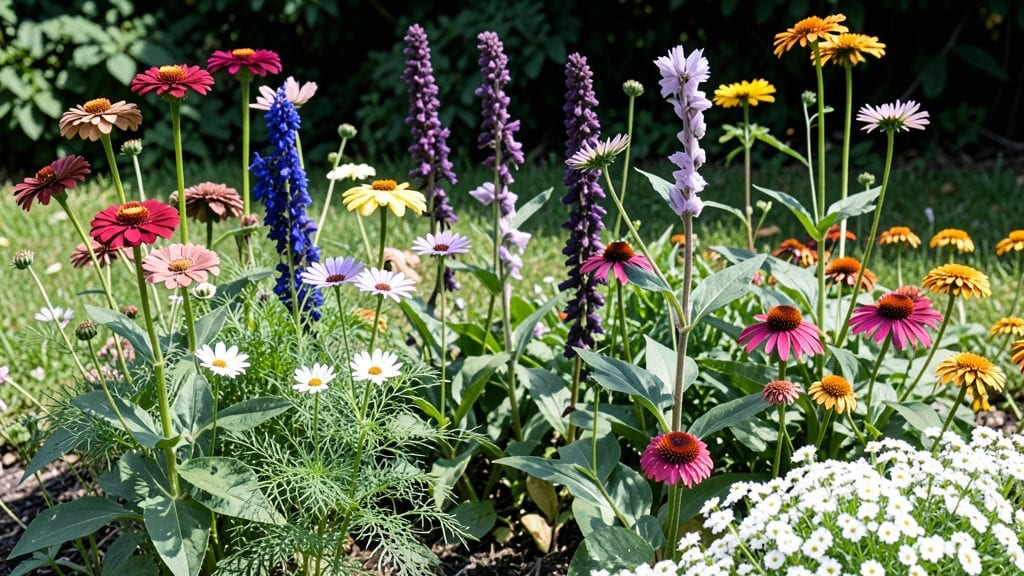
Transforming your space with rainbow garden flowers is easier than you think—and the results are shockingly lush. 🌈 I’ve designed borders that turn heads at neighborhood garden tours by blending annuals and perennials in a gradient that shifts from deep purples to bright yellows, with every hue in between.
The secret isn’t just picking flowers; it’s arranging them so the colors flow like a painter’s palette.
Start with a mix of petunias (for vibrant purples and reds), zinnias (sunburst yellows and oranges), and cosmos (soft pinks and whites) to cover the spectrum. Add tulips or dahlias for seasonal depth, and layer them in 12-inch-deep beds for a full, dimensional look.
Most of these thrive in full sun and moderate watering, making them foolproof for border plantings.
By midsummer, your border will burst with nonstop blooms that attract bees and butterflies while keeping weeds at bay. The key is deadheading spent flowers weekly—it keeps the rainbow vibrant and encourages new growth.
Even in partial shade, the right mix (like impatiens and begonias) will deliver that same wow factor.
This design works for small city yards or sprawling backyards—just scale the bed width to your space. The magic happens when you let the colors blend naturally rather than forcing symmetry. Ready to make your garden the talk of the neighborhood?
📚 In This Guide
- What you need
- Instructions
- Tips and common mistakes
- Wrapping up and next steps
What you need
- ● Rainbow garden flowers: A mix of annuals and perennials for long-lasting color. Recommended varieties: 10–15 petunia plants (mixed colors: purple, pink, red, white)
- ● 10–12 zinnia plants (orange, yellow, pink, or bi-color)
- ● 8–10 marigold plants (gold, orange, or lemon varieties)
- ● 6–8 cosmos plants (pink, white, or deep red)
- ● 5–7 salvia plants (purple, blue, or red for height)
- ● 3–5 black-eyed Susan plants (golden-yellow centers)
- ● Soil: 1–2 bags of high-quality garden soil (or potting mix for containers) + compost (1 part compost to 3 parts soil for nutrient-rich beds).
- ● Fertilizer: Slow-release granular fertilizer (10-10-10 ratio) or organic plant food (like fish emulsion or worm castings).
- ● Mulch: 2–3 bags of organic mulch (cedar, pine, or dyed mulch for extra pop).
- ● Garden tools: 1 garden trowel (for planting small flowers)
- ● 1 hand shovel (for larger beds)
- ● 1 pruning shears (for trimming dead blooms)
- ● 1 garden fork (to loosen soil)
- ● Measuring & marking: 1 measuring tape (for spacing plants)
- ● 4–6 wooden stakes or plant labels (to mark flower types)
- ● 1 spray bottle (for watering seedlings)
- ○ Optional (but helpful!): 1 wheelbarrow (for hauling soil/mulch)
- ● 1 knee pad (for comfort)
- ● 1 watering can (or hose with adjustable nozzle)
- ● 1 gloves (to protect hands from thorns/soil)
- ● Sunlight: A full-sun location (6+ hours of direct sunlight daily) or partial shade (4–6 hours) for shade-tolerant varieties.
- ● Space: A border bed (at least 3–4 feet wide) or containers (12–14" in diameter for each plant).
- ● Water source: Easy access to a hose or watering system (new plants need consistent moisture).
- ● Knowledge: Basic understanding of plant spacing (check seed packets for guidelines) and seasonal care (e.g., deadheading for longer blooms).
Step-by-Step instructions for designing a rainbow garden flower border
Here's how to create a stunning, low-maintenance rainbow border that blooms from spring through fall.
🌱 Step 1: Plan Your Color Sequence and Plant Placement
Start by sketching your border layout on graph paper, using each square to represent 12 inches of space. I like to begin with the tallest blooms at the back and work forward to shorter varieties. For a true rainbow effect, group flowers by color families—think deep purples like salvia, royal blues like delphinium, sunny yellows like black-eyed susans, and fiery reds like geraniums.
Place your tallest plants (like 4-5 feet delphinium or hollyhocks) at the back, then progress to medium-height blooms (like 2-3 feet coneflowers or phlox) in the middle. Fill the front with 1-2 foot annuals like pansies or snapdragons. This layered approach ensures every color pops without competition from taller neighbors.
🌿 Step 2: Prepare the Soil for Long-Lasting Blooms
Dig down 12 inches deep along your border line to loosen compacted soil and improve drainage. Amend the native soil with 2-3 inches of compost and 1 cup of bone meal per foot of border for phosphorus—this fuels strong root systems and vibrant blooms. Work the compost into the top 6 inches of soil, breaking up any clumps.
For clay-heavy soil, mix in 1 part perlite to 3 parts soil to prevent waterlogging. If your soil is sandy, blend in 2 parts peat moss to 1 part soil to retain moisture. Test your soil's pH—most rainbow garden flowers thrive in 6.0-7.0 range. If needed, adjust with lime (to raise pH) or sulfur (to lower it) before planting.
☀️ Step 3: Plant for Continuous Color and Seasonal Flow
Begin with perennial staples like daylilies, coneflowers, and black-eyed susans—they return year after year. Space them 18-24 inches apart to allow room for mature foliage. Next, add bi-annuals like sweet alyssum or snapdragons for winter and early spring color. Fill gaps with annuals like marigolds or zinnias for summer-long blooms.
Plant in clusters of 3-5 for each color group—this creates bold visual impact. For example, place 5 purple salvia plants together, then 3 blue delphinium nearby. Water deeply after planting to settle roots, then mulch with 2 inches of shredded bark to conserve moisture and suppress weeds. This layered planting ensures your rainbow never fades.
💧 Step 4: Water and Feed for Maximum Vibrancy
Water newly planted borders once weekly for the first month, delivering 1 inch of water per week at the soil line. Use a soaker hose to water deeply rather than surface sprinkling—this encourages roots to grow downward. Check soil moisture by pushing your finger 2 inches deep; if it feels dry, water again. Most rainbow flowers tolerate drought once established, but consistent moisture during root establishment prevents stress.
Fertilize lightly in early spring with a balanced 10-10-10 formula at half strength. For vibrant blooms, switch to a 5-10-10 high-phosphorus feed when buds form. Avoid over-fertilizing—this leads to lush foliage but fewer flowers. Deadhead spent blooms regularly to encourage continuous flowering and maintain that rainbow effect.
✂️ Step 5: Prune and Maintain for Year-Round Interest
After the first flush of blooms, cut back one-third of the stem length for perennials like coneflowers or daylilies. This promotes bushier growth and a second round of flowers. For woody stems like hollyhocks, prune in early spring to remove dead growth and shape the plant. Always use clean, sharp shears to avoid damaging stems.
In late fall, cut back perennials to 2-3 inches above ground level and remove annuals. Add a 2-inch layer of mulch to protect roots over winter. Divide clumping perennials like daylilies every 3-4 years to prevent overcrowding and maintain vigor. This simple maintenance keeps your rainbow border thriving for decades.
Tips & tricks for perfect rainbow garden flower borders
Creating a rainbow garden border that wows year after year takes more than just picking pretty flowers—it's about strategic planning and a few gardening secrets I've perfected over time. Here's what nobody tells you that makes all the difference.
The Color Theory Secret: In Step 1, when you're sketching your layout, remember that color perception changes based on what surrounds it. Place sunny yellows like black-eyed susans next to deep purples like salvia to make both colors appear more vibrant. This complementary contrast is what creates that "wow" factor in rainbow gardens. I've found that grouping royal blues like delphinium with fiery reds like geraniums also creates stunning visual tension that draws the eye.
Soil Science Matters: The 12-inch deep soil prep in Step 2 isn't just about loosening soil—it's about creating the perfect root environment. When amending with compost, I recommend adding 1 tablespoon of Epsom salt per foot of border (optional) to boost magnesium levels, which enhances flower color intensity. For clay-heavy soils, consider adding 1 part coconut coir to 3 parts soil instead of perlite—it retains moisture better while improving structure. The key is creating a soil that drains well but holds enough moisture to support continuous blooming.
Planting Clusters That Pop: In Step 3, when you're planting those clusters of 3-5 plants, think about the "rule of three" in design. Odd numbers create more visual interest than even groupings. For example, plant 5 purple salvia in a triangular formation rather than a straight line. This creates natural movement in the border that makes it feel more dynamic. Also, leave 6-8 inches of space between clusters to allow air circulation—this prevents fungal diseases that can dull those vibrant colors.
Watering Wisdom: That first month of weekly watering in Step 4 is critical, but timing matters just as much as quantity. Water in the early morning (between 4-8 AM) to prevent fungal issues from evening moisture. I've found that using a drip irrigation system on a timer set for 30 minutes daily is even better than weekly soaking—it keeps soil consistently moist without the risk of overwatering. The 2-inch deep moisture check is perfect, but if you're using mulch, you can extend that to 3 inches deep since mulch helps retain moisture.
Pro Tips for Rainbow Garden Flowers
- Creating a rainbow garden border that wows year after year takes more than just picking pretty flowers—it's about strategic planning and a few gardening secrets I've perfected over time.
- The Color Theory Secret: In Step 1, when you're sketching your layout, remember that color perception changes based on what surrounds it.
- Soil Science Matters: The 12-inch deep soil prep in Step 2 isn't just about loosening soil—it's about creating the perfect root environment.
Frequently asked questions
Got questions about creating a dazzling rainbow garden? You’re not alone!
Here are answers to the most common queries—from timing to troubleshooting—to help you craft a show-stopping floral border that bursts with color year after year.
When is the best time to plant rainbow garden flowers?
Most annual rainbow flowers thrive when planted in early spring (after the last frost) or late summer (for fall blooms). Perennials, like coneflowers or black-eyed Susans, can go in spring or fall for deeper root establishment. Check your USDA zone for local frost dates—just don’t wait until summer heat sets in!
How often should I water rainbow garden flowers?
Newly planted flowers need 1–1.5 inches of water per week, including rainfall. Once established, most varieties are drought-tolerant but still love deep watering 2–3 times per week during dry spells. Mulch helps retain moisture—just avoid overwatering (soggy soil = sad blooms).
Can I mix perennials and annuals in a rainbow garden?
Annuals (like zinnias or marigolds) add instant pops of color, while perennials (e.g., bee balm or daylilies) return yearly. For harmony, group similar water/light needs together. Pro tip: Plant annuals in front for height contrast and perennials in back for structure.
Are rainbow garden flowers bee-friendly?
Most rainbow garden flowers are bee magnets! Opt for native varieties like purple coneflower, lavender, or butterfly weed to support pollinators. Avoid double-flowered blooms (they’re less accessible). For extra appeal, add herbs like thyme or oregano—they’re pollinator powerhouses too!
What do I do if my rainbow flowers stop blooming?
Over-fertilizing (especially with high nitrogen) can promote leaves over blooms. Try deadheading spent flowers and switching to a low-phosphorus fertilizer (like 5-10-5). Also, ensure they get 6+ hours of sunlight—some varieties (like impatiens) wilt in too much heat.
Can I grow rainbow flowers in containers?
Yes! Choose compact varieties (e.g., petunias, pansies, or dwarf zinnias) and use well-draining potting mix. Containers dry out faster, so water daily in hot weather. For extra color, layer trailing flowers (like nasturtiums) at the edges and taller blooms in the center.
Wrapping up and next steps
Transforming your garden into a vibrant rainbow haven is easier—and more rewarding—than you think! 🌈 From sun-loving Black-Eyed Susans to shade-friendly Impatiens, these border blooms not only dazzle with color but also attract pollinators and boost your garden’s charm.
Whether you’re a seasoned gardener or just starting, every petal planted is a step toward a brighter, happier outdoor space.
Ready to bring the magic home? Start small—pick one or two flowers from this guide, grab your tools, and dive in! 🌱 Your dream rainbow garden awaits—plant the first seed today!