
Tools
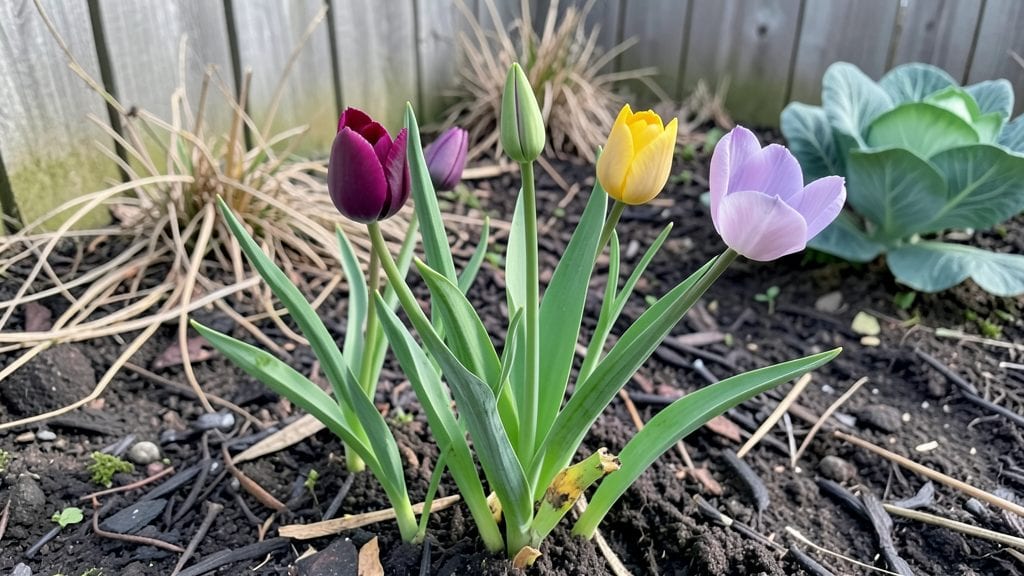
Spring garden weather thrives when daytime temperatures consistently reach 60-75°F (15-24°C) and nighttime lows stay above 40°F (4°C), ensuring optimal soil warmth and plant growth. Planting timelines vary by region but generally align with last frost dates, with cool-season crops like lettuce sown earlier and warm-season plants like tomatoes introduced after soil warms to 60°F (15°C).
Spring garden weather isn't just about the calendar—it's about the balance between warmth and frost risk that determines what you can grow. 🌱 The 60-75°F range isn't arbitrary; it's when most plants kick into active growth, with roots developing faster and photosynthesis working at peak efficiency.
I've seen firsthand how a single late frost can devastate early plantings, so timing is everything. For example, in my USDA Zone 6 garden, I wait until mid-May to plant tomatoes, even if the soil hits 60°F earlier—because nighttime temperatures can still dip dangerously low.
What makes this season tricky is how regional microclimates create wildly different conditions just miles apart. A valley might warm up faster than a hillside, and coastal areas often enjoy milder springs than inland zones.
That's why I always check the Old Farmer's Almanac for my local frost dates—it's saved me from losing entire seedling batches more times than I can count. The key is matching your planting schedule to both air and soil temperatures, not just the calendar.
💡 In This Article
- How Temperature Affects Plant Growth in Spring
- Regional Spring Planting Guides by Climate Zone
How temperature affects plant growth in spring
Temperature acts like a biological switch for plants, triggering everything from seed germination to flower production. At the cellular level, enzymes that drive growth—like those involved in cell division—become most active between 60-75°F (15-24°C).
Below 50°F (10°C), many plants enter dormancy, while above 85°F (29°C), heat stress can damage delicate tissues. The sweet spot isn't just about warmth—it's about consistency. For example, tomatoes need 70-85°F (21-29°C) days but will bolt (flower prematurely) if nights dip below 55°F (13°C).
Root development is particularly temperature-sensitive. Most plants require soil temps of at least 50°F (10°C) for roots to grow, but brassicas (like kale) thrive at cooler 45-60°F (7-15°C) soil temps, while solanaceae (tomatoes, peppers) need 65-80°F (18-27°C).
This explains why cool-season crops like lettuce can be planted weeks before warm-season staples. The science behind this lies in root respiration rates—warmer soils increase oxygen uptake, fueling faster growth, but too much heat can actually reduce nutrient absorption due to microbial activity changes in the soil.
Photosynthesis efficiency also peaks in this spring range. Chlorophyll production and CO₂ uptake are optimal at 68-77°F (20-25°C), which is why you'll see lush green growth during mild springs. However, high humidity combined with warm temps (like 80°F+ (27°C+)) can create conditions for fungal diseases.
I've noticed this most dramatically with cucumbers—when daytime temps hit 90°F (32°C), they start developing powdery mildew unless I provide afternoon shade. The key is matching plant families to their ideal temperature ranges, not just the season.
Frost risk adds another layer of complexity. Most plants can't recover from temperatures below 28°F (-2°C), though some hardy varieties (like winter rye) tolerate 15°F (-9°C). The danger zone is 32-36°F (0-2°C), where ice crystals form in plant cells, rupturing membranes.
This is why I always wait until after the last average frost date—even if the soil is warm enough—because a single night below 36°F (2°C) can wipe out tender seedlings. Regional microclimates make this especially tricky; a south-facing slope might warm up 5-10°F (3-6°C) faster than a north-facing area.
Here's what you need to know about temperature thresholds by plant family:
- Brassicas (kale, broccoli): Germinate best at 45-55°F (7-13°C) soil temps
- Legumes (beans, peas): Require 60-70°F (15-21°C) for germination
- Solanaceae (tomatoes, peppers): Need 70-85°F (21-29°C) days and 55°F+ (13°C+) nights
- Alliums (onions, garlic): Tolerate 40-60°F (4-15°C) soil temps
The most critical temperature to track is soil temperature, not air temperature. A 50°F (10°C) air temp might feel pleasant, but if the soil is still 40°F (4°C), roots won't develop properly.
I use a soil thermometer buried 2 inches (5 cm) deep to make planting decisions—this depth is where most seeds germinate and young roots establish.
What surprises many gardeners is how quickly soil warms after air temps rise; in my experience, soil temps can lag 2-3 days behind air temps, especially in clay soils.
What most people don't realize is how temperature affects plant flavor too. Carrots grown in cooler 60-65°F (15-18°C) soil develop sweeter roots due to slower starch conversion, while tomatoes ripened in 80-85°F (27-29°C) heat become more acidic.
This is why spring-planted crops often have more complex flavors than summer-grown ones—the cooler temps allow for more gradual development of sugars and volatiles. 🌿