
Tools
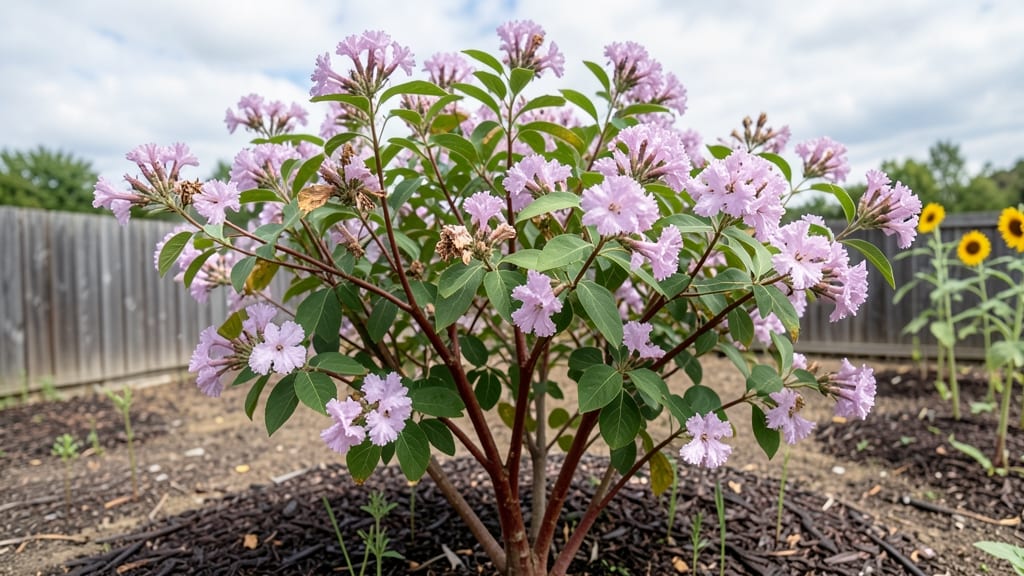
A crepe myrtle garden can transform your yard into a lush, fragrant retreat that works hard all year. I planted mine along a narrow side yard where nothing else would thrive, and now it’s a vibrant privacy screen that blooms from summer through fall.
The key is choosing the right variety—dwarf types for tight spaces, standard sizes for bold statements—and pairing them with plants that complement their peeling bark and floral display.
Most people overlook how versatile crepe myrtles are—they handle heat, drought, and poor soil better than many shrubs. You’ll need well-draining soil and full sun, but beyond that, they’re low-maintenance workhorses. I’ve seen them flourish in everything from clay soil to sandy loam, as long as they’re not waterlogged.
The right spacing (6-10 feet apart for standard types) ensures airflow and prevents disease, while adding ornamental grasses or boxwoods creates texture and depth.
By late summer, your garden will burst with color—purple, pink, or white blooms that attract hummingbirds and butterflies. The bark peels naturally in winter, adding visual interest when everything else is dormant.
Even the fallen flowers create a fragrant mulch that suppresses weeds. With just a little pruning after blooming, you’ll keep them shaped and encourage next year’s flowers.
This design works for urban backyards, rural borders, or even container plantings if space is tight. The secret is balancing crepe myrtles with plants that thrive in the same conditions but offer different heights and textures. Let’s get yours planted for a screen that’s as functional as it is beautiful.
📚 In This Guide
- What you need
- Instructions
- Tips and common mistakes
- Wrapping up and next steps
What you need
- ● Crepe myrtle plants: 3–5 mature trees (5–6 ft tall) for a dense screen; spacing depends on variety (check tags for specifics).
- ● High-quality soil: 1–2 cubic yards of well-draining, slightly acidic soil (pH 6.0–7.0). Mix in compost (1 part compost to 3 parts soil) for nutrients.
- ● Mulch: 2–3 bags of organic mulch (e.g., pine bark or shredded leaves) to retain moisture and suppress weeds.
- ● Organic fertilizer: Slow-release, balanced fertilizer (10-10-10 or similar) for planting and a mid-season boost.
- ● Shovel or spade: For digging holes (18–24 inches wide/deep per plant).
- ● Wheelbarrow: To mix soil and transport materials.
- ● Pruners: Sharp, clean bypass pruners (sterilize with rubbing alcohol).
- ● Measuring tape: For precise spacing (aim for 6–10 ft apart, depending on variety).
- ● Garden hose or watering can: For post-planting hydration.
- ● Gloves & knee pads: Comfort is key—protect your hands and joints!
- ● Erosion control fabric: If planting on a slope, use biodegradable fabric to stabilize soil.
- ● Drip irrigation system: Automates watering (especially useful for drought-prone areas).
- ● Tree stakes & ties: For young plants in windy areas (remove after 1 year).
- ● Soil pH test kit: Ensure your soil meets crepe myrtle’s ideal range.
How to create a crepe myrtle privacy screen in small spaces
Here's how to transform tight spaces into lush, low-maintenance privacy screens using crepe myrtles.
Choose the Right Varieties for Your Space
Select dwarf or compact crepe myrtle varieties like 'Arapaho,' 'Sioux,' or 'Comanche' for narrow spaces. These stay under 6 feet tall while still providing dense foliage. Avoid standard varieties—they grow 15-20 feet tall and need wide planting beds. Check your hardiness zone to pick a variety that thrives in your climate.
I always plant 3-4 plants in a staggered row for a natural, full look. Space them 4-5 feet apart to allow airflow and prevent disease. If you have a 6-foot-wide space, three plants spaced evenly create an instant privacy barrier. For taller walls, mix in a slightly taller variety like 'Natchez' in the center.
Prepare the Planting Site for Optimal Growth
Crepe myrtles hate soggy soil, so improve drainage by amending the planting area with 2-3 inches of compost mixed into the top 12 inches of soil. They tolerate poor soil but grow best in well-draining, slightly acidic soil with a pH of 5.5-6.5. Test your soil before planting—amend with sulfur if it's too alkaline.
Dig holes twice as wide as the root ball but only as deep as the container. This encourages roots to spread horizontally rather than settling too deep. Gently loosen the roots if they're circling in the pot before placing the plant in the hole. Backfill with native soil mixed with a slow-release fertilizer to give them a nutrient boost.
Plant and Stake for Stability
Position each plant so the top of the root ball sits 1 inch above ground level. This prevents soil from washing into the graft union if you mulch later. Fill the hole with soil, pressing lightly to remove air pockets, then water deeply to settle everything. Use a 4-foot stake for each plant—drive it 3 inches away from the trunk at a 45-degree angle to avoid girdling.
Secure the plant with soft ties (not wire) to the stake, leaving room for growth. Water again after staking to help roots adjust. Mulch the base with 2-3 inches of organic mulch, keeping it 6 inches away from the trunk to prevent rot. This conserves moisture and regulates soil temperature, which crepe myrtles appreciate.
Prune for Shape and Health Year-Round
Prune in late winter or early spring before new growth begins. Remove dead, diseased, or crossing branches first, then shape the plant by cutting back last year's growth to just above a leaf node. Avoid "heading back" (cutting into old wood)—crepe myrtles bloom on new wood, and over-pruning reduces flowers.
In summer, trim only to maintain shape, never more than 25% of the plant's volume. I always sanitize my pruners with rubbing alcohol between cuts to prevent spreading disease. Watch for powdery mildew on leaves—this is common in humid climates. If you see it, prune affected leaves immediately and improve airflow by thinning dense areas.
Maintain Through Seasons for Long-Term Privacy
Water deeply once a week during the first growing season to establish roots, then taper to every 2-3 weeks once established. Crepe myrtles are drought-tolerant but look best with consistent moisture. You'll know they're thirsty when the leaves curl slightly at the edges—water then, but don't let soil stay soggy.
Fertilize lightly in early spring with a balanced, slow-release fertilizer (10-10-10). Too much nitrogen produces leafy growth at the expense of flowers. In fall, apply a high-phosphorus fertilizer (like 5-10-10) to encourage strong root development for winter. Deadhead spent flowers in late summer to promote a second flush of blooms before frost.
Tips & tricks for perfect crepe myrtle privacy screens
Creating a stunning crepe myrtle privacy screen in small spaces takes a few strategic moves that make all the difference between a scraggly hedge and a lush, year-round barrier.
Variety Selection: When choosing between 'Arapaho,' 'Sioux,' or 'Comanche' for your 6-foot-wide space, consider their mature heights and growth habits. The 'Natchez' variety can serve as an excellent centerpiece for taller walls, but make sure to leave at least 4 feet between it and the dwarf varieties to prevent overcrowding. I've found that staggering the planting—placing one plant slightly forward of the others—creates a more natural, layered look that fills in faster than a straight line.
Soil Preparation: The 2-3 inches of compost mixed into the top 12 inches of soil is non-negotiable for crepe myrtles. I always test my soil pH before planting—if it's above 6.5, I'll amend with sulfur to get that ideal 5.5-6.5 range. For clay-heavy soils, consider adding perlite or coarse sand to improve drainage. Remember, these plants hate soggy roots, so if your yard has poor drainage, you might want to create a raised bed instead of planting directly in the ground.
Planting Technique: That 1-inch gap between the root ball and ground level is crucial—it prevents soil from piling up against the graft union during watering or mulching. When loosening circling roots, I use my fingers to gently separate them rather than cutting, which gives them a better chance to spread out. And for staking, I always use soft fabric ties rather than wire—they won't cut into the bark as the plant grows, and they're easier to remove later without damaging the trunk.
Pruning Strategy: The late winter/early spring pruning is your chance to shape the plant while it's dormant. I always make my cuts just above a leaf node to encourage new growth from that point. For summer maintenance, I never trim more than 25% of the plant's volume at once—this prevents shocking the plant and reduces flower production. When dealing with powdery mildew, I've had success with a homemade spray of 1 tablespoon baking soda, 1 tablespoon vegetable oil, and a drop of dish soap in a gallon of water, applied in the early morning when leaves are dry.
Pro Tips for Crepe Myrtle Garden
- Creating a stunning crepe myrtle privacy screen in small spaces takes a few strategic moves that make all the difference between a scraggly hedge and a lush, year-round barrier.
- Variety Selection: When choosing between 'Arapaho,' 'Sioux,' or 'Comanche' for your 6-foot-wide space, consider their mature heights and growth habits.
- Soil Preparation: The 2-3 inches of compost mixed into the top 12 inches of soil is non-negotiable for crepe myrtles.
Frequently asked questions
Got questions about creating a stunning crepe myrtle garden? You’re not alone! Here are some of the most common queries—and their answers—to help you design a lush, low-maintenance privacy screen with confidence.
How fast do crepe myrtles grow for a privacy screen?
Crepe myrtles grow surprisingly fast—typically 12 to 24 inches per year under ideal conditions. With proper spacing (6 to 10 feet apart), you can expect a solid privacy screen in 3 to 5 years. Dwarf varieties (like ‘Arapaho’ or ‘Tonto’) mature faster, offering quicker results for smaller spaces.
Are crepe myrtles cold-hardy enough for my climate?
Most crepe myrtles thrive in USDA Zones 7 to 9, but some varieties (like Lagerstroemia indica) tolerate brief dips to 0°F. For colder regions (Zones 6 or below), opt for ‘Natchez’ or ‘Sioux’—they’re the toughest and regrow from the base after frost. Always check your local nursery for region-specific recommendations!
Do crepe myrtles need full sun, or can they handle partial shade?
While crepe myrtles love full sun (6+ hours daily) for vibrant blooms and dense growth, they can tolerate partial shade (4–6 hours), especially in hot climates. In shadier spots, expect fewer flowers but still lush foliage. Avoid deep shade—they’ll grow leggy and sparse. Pro tip: Prune lower branches to encourage upward growth if shade is unavoidable!
Why are my crepe myrtle leaves turning yellow or dropping?
Yellowing leaves or premature drop-off usually signal overwatering, underwatering, or pests. Check the soil—it should be dry 1–2 inches down before watering. Powdery mildew (white fuzzy spots) or aphids (sticky residue) are common culprits. Treat with neem oil or insecticidal soap, and improve airflow by pruning crowded branches. Bonus: Mulch to retain moisture and deter diseases!
Can I mix crepe myrtles with other plants for a layered look?
Crepe myrtles pair beautifully with evergreens (like boxwoods or holly) for year-round texture, ornamental grasses (e.g., maiden grass) for movement, or spring bulbs (daffodils, tulips) to pop under their canopy. Avoid competitive roots—stick to drought-tolerant perennials (e.g., lavender, salvia) or shallow-rooted shrubs. Design hack: Use ‘Zuni’ crepe myrtles (compact) as accent plants near patios!
When and how should I prune crepe myrtles for a tidy screen?
Prune late winter or early spring (before new growth) to shape your screen. Avoid “crepe murder”—never cut into the trunk or old wood. Instead, focus on:
- Removing dead or crossing branches (cut back to the collar).
- Thinning overcrowded areas for airflow.
- Trimming sucker growth at the base to redirect energy upward.
Wrapping up and next steps
Creating a crepe myrtle garden is a fantastic way to enjoy year-round privacy and beauty in even the smallest spaces! These versatile trees offer low-maintenance charm, stunning blooms, and adaptability to various climates—making them a must-have for any outdoor lover.
Whether you’re a seasoned gardener or just starting, your crepe myrtle haven is within reach!
Ready to take the next step? Start small—pick a single variety or two—and watch your garden transform. Need inspiration? Sketch a layout, gather your tools, and dive in! Your future shaded retreat awaits. 🌿✨