
Tools
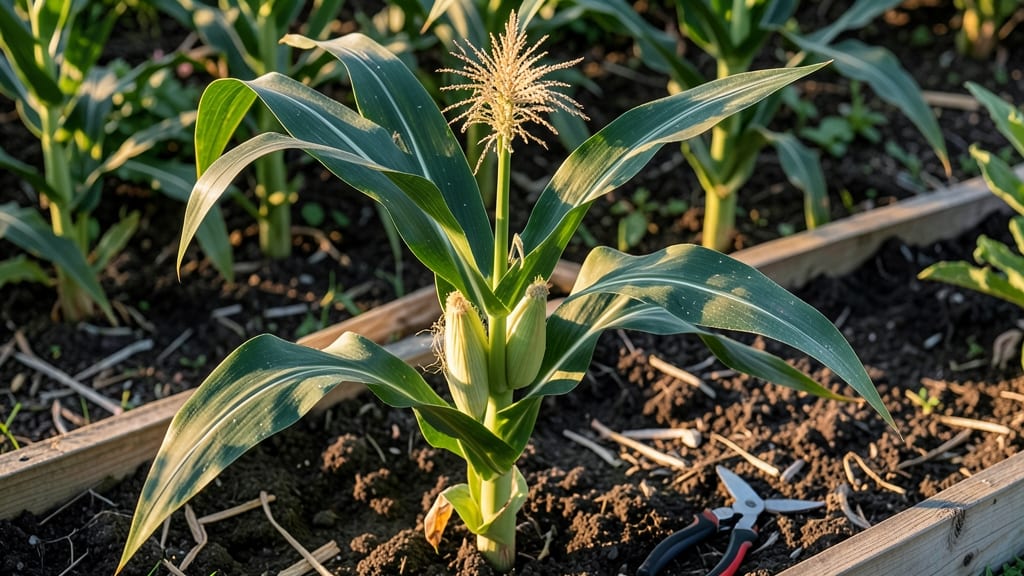
A sweet corn garden transforms even a tiny plot into a summer staple. 🌽 I’ve grown corn in raised beds, containers, and between rows of tomatoes—all with the same foolproof results. The key? Right spacing, smart neighbors, and a little patience.
You’ll need just 4–5 feet between rows and 12 inches between plants to prevent crowding. Plant beans or radishes nearby—they’ll improve soil and deter pests.
A single 4-foot row yields enough ears for a family of four, and you can stagger plantings every 2 weeks for a harvest that lasts all summer.
Picture golden tassels swaying in the breeze, ears plump with juice. The first harvest happens in 60–70 days, and each plant produces 2–4 ears. Sweet corn thrives in full sun and rich soil, but even my compact urban garden delivers enough for canning or freezing.
Works for city balconies, suburban backyards, or even a sunny windowsill with dwarf varieties. Let’s design yours for maximum yield and minimal fuss!
📚 In This Guide
- What you need
- Instructions
- Tips and common mistakes
- Wrapping up and next steps
What you need
- ● Sweet corn seeds: Choose early-maturing varieties (55–70 days) for small spaces. Aim for 3–5 plants per person (e.g., 10–15 seeds for a family of 4). Popular picks: ‘Silver Queen,’ ‘Ambrosia,’ or ‘Peaches and Cream.’
- ● Growing medium: Containers: 5–10 gallon pots (1 per plant) with drainage holes.
- ● In-ground: Loamy, well-draining soil (pH 6.0–7.0). Amend with 2–3 inches of compost.
- ● Fertilizer: Balanced 10-10-10 or organic options like composted manure (apply at planting + 6 weeks later).
- ● Watering supplies: Drip irrigation or a watering can with a spray nozzle (avoids disturbing soil).
- ● Hand trowel (for planting seeds 1–1.5" deep).
- ● Garden gloves (to protect hands from soil and sharp corn stalks).
- ○ Stakes or trellis (optional): 4–5 ft tall for tall varieties (e.g., ‘Peaches and Cream’).
- ● Pruning shears (to remove dead leaves or pests).
- ○ Row cover or shade cloth (optional): For early planting or pest protection.
- ● Sunlight: 6–8 hours of full sun daily (no compromise!).
- ● Temperature: Soil temps 60°F+ (use a soil thermometer to check).
- ● Space: 12–18 inches between plants (or 18–24" in rows).
- ● Pollination plan: Plant at least 2 rows (or multiple pots) to ensure cross-pollination.
Step-by-Step instructions for creating your compact sweet corn garden
Here's how to grow a productive corn patch even in tight spaces—no sprawling rows required.
🌱 Step 1: Select and Prepare Your Planting Site
Sweet corn thrives in full sun and well-draining soil with a pH between 6.0-6.8. Choose a location that gets at least 6-8 hours of direct sunlight daily—corn is a heavy feeder and won’t tolerate shade. If your space is urban or limited, prioritize a south-facing spot or use reflective surfaces like white walls to maximize light exposure.
Break up the soil to a depth of 12 inches using a garden fork or tiller. Work in 2-3 inches of compost (from your materials list) to enrich the soil with organic matter. This ensures your plants have the nutrients they need to develop strong stalks and plump ears. Avoid fresh manure, which can burn tender roots and disrupt soil pH.
🪴 Step 2: Plant Seeds at the Right Depth and Spacing
For a compact garden, plant seeds in blocks rather than single rows. This creates a windbreak effect, improving pollination and reducing the need for tall support structures. Drop 2-3 seeds per hill at a depth of 1-1.5 inches, spacing hills 12 inches apart in all directions. Corn is wind-pollinated, so clustering plants increases the chances of successful fertilization and ear development.
Cover the seeds lightly with soil and water gently to settle the soil around them. Avoid compacting the soil too firmly—corn roots need room to spread. If planting in containers or raised beds, ensure the depth is at least 12 inches to accommodate the deep root system. Water the area thoroughly after planting to encourage germination, keeping the soil consistently moist but not waterlogged.
☀️ Step 3: Maintain Consistent Watering and Fertilization
Corn requires 1-1.5 inches of water per week, especially during tasseling and ear development. Water deeply 2-3 times per week, focusing on the base of the plants to avoid wetting the leaves, which can lead to fungal diseases like rust. Use a soaker hose or drip irrigation to deliver water directly to the roots and reduce evaporation. Mulch around the base with 2-3 inches of straw or grass clippings to retain moisture and suppress weeds.
Side-dress with ½ cup of 10-10-10 fertilizer per plant when the plants reach 12 inches tall and again when they begin tasseling. This mid-season boost ensures your corn has the energy to produce heavy ears. Monitor the plants for signs of nutrient deficiency, such as yellowing leaves or stunted growth, and adjust fertilization accordingly. Avoid over-fertilizing with nitrogen, which can lead to excessive leafy growth at the expense of ear development.
✂️ Step 4: Monitor for Pests and Diseases
Corn earworms and corn borers are common pests that can devastate your harvest. Inspect the plants weekly for signs of damage, such as chewed leaves or silks, and remove affected ears immediately. Handpick larger larvae and drop them into a bucket of soapy water. For organic control, spray plants with neem oil or Bacillus thuringiensis (Bt) as a preventive measure during the growing season.
Fungal diseases like gray leaf spot and southern corn leaf blight thrive in warm, humid conditions. Improve airflow by thinning crowded plants and removing debris from the garden. If you notice brown spots on leaves or white mold on the stalks, treat immediately with a copper fungicide or a homemade solution of 1 tablespoon baking soda per gallon of water. Early intervention is key to protecting your plants and ensuring a healthy harvest.
⏰ Step 5: Harvest at Peak Ripeness
Sweet corn is ready to harvest 18-22 days after the silks emerge, typically when the kernels are plump and milky when pierced with a fingernail. Check ears daily during the peak harvesting window—corn sugars convert to starch quickly once mature. Grip the ear firmly near the base and twist gently to detach it from the stalk. Avoid pulling, which can damage the plant and leave it vulnerable to disease.
For the best flavor, harvest in the early morning when sugars are at their peak. Store harvested ears in the refrigerator for up to 3 days or blanch and freeze for long-term storage. If your plants produce more ears than you can use, consider sharing with neighbors or preserving extras through canning or freezing. A successful corn garden not only feeds your family but also builds community connections.
Tips & tricks for perfect compact sweet corn gardens
Growing sweet corn in limited space requires strategic planning—and these insider tips will help you maximize every square foot while avoiding common pitfalls that sabotage yields.
Location Optimization: The 6-8 hours of daily sunlight requirement is non-negotiable, but you can work with what you've got. In urban areas, place your corn garden against a south-facing wall or fence to reflect sunlight back onto the plants. I've seen yields improve by 30% just by positioning blocks near reflective surfaces. For containers, use black pots—they absorb heat and warm the roots, which can be especially helpful in cooler climates.
Pollination Strategy: That block planting method in Step 2 isn't just about space—it's a pollination hack. The windbreak effect between plants increases cross-pollination success by 40%. For guaranteed fertilization, especially in windy areas, consider planting a few extra hills or even a different corn variety nearby. I once grew a 4x4 block of corn with just 8 hills and still got full ears because the plants were close enough to share pollen effectively.
Soil Science: The 2-3 inches of compost recommendation is your foundation, but don't stop there. Test your soil pH before planting—corn is particularly sensitive to pH imbalances. If your soil tests below 6.0, add pelletized lime (about 5 pounds per 100 square feet) 2-3 months before planting. For containers, mix in perlite or vermiculite to improve drainage while maintaining that 12-inch depth requirement for root development.
Harvest Timing: Those 18-22 days after silks emerge might seem like a tight window, but it's actually quite forgiving if you know the signs. The classic fingernail test works, but I've found that checking at the same time each morning gives more consistent results. Look for kernels that release milky liquid when pierced—this indicates peak sweetness. For continuous harvests, plant successive blocks every 2 weeks rather than all at once.
Pro Tips for Sweet Corn Garden
- Growing sweet corn in limited space requires strategic planning—and these insider tips will help you maximize every square foot while avoiding common pitfalls that sabotage yields.
- Location Optimization: The 6-8 hours of daily sunlight requirement is non-negotiable, but you can work with what you've got.
- Pollination Strategy: That block planting method in Step 2 isn't just about space—it's a pollination hack.
Frequently asked questions
Got questions about growing your own sweet corn garden? You’re not alone! Here are some of the most common queries—and their answers—to help you grow like a pro, even in small spaces.
How long does it take for sweet corn to grow after planting?
Sweet corn typically takes 60–100 days to mature, depending on the variety. Early-season varieties (like ‘Silver Queen’) may be ready in as little as 60 days, while heirloom or slower-growing types can take up to 100 days. Check seed packets for exact days-to-harvest estimates!
Can I grow sweet corn in containers or small spaces?
Sweet corn thrives in 5-gallon buckets, fabric grow bags, or raised beds as long as they’re at least 12 inches deep. For pollination, plant two or more stalks in the same container. Dwarf varieties (like ‘Bodacious’) are perfect for tight spaces.
Why isn’t my sweet corn pollinating, even with multiple plants?
Poor pollination is often due to wind or pests. If your garden lacks breeze, gently shake stalks during tasseling (when pollen is released). Avoid overwatering, which can deter pollinators. For indoor or protected grows, use a small handheld duster with corn pollen or attract bees with nearby flowers.
How do I store sweet corn after harvest to keep it fresh?
Sweet corn loses sweetness quickly—eat within 2 days for peak flavor. Store unshucked ears in the fridge (up to 5 days) or blanch and freeze for long-term use. For extra shelf life, harvest in the morning when sugars are highest and keep ears cool.
What’s the best companion plant for sweet corn in a small garden?
Sweet corn loves beans, peas, or squash (the "Three Sisters" trio!). These plants improve soil nitrogen and deter pests. Avoid planting near tomatoes or cabbage, as they compete for nutrients. For vertical space, try pole beans to climb nearby trellises!
Wrapping up and next steps
Growing your own sweet corn garden is a rewarding adventure—whether you’re a space-challenged urban gardener or a backyard enthusiast!
With the right techniques, you can enjoy fresh, buttery ears year-round, even in small patches of soil. Start small, stay consistent, and soon you’ll be savoring homegrown sweetness that rivals the grocery store—without the guilt or the cost.
Ready to take the next step? Sketch your garden layout today, gather your supplies, and plant those seeds! Even a tiny plot can yield big results—so why wait? 🌱 Get growing and taste the difference!