
Advice
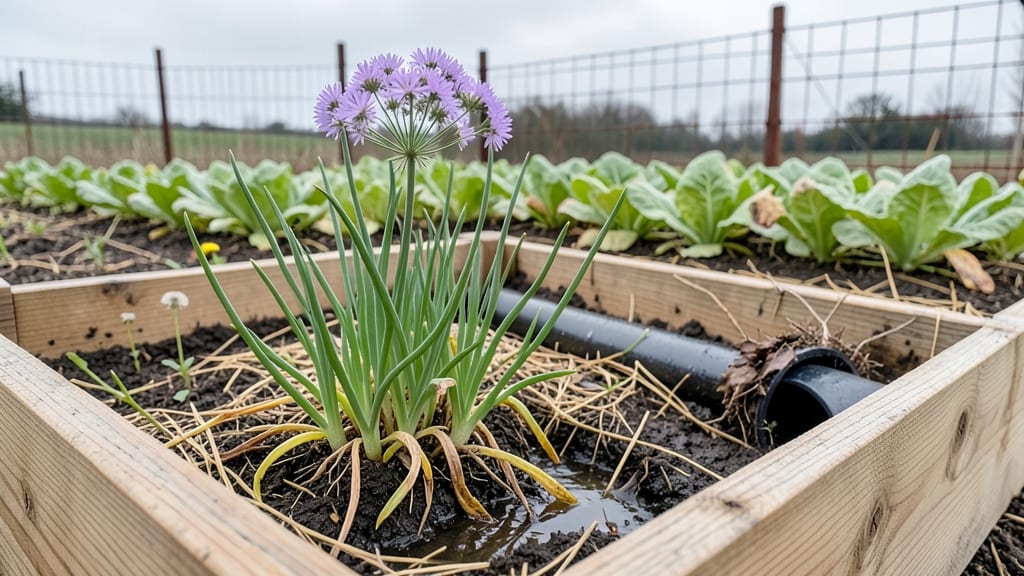
The disadvantages of raised bed gardening include higher initial material costs, soil compaction risks over time, and shallow root space that limits deeper-rooted plants. Without careful planning, drainage issues and weed control can also become persistent problems.
While raised beds offer excellent drainage and weed suppression, their confined space forces gardeners to make trade-offs. 🌱 The soil in raised beds tends to dry out faster than in-ground plots, requiring more frequent watering—especially in hot climates.
Additionally, heavy materials like cedar or metal frames can become costly over time if you need to replace or expand them. Many gardeners also discover that root crops like carrots or potatoes struggle in shallow beds, forcing them to either choose different plants or dig deeper holes for larger varieties.
Another overlooked challenge is the potential for nutrient depletion. Since raised beds rely on a finite volume of soil, they require more frequent amendments like compost or fertilizer to maintain fertility. Without proper maintenance, you might find your plants becoming nutrient-deficient more quickly than in traditional garden beds.
The good news? With smart planning—like rotating crops and mixing in organic matter—you can extend your raised bed's lifespan and productivity.
💡 In This Article
- Soil and Structural Challenges in Raised Beds
- Budget-Friendly Alternatives to Traditional Raised Beds
Soil and structural challenges in raised beds
Here's what's actually happening with soil depletion in raised beds: the confined volume means nutrients get used up faster than in-ground gardens. A typical 4'x8' raised bed with 12" depth contains about 1.5 cubic yards of soil—significantly less than a traditional garden bed.
Since plants extract nutrients directly from this limited volume, fertility declines more rapidly, often requiring annual compost additions (2-3 inches) just to maintain levels.
The science behind this is simple: in-ground soil benefits from natural replenishment through decomposition of organic matter below the surface, while raised beds rely entirely on what you add.
The material choice dramatically affects moisture retention and structural integrity. Wooden beds (especially cedar) hold moisture better than metal or plastic due to their natural insulating properties, but they can rot over 5-7 years if not treated.
Metal beds, while durable, reflect sunlight and heat, causing soil surface temperatures to spike 10-15°F hotter than wood during peak summer—this accelerates moisture loss and can stress plants.
The key factor is thermal mass: wood acts like a sponge, while metal behaves like a frying pan. 🔥 For example, a cedar bed might need watering every 3-4 days in summer, while a metal one could dry out in just 2 days under the same conditions.
Root-bound plants face a fundamental limitation: most raised beds only provide 6-12 inches of soil depth, while crops like sweet potatoes or asparagus need 18+ inches to thrive.
What most people don't realize is how this affects plant development—roots that hit the bottom of the bed can become girdled (constricted) or grow in circular patterns, reducing nutrient uptake by up to 40%.
For instance, a carrot planted in a 6-inch-deep bed will develop a stubby, deformed root system compared to its in-ground counterpart, which can grow 3-4 times longer.
The structural challenge becomes especially visible with perennials: asparagus crowns can outgrow their containers in just 3-4 years, requiring complete bed reconstruction.
Moisture management becomes a balancing act because raised beds drain 2-3 times faster than in-ground plots. The lack of subsoil means water runs straight through, carrying away nutrients. This is why many gardeners using raised beds report 30-50% more water usage during dry periods. The solution?
Adding 20-30% organic matter (like compost or coconut coir) improves water retention by creating more pore space where moisture can cling to soil particles. However, this also means more frequent irrigation—automatic drip systems become almost essential in climates with regular 90°F+ temperatures.
Consider these key structural trade-offs when planning your bed dimensions:
- Width: Never exceed 4 feet—any wider and the center soil stays too dry because sunlight can't reach the middle. Most gardeners use 3-4 feet for optimal moisture distribution.
- Height: 12-18 inches is ideal for most vegetables, but taller beds (24+ inches) are needed for root crops and perennials. The deeper the bed, the more expensive the materials and labor become.
- Material thickness: 2x6 or 2x8 boards are standard, but thinner wood (1x6) warps faster and lets moisture escape through gaps.
The most critical insight is that raised beds require active management to prevent these challenges. Unlike in-ground gardens where nature handles some of the work, raised beds demand your attention for soil testing (every 2 years), pH balancing (6.0-7.0 range), and structural maintenance.
The good news? With this knowledge, you can design beds that minimize these drawbacks—like using compost-rich soil mixes and wide, low-profile designs for moisture efficiency. 💫