
Light Requirements
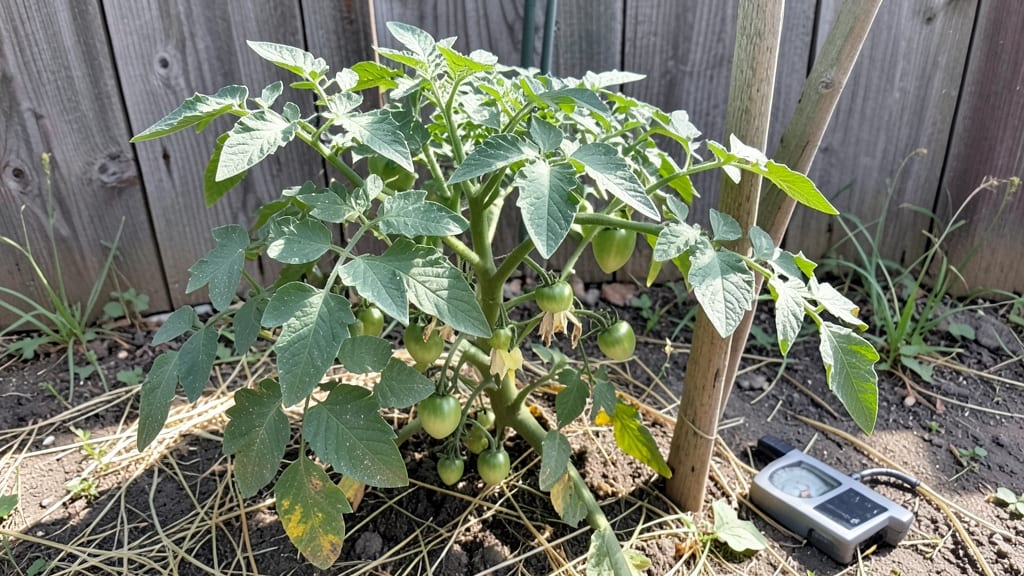
A vegetable garden needs 6 to 8 hours of direct sunlight daily for most crops, though leafy greens tolerate partial shade (4-6 hours), while sun-lovers like tomatoes and peppers require full sun (8+ hours). Soil quality and watering also influence plant performance under varying light conditions.
Understanding how sunlight impacts growth helps you plan your garden layout strategically. 🌱 For instance, leafy greens like spinach or kale thrive in 4-6 hours of sunlight, while root vegetables such as carrots and beets can handle 6 hours but produce better with more.
Meanwhile, fruits like peppers and eggplants demand 8+ hours to develop their full flavor and yield. Even a small difference in light exposure can mean the difference between a healthy harvest and stunted plants.
If your garden doesn’t get enough sunlight, consider using reflective surfaces like white gravel or mulch to bounce light onto plants. 💫 Vertical gardening with trellises also maximizes space for sun-loving crops like cucumbers or beans, allowing them to grow upward instead of competing for ground-level light.
Seasonal changes can shift sunlight patterns, so monitoring your garden’s light throughout the year ensures consistent growth.
💡 In This Article
- Sunlight Requirements for Different Vegetable Types
- Adjusting Garden Layout for Optimal Sunlight Exposure
Sunlight requirements for different vegetable types
Photosynthesis is the engine behind plant growth, and sunlight provides the energy that drives this process. Vegetables fall into three broad categories based on their light needs: full sun lovers, partial shade tolerators, and low-light adaptors.
The key factor is chlorophyll production—plants with 6+ hours of direct light maximize photosynthesis, while those with less adapt by growing broader leaves to capture scattered rays. 🔥 For example, tomatoes need 8+ hours to produce the sugars that give them their signature sweetness, while lettuce thrives with just 4-6 hours to avoid bolting (premature flowering).
Sunlight intensity also affects plant structure. Full-sun vegetables like peppers develop thicker stems and higher yields because their cells grow faster under strong light. In contrast, shade-tolerant crops like spinach prioritize leaf area over height, creating a lush, dense foliage. The trade-off?
Shade-loving plants often have lower sugar content since they can't perform photosynthesis as efficiently. For instance, a pepper grown with 6 hours of sun will be smaller and less flavorful than one with 8+ hours, even if both receive equal water and nutrients.
Some vegetables have exceptions based on variety. Heat-tolerant tomato varieties like 'Solar Fire' can handle 10+ hours of sun in desert climates, while heirloom types may struggle. Similarly, 'Buttercrunch' lettuce can tolerate 6 hours of sun, but delicate varieties like 'Romaine' bolt in 5 hours during summer.
The rule of thumb? Check seed packets for specific light recommendations—many modern hybrids are bred for flexibility. 💫
Light quality matters too. Blue light (morning sun) promotes leafy growth, while red light (afternoon sun) boosts flowering and fruiting. This is why morning sunlight is ideal for leafy greens, while afternoon light helps tomatoes set fruit.
A simple trick? Place taller, sun-loving plants on the south side of your garden (in the Northern Hemisphere) to avoid shading shorter crops. For example, pole beans on a trellis won’t steal light from carrots planted nearby.
Seasonal adjustments are critical. In summer, plants need 8+ hours of light, but winter days may only offer 4-5 hours. Extend growing seasons with cold frames or row covers to give plants the light they need.
For instance, kale grown in winter with supplemental light can produce sweeter stems than summer-grown varieties. The science? Lower light triggers plants to convert starches into sugars for survival—resulting in that classic winter kale flavor. ✨
Even within categories, microclimates create variations. A north-facing wall might cast shade for 3 hours in the morning, making it perfect for lettuce but unsuitable for basil. Use a light meter or observe your garden’s shadows to map these patterns.
For example, a 6-foot-tall fence can block 2-3 hours of afternoon sun in summer but cast minimal shadow in winter. Planning around these shifts ensures every plant gets its ideal light dose.